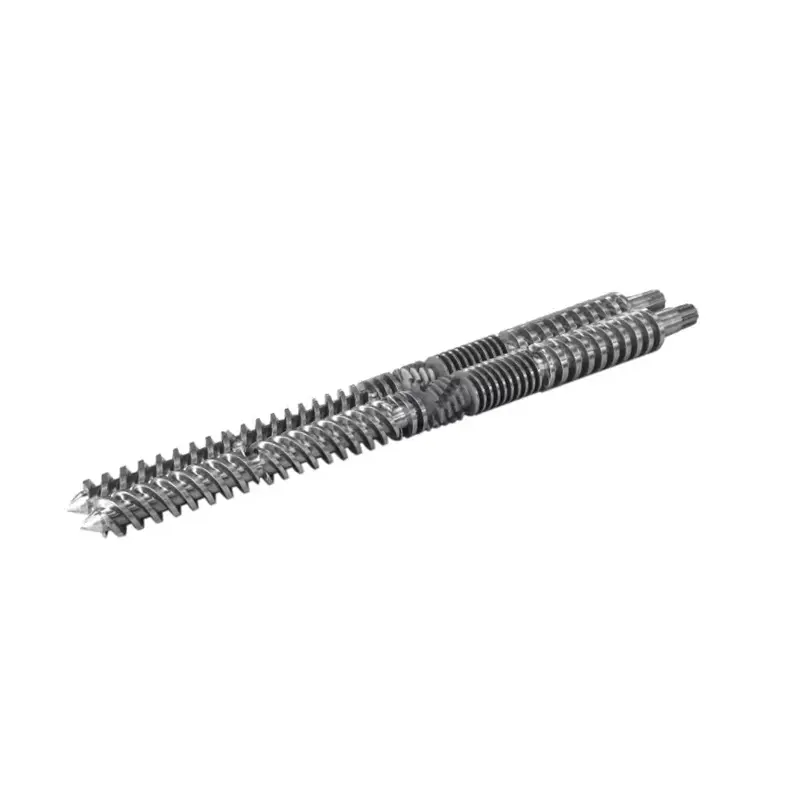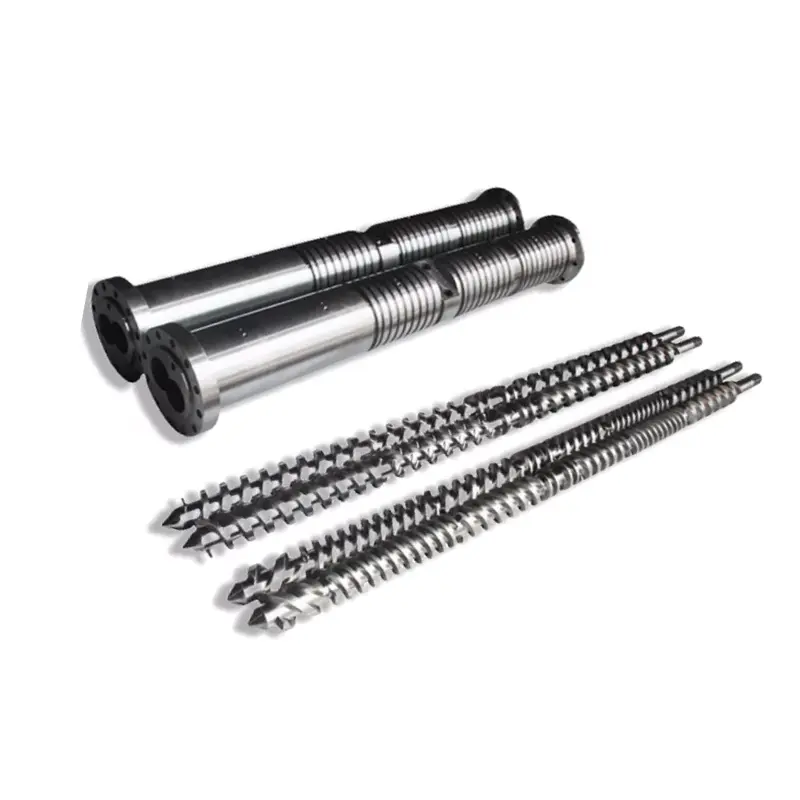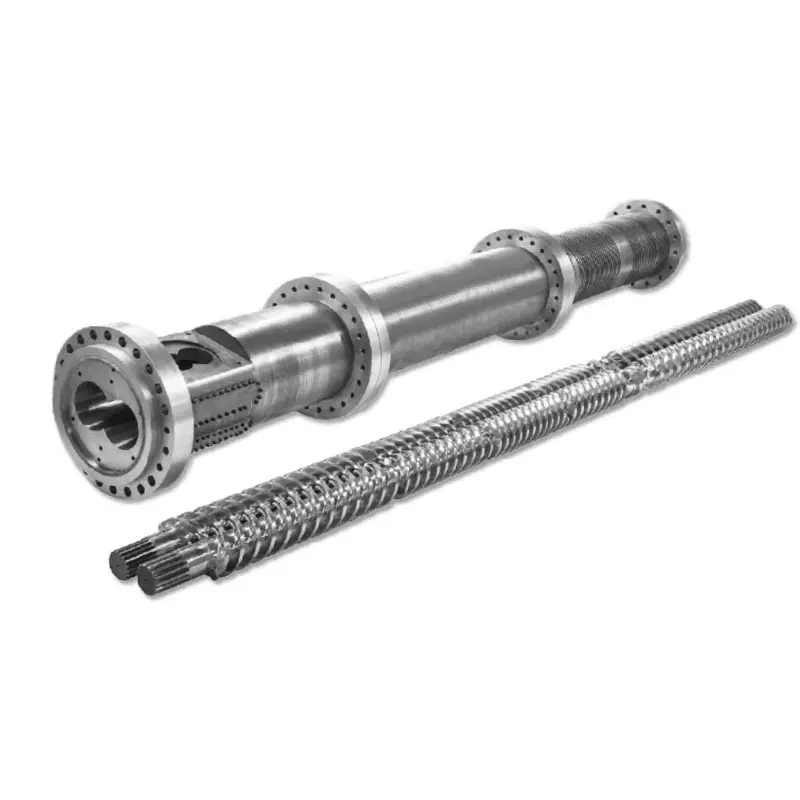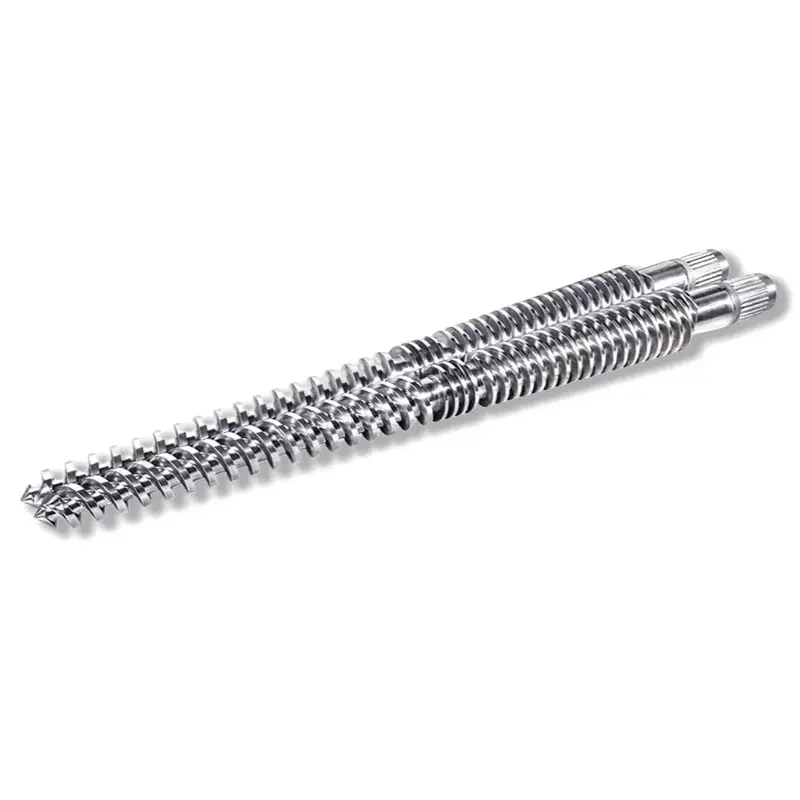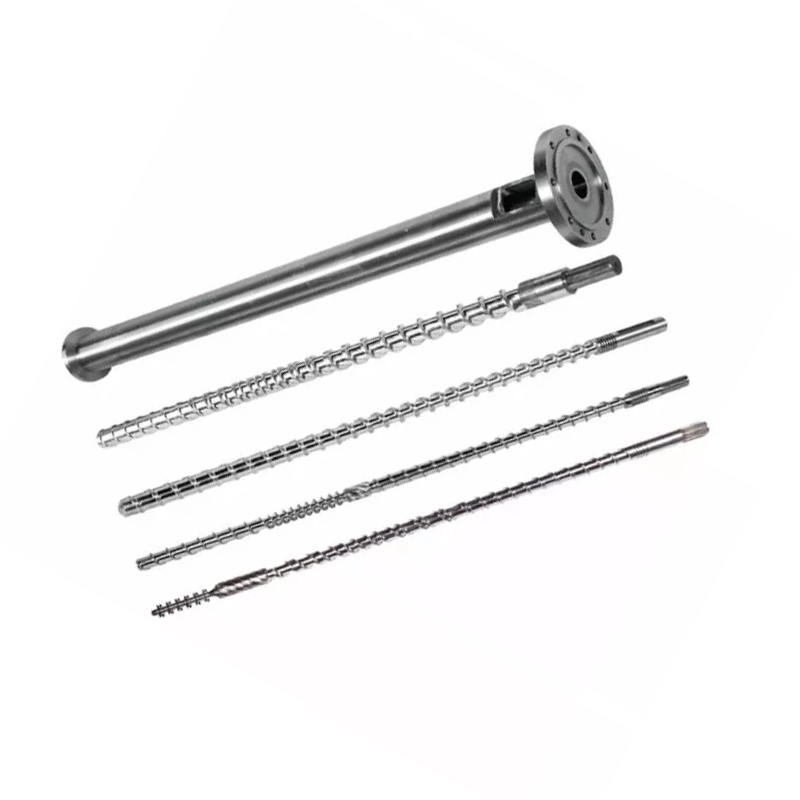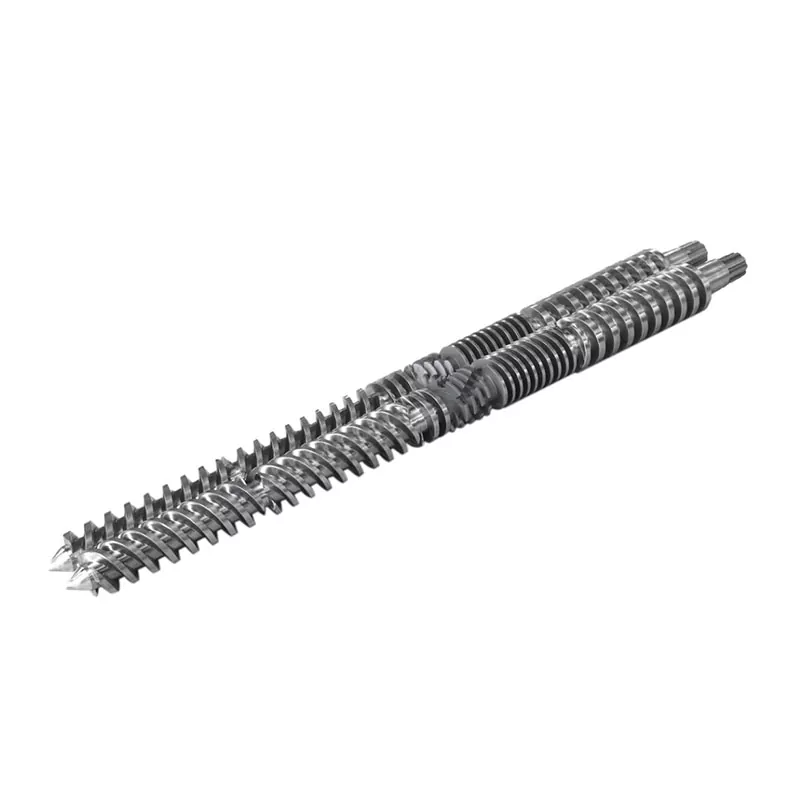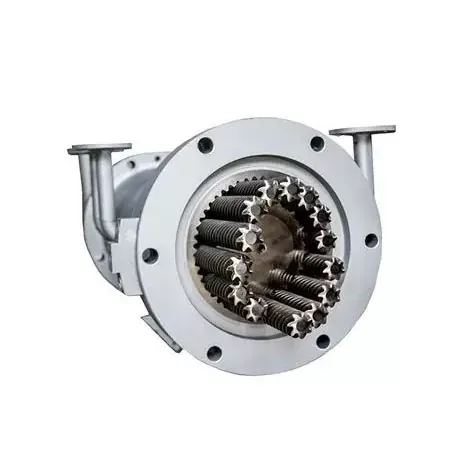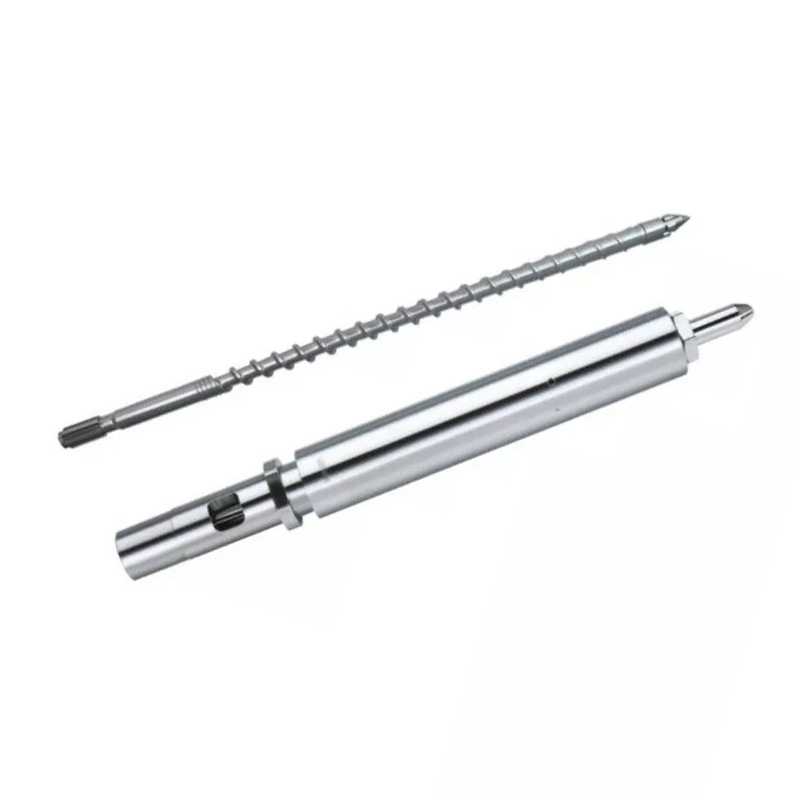

A screw barrel is worn out when the radial clearance between screw and barrel exceeds the manufacturer’s tolerance — usually signaled by falling output, surging, poor mixing, or black specks. Minor flight damage can sometimes be repaired; once the barrel bore or screw flights are worn past tolerance, replacement is the economical fix. Measure the clearance before you decide.
Output is down. The melt looks inconsistent — maybe you are seeing surging, or black specks that were not there a year ago. Before you blame the resin or the heater bands, check the part doing the actual work: the screw and the barrel. Wear creeps in slowly, a few hundredths of a millimeter at a time, until one day the machine simply cannot hold output or quality.
This guide covers how to tell when a screw barrel is worn, how to measure it against real wear tolerances, and how to decide between repair and replacement. We have rebuilt and replaced thousands of them, so we will be straight about which fix makes sense when — and what to send us if you need a new one.
Signs Your Screw Barrel Is Worn
Wear rarely announces itself with a single dramatic failure. It shows up as a drift in the numbers you watch every day. Watch for these:
- Output drops at the same screw speed — the classic first sign. Worn clearance lets melt slip backward over the flights instead of moving forward.
- Surging or unstable pressure — head pressure and amperage swing instead of holding steady.
- Poor mixing or melt quality — unmelted particles, uneven color, or weak parts.
- Black specks and degradation — material lingers in worn gaps, overheats, and carbonizes.
- Rising melt temperature — extra shear from backflow heats the melt beyond setpoint.
- Longer screw recovery or cycle time on an injection machine.
- Higher energy draw for the same throughput.
One symptom on its own can have many causes. Two or three of them together, trending the wrong way over weeks, point squarely at a worn screw and barrel.
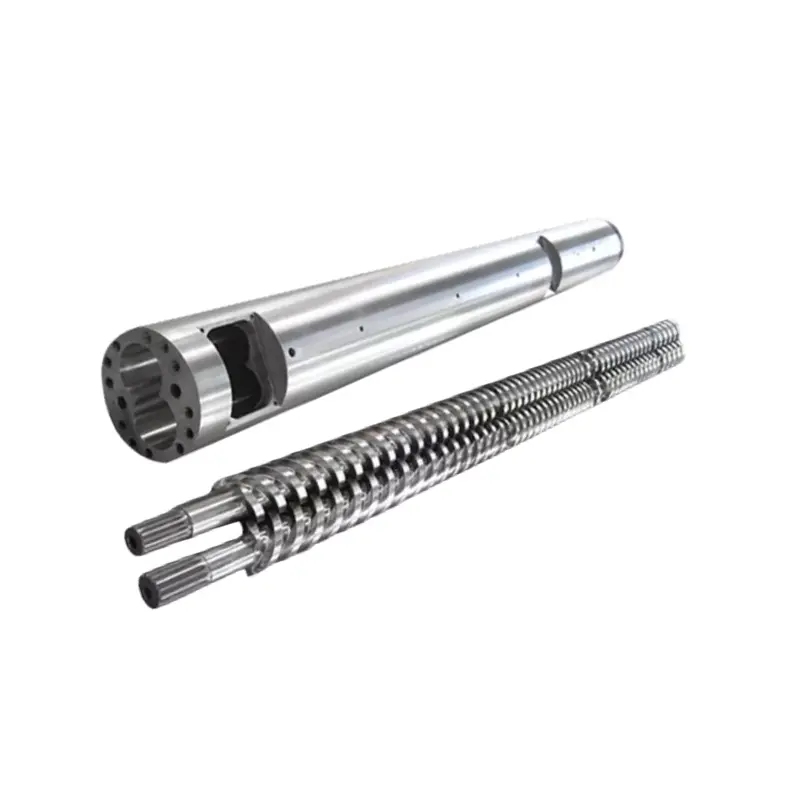
What Causes Screw and Barrel Wear
Knowing the mechanism helps you choose a replacement that lasts longer than the one that just failed. Four causes account for most cases:
- Abrasive wear — glass fiber, mineral fillers, and pigments scour the flight lands and bore. The most common killer in compounding and reinforced materials.
- Corrosive wear — rigid PVC, flame-retardant, and some recycled feedstocks release compounds that chemically attack the steel.
- Adhesive wear — metal-to-metal contact from poor lubrication or thermal issues galls the surfaces.
- Mechanical damage — hard contaminants in the feed, a bent screw, or shaft misalignment that drives the screw against one side of the bore.
If your last barrel wore out fast on an abrasive or corrosive material, that is the signal to step up the surface specification on the replacement — which brings us to a decision covered in our guide to bimetallic vs nitrided screw barrels.
How to Measure Screw and Barrel Wear
Do not guess from symptoms alone. Measure, so the repair-or-replace decision rests on numbers:
- Measure the screw flight outer diameter with a micrometer at several points along the screw.
- Measure the barrel bore inner diameter with a bore gauge at matching points.
- Calculate radial clearance as half the difference between bore ID and screw OD.
- Compare against the original build clearance from your drawing.
Take readings along the full length, not just at one spot. Wear is never uniform — it concentrates in the transition and metering zones where pressure and shear peak. The screw and the barrel also wear at different rates, so measure both before concluding which one is the problem.
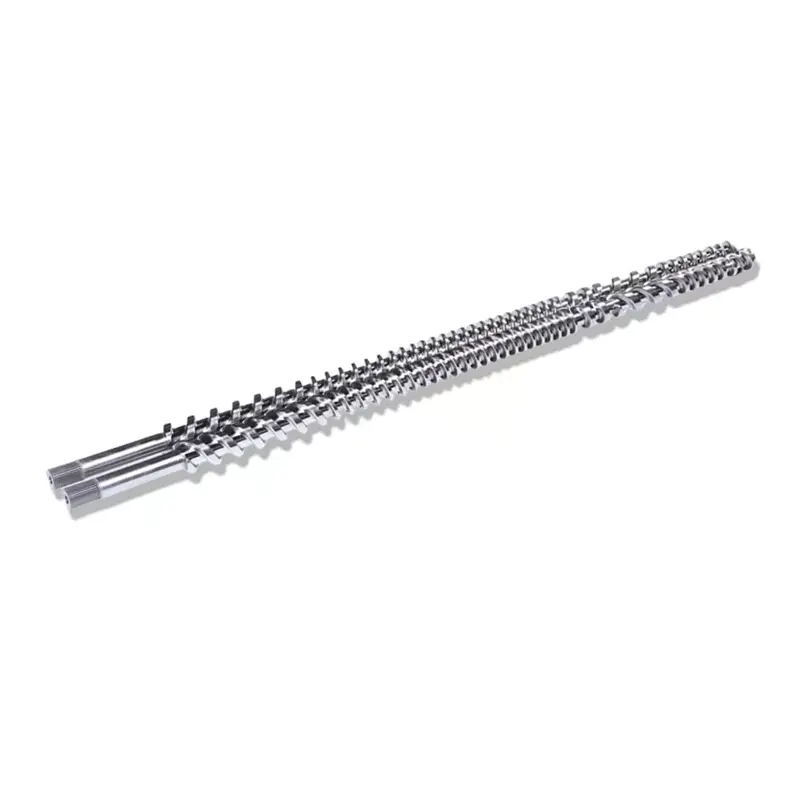
Screw Wear vs Barrel Wear: Which Goes First?
Screws and barrels do not wear at the same rate, and which one fails first depends on your process. On abrasive materials, the screw flights — the moving, load-bearing surface — usually wear faster than the bore. On corrosive materials the barrel bore often suffers first, since it sees the longest dwell time in contact with the melt. Misalignment or a bent screw, on the other hand, drives wear onto one side of the barrel and one face of the flights. This is exactly why you measure both parts before deciding anything: replace the obvious culprit while ignoring a near-worn partner and you are simply back here in a few months, paying for the second half of a job you could have done once.
Screw and Barrel Wear Tolerances: What Is Acceptable?
There is no single millimeter figure that fits every machine, because acceptable screw and barrel wear tolerances scale with screw diameter. What stays constant is the relationship between clearance and performance. The table below gives a practical, diameter-independent way to read your measurements.
| Wear stage | Radial clearance vs. new build | Output impact | What to do |
|---|---|---|---|
| New | Baseline (per drawing) | Full output | Run and log baseline readings |
| Light | Up to ~1.5× baseline | Negligible | Monitor; record readings each service |
| Moderate | ~1.5–2× baseline | Output begins to drop | Plan a replacement; budget lead time |
| Severe | >2× baseline | Output down 10–20%+, quality issues | Replace now |
Repair vs Replace: How to Decide
This is where money is won or lost. The right answer depends on which part is worn and how far.
Repair the screw, keep the barrel. If the barrel bore is still within tolerance and only the screw flights are worn, rebuilding and re-hardfacing the screw is often the economical route. Screws are more repairable than barrels.
Replace the barrel. A worn barrel bore is harder to justify repairing. Re-lining or re-boring a small or mid-size barrel can cost close to a new one, with no guarantee of matching original geometry. In most cases a worn barrel is replaced, not repaired.
Replace both as a matched set. When the screw and barrel are both worn, or the machine is well into its service life, replacing them together restores correct clearance from day one. Drop a new barrel around a tired screw — or vice versa — and the clearance is wrong immediately, so the fresh part wears unevenly and you are back here sooner than you should be.
The Hidden Cost of Running a Worn Screw Barrel
Processors often delay replacement to avoid the part cost and the downtime. The math usually argues the other way. A worn screw barrel quietly bleeds money every shift: higher scrap and reject rates, more energy burned per kilogram, lost throughput, and the quality complaints that follow inconsistent parts. Add those up over a few months and they routinely exceed the cost of the replacement that would have stopped them. The screw barrel is not where you want to save money by waiting — the savings are an illusion the scrap bin pays for.
How to Extend the Life of Your Next Screw Barrel
Whatever you fit next, a few habits stretch its service life and protect the investment:
- Match the surface to the material — bimetallic for abrasive or corrosive duty, nitrided for clean resins. Under-speccing is the most common reason a barrel wears out early.
- Keep contaminants out of the feed — metal fragments and grit do more damage in a week than years of normal running.
- Control temperature and avoid running dry — overheating and metal-to-metal contact accelerate wear fast.
- Check alignment at install — a screw running off-center wears one side of the bore prematurely.
- Log clearance readings every service — so you see wear coming instead of discovering it through scrap.
A screw barrel that is correctly specified and looked after comfortably reaches the upper end of that 3-to-10-year range — and gives you far more warning before it gets there.
How to Order a Replacement Screw Barrel
When you have decided to replace, a clean specification gets you an accurate quote fast and a part that drops straight in. Send us the following:
- Machine make and model — so we match mounting, length, and fit.
- Screw diameter and L/D ratio, or the original drawing if you have it.
- A sample or photos of the worn part — we can reverse-engineer from a sample.
- Material processed and target output — this drives the screw geometry and surface choice.
- Preferred surface treatment — nitrided for clean resins, bimetallic for abrasive or corrosive duty.
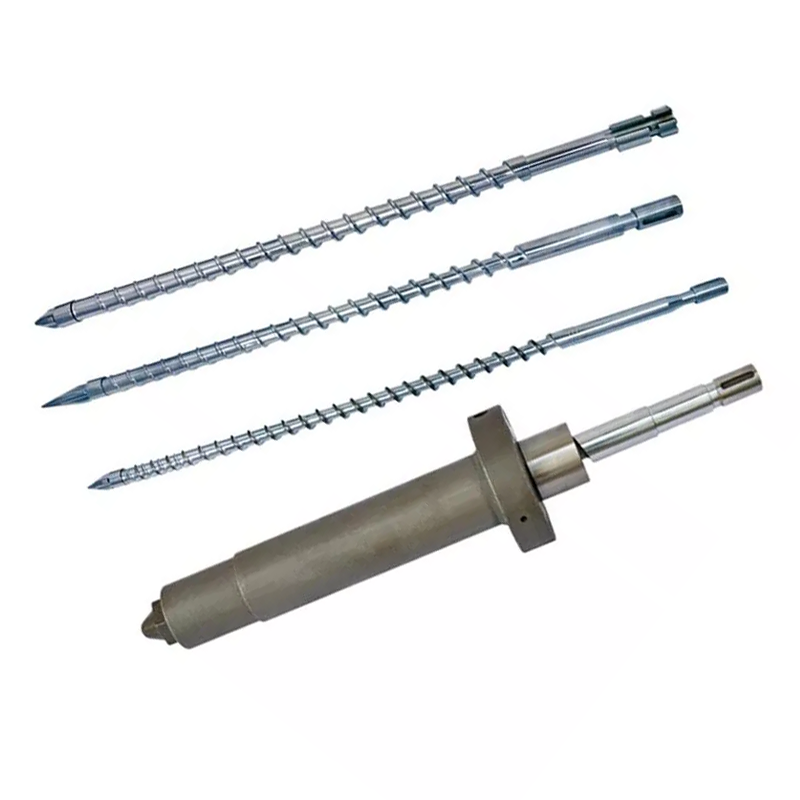
Nanhaiya builds replacement screws and barrels compatible with major extruder and injection molding brands such as KraussMaffei, Cincinnati, and Jwell — whether you need an exact original-spec copy or an upgraded surface to outlast the part that just wore out. Browse our spare parts range, or send a drawing and we will quote a custom build.
Why Work With Nanhaiya
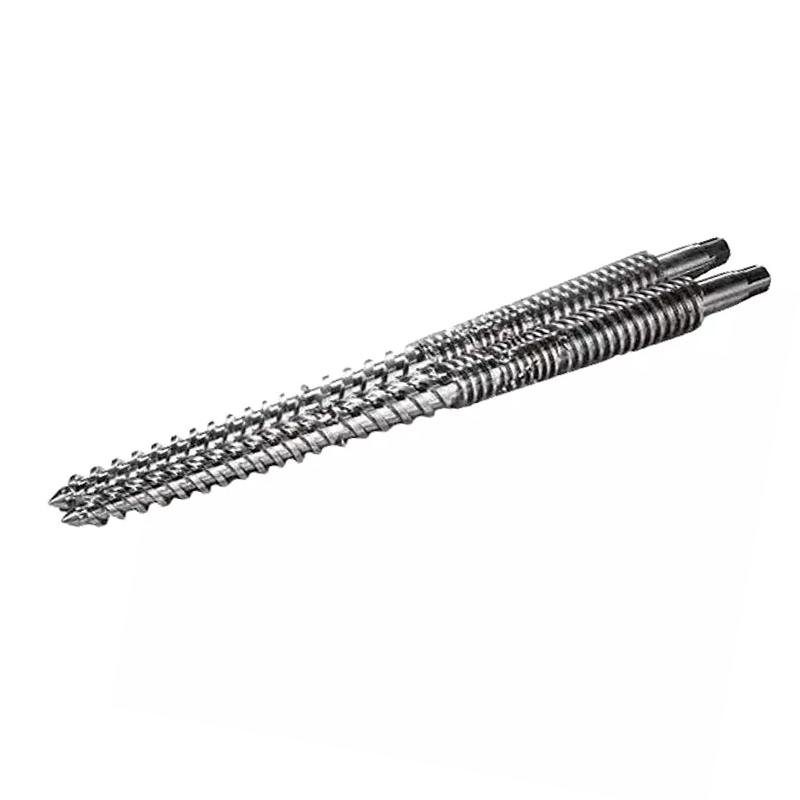
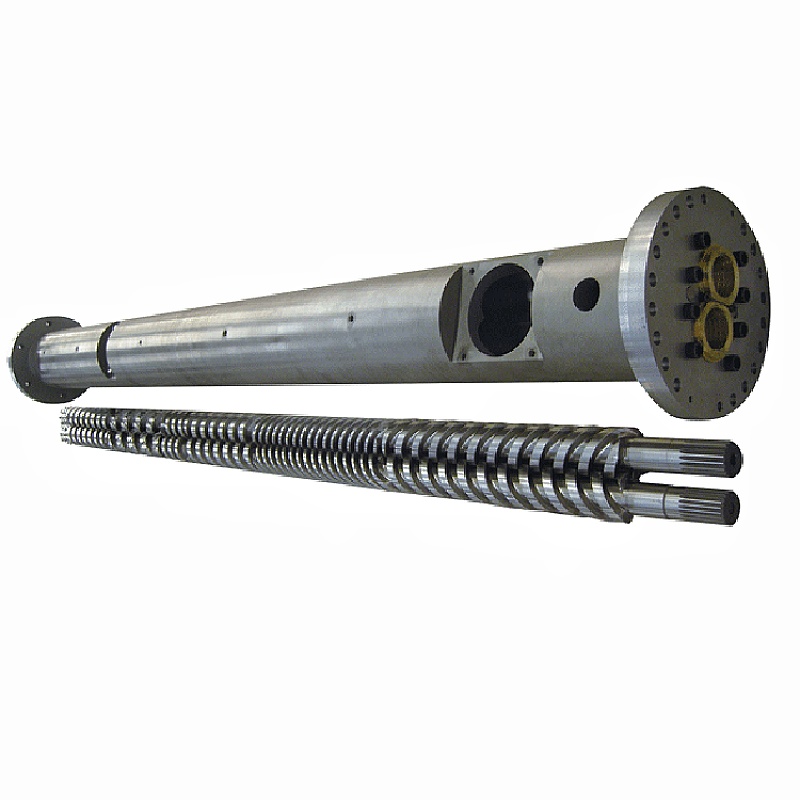
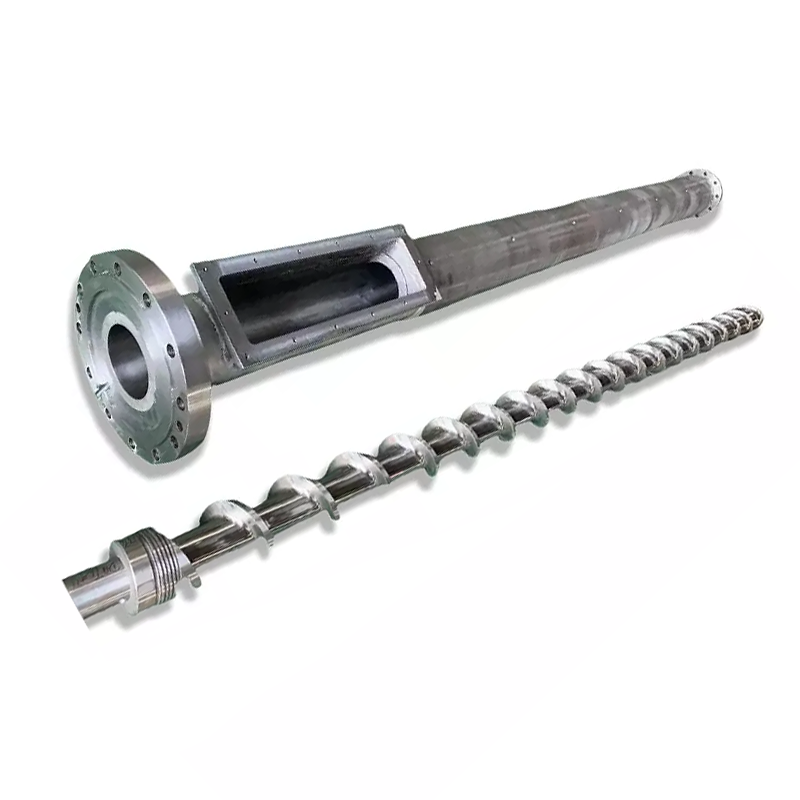
We have spent more than twenty years making screws and barrels — single screw, parallel twin screw, and conical twin screw assemblies in 38CrMoAlA nitrided steel and bimetallic alloys. On our bimetallic barrels we spray a hard alloy around the high-wear zone of the bore to reach an inner-surface hardness of up to 62 HRC, where many suppliers stop at 58. Every replacement leaves the floor with tolerance-controlled geometry and dynamic balance testing, built to drop into your machine and hold its clearance. Send your specs and you will have a tailored quote back within twelve hours.
Worn barrel killing your output? Send your machine model and a photo — get a replacement quote within 12 hours.
Get a Replacement QuoteFrequently Asked Questions
How long does a screw barrel last?
A well-maintained screw barrel typically lasts between 3 and 10 years. Service life depends on the material processed, the surface treatment, operating conditions, and maintenance. Abrasive or corrosive compounds shorten it; clean resins and a bimetallic barrel extend it.
Can a worn screw barrel be repaired?
Often the screw can be repaired by rebuilding and re-hardfacing the worn flights, which is economical when the barrel bore is still within tolerance. A worn barrel bore is harder to justify repairing, because re-lining a small barrel can cost close to a new one. When both are worn, replacing them as a matched set is usually the better value.
What wear tolerance means it is time to replace?
As a rule of thumb, when radial clearance reaches roughly twice the original build clearance, or output drops by 10 to 20 percent, it is time to replace. Exact limits depend on screw diameter and the original specification, so measure and compare against your build drawing.
How do I measure screw and barrel wear?
Measure the screw flight outer diameter with a micrometer and the barrel bore inner diameter with a bore gauge, then take radial clearance as half the difference. Measure along the full length, since wear concentrates in the transition and metering zones, and compare against the original build clearance.
Can you make a replacement screw barrel for my machine brand?
Yes. We build replacement screws and barrels compatible with major extruder and injection molding brands such as KraussMaffei, Cincinnati, and Jwell, working from your machine model, a drawing, or a sample. Send your specifications for a tailored quote within 12 hours.