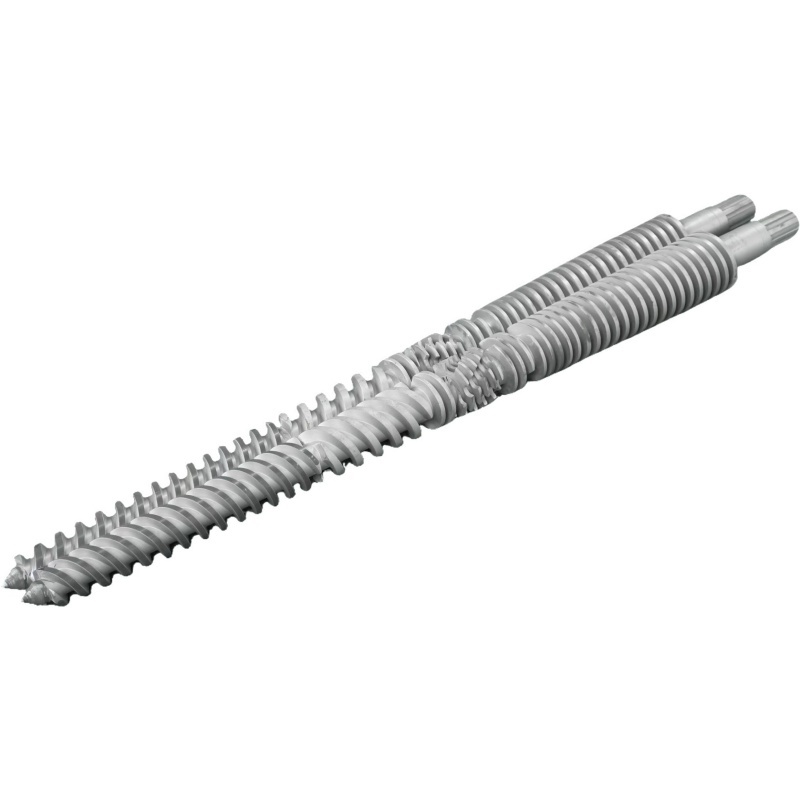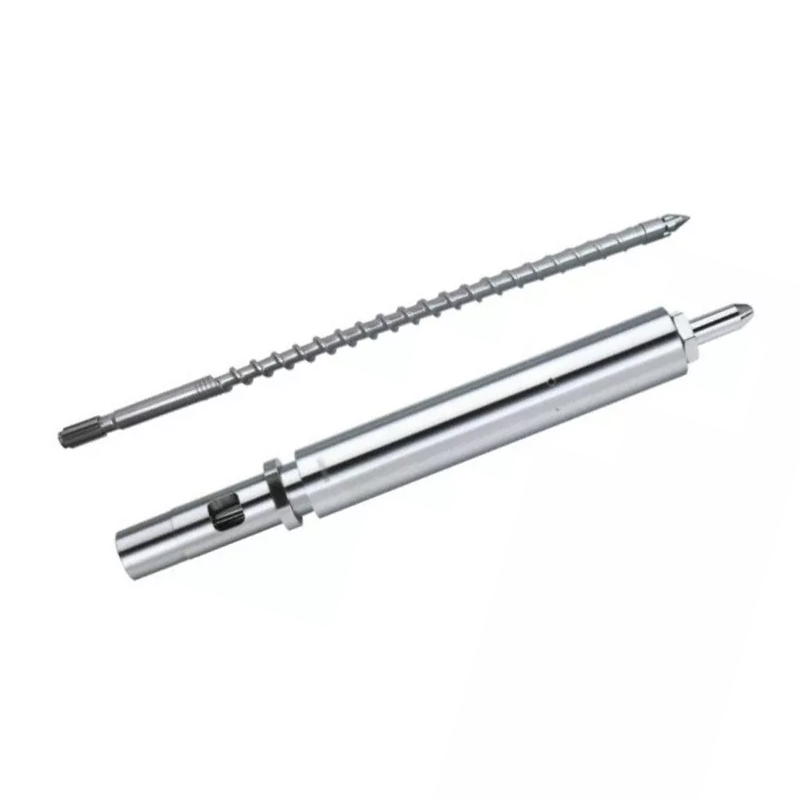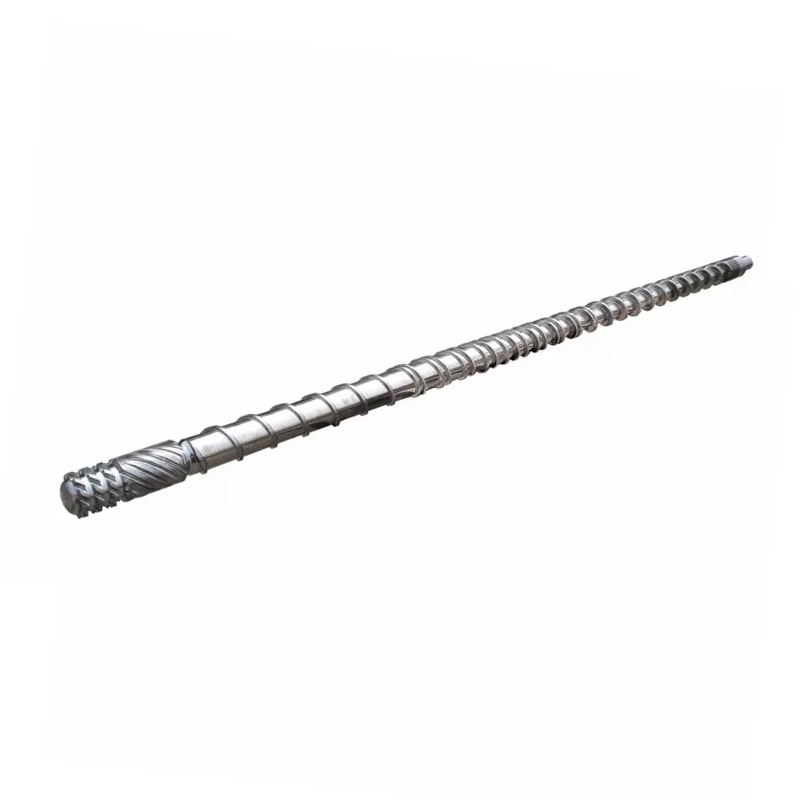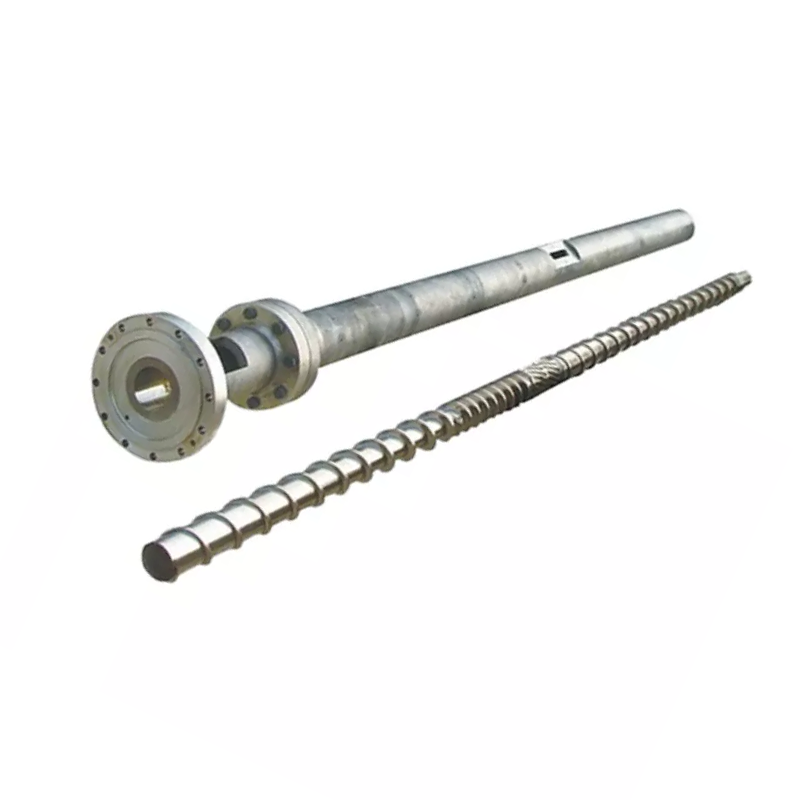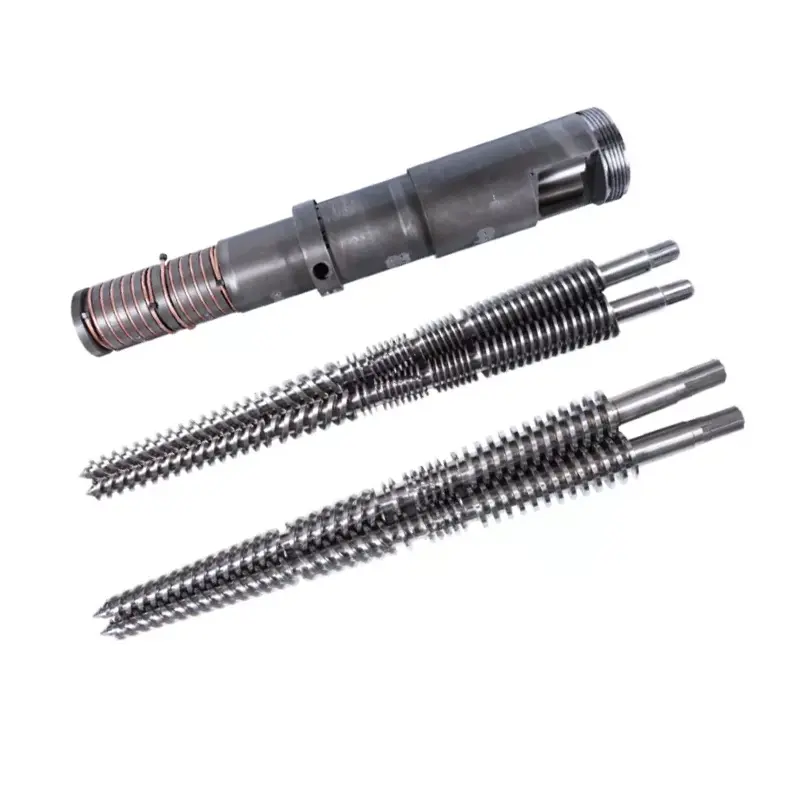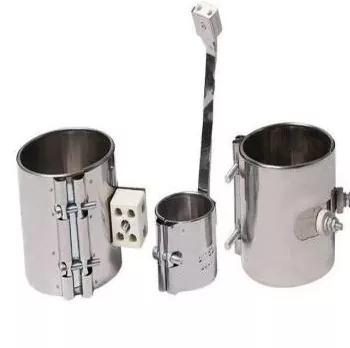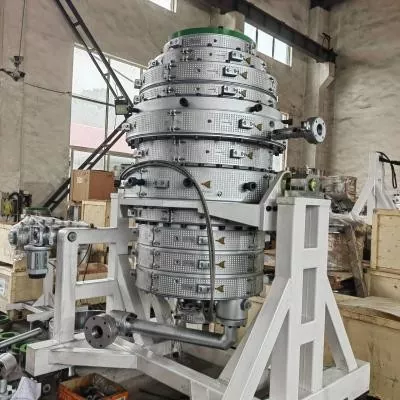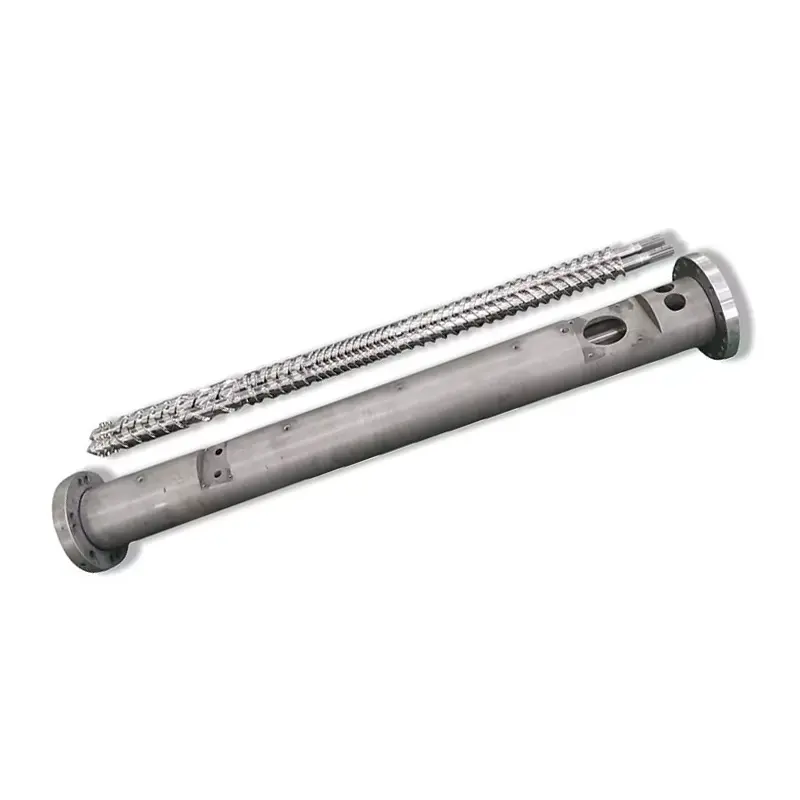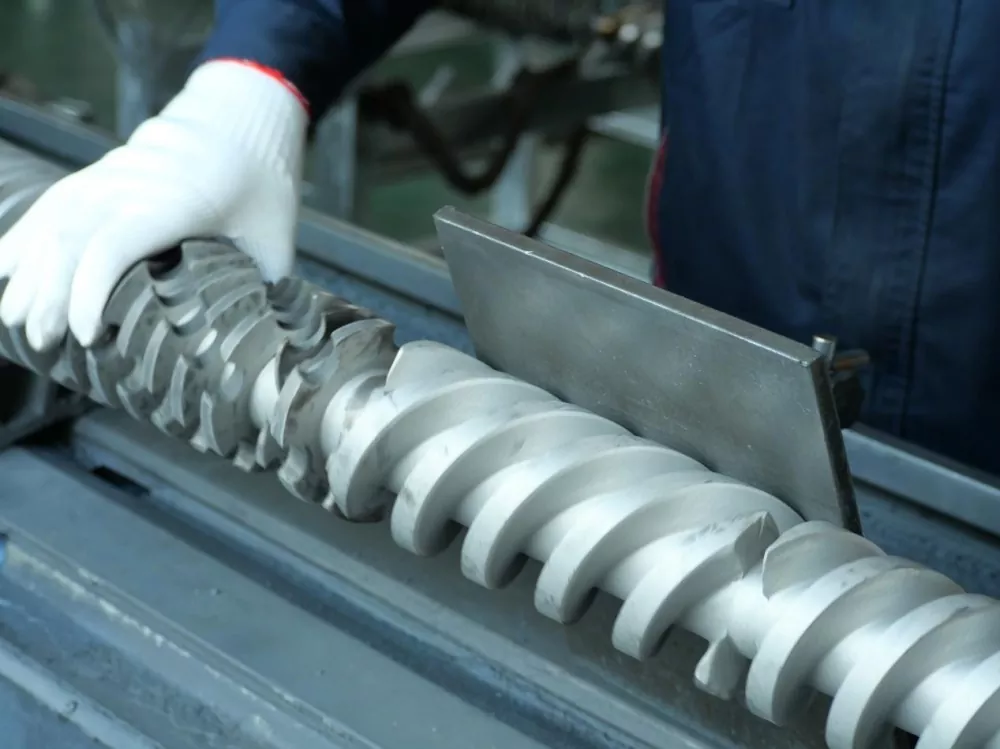

Choose a nitrided screw barrel for clean, non-abrasive resins like PP, PE, and ABS — it costs less and lasts for years in that duty. Choose a bimetallic screw barrel when you run PVC, glass-filled, flame-retardant, or recycled material, where its thicker, harder alloy layer lasts two to three times longer. Match the barrel to your material, not to the price tag.
Pick the wrong screw barrel and one of two things happens. Either you overpay for an alloy layer your process never stresses, or you save a few hundred dollars upfront and watch a cheaper barrel wear out in eighteen months — taking your output and your melt quality down with it. We have built both kinds for over twenty years, and the question we hear most from buyers is the one you are probably asking right now: bimetallic vs nitrided screw barrel, which way to go?
This guide walks through the real metallurgical difference between the two, the cost math that actually matters (hint: it is not the sticker price), and a simple way to decide which screw barrel fits your machine, your material, and your budget.
What Is a Nitrided Screw Barrel?
A nitrided screw barrel starts as a single piece of steel — almost always 38CrMoAlA in our shop — and gets surface-hardened in a nitriding furnace. The process diffuses nitrogen into the steel skin at a controlled temperature over many hours. No second material is added. The steel simply grows a hard outer shell.
What you end up with is a surface hardness around HV 950–1000 and a nitrided layer roughly 0.5 to 0.7mm deep. That thin, hard skin shrugs off abrasion from ordinary polymers and keeps the bore dimensionally stable, run after run. Nitrided barrels have been the industry default for decades, and for good reason: economical, predictable, and more than enough for non-abrasive, non-corrosive resins such as PP, PE, and ABS.
The catch is depth. Once that sub-millimeter layer wears through — and in an abrasive process it will — the softer base steel underneath is exposed, and wear starts running away from you.
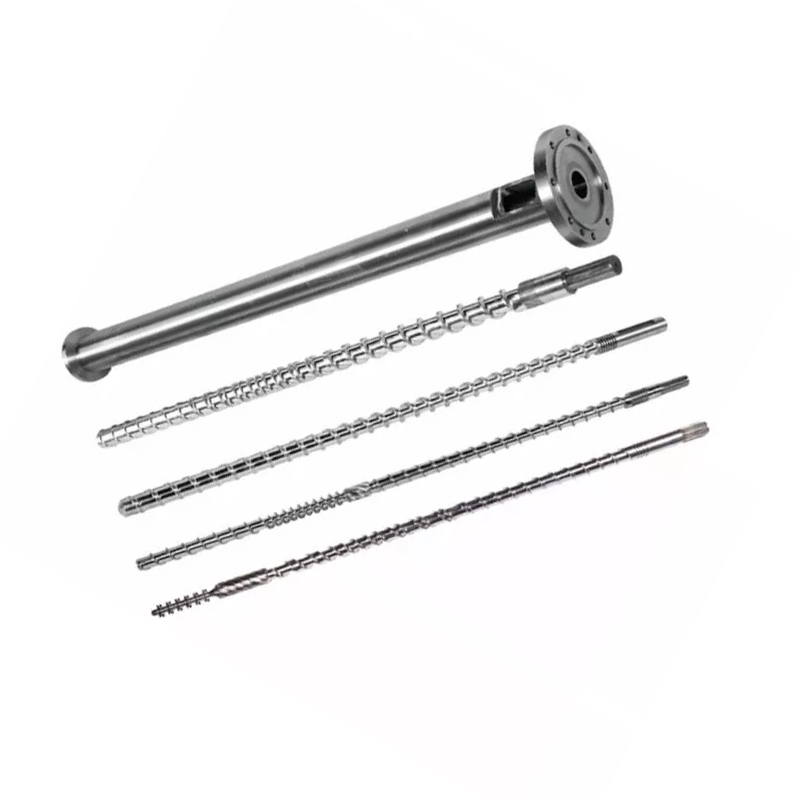
What Is a Bimetallic Screw Barrel?
A bimetallic screw barrel takes the opposite approach to the depth problem. Instead of hardening one steel, it fuses a high-performance alloy onto a tough base. The base metal — a structural steel — carries the load and keeps the barrel rigid. The inner working surface is a separate alloy layer, usually nickel-based or tungsten-carbide-based, bonded to the base through centrifugal casting. The two metals metallurgically lock into one piece.
Here is what makes the difference: that protective layer runs 2.0 to 3.0mm deep, at a hardness of HRC 60–65. Set that next to the half-millimeter skin on a nitrided barrel and the whole point comes into focus. Wear resistance is spread across a much thicker zone, so the barrel holds its geometry far longer when it is fighting abrasion or corrosion. Glass fiber, mineral fillers, halogen-bearing compounds — the things that chew through a nitrided surface — are exactly where a bimetallic layer earns its keep.
Not all bimetallic layers are the same, either. A nickel-based alloy leans toward corrosion resistance — the right pick for PVC and flame retardants. A tungsten-carbide-rich layer leans toward raw abrasion resistance, which is what glass-fiber and high-mineral compounds demand. Iron-based alloys sit in between as a cost-conscious middle ground. Matching the alloy to the specific enemy — corrosion or abrasion — matters nearly as much as choosing bimetallic in the first place.
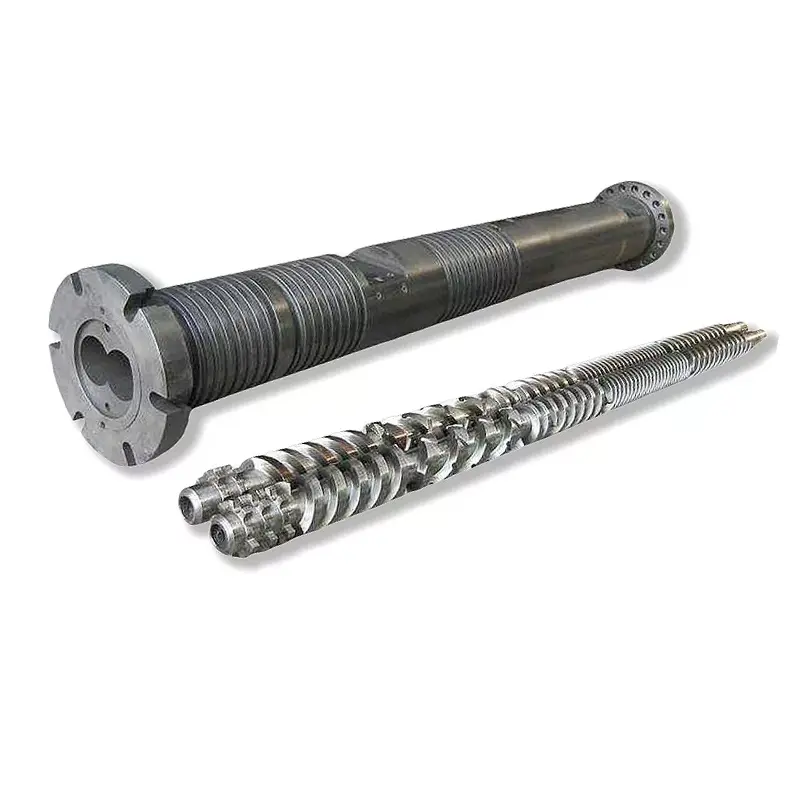
Bimetallic vs Nitrided Screw Barrel: Key Differences
Easiest way to see the gap is side by side. The table lines them up on the factors that actually drive a purchasing decision.
| Factor | Nitrided Screw Barrel | Bimetallic Screw Barrel |
|---|---|---|
| Construction | Single steel (38CrMoAlA), surface-nitrided | Base steel + fused alloy inner layer |
| Surface hardness | HV 950–1000 | HRC 60–65 |
| Hardened layer depth | 0.5–0.7mm | 2.0–3.0mm |
| Wear resistance | Good for non-abrasive resins | 2–5× longer in abrasive service |
| Corrosion resistance | Limited | Excellent (nickel-based alloys) |
| Best-fit materials | PP, PE, ABS, standard compounds | PVC, glass fiber, flame-retardant, recycled, high-filler |
| Initial cost | Lower | Higher |
| Total cost of ownership | Higher in demanding service | Lower in demanding service |
The number most processors fixate on is service life, and rightly so. Under the same conditions, a bimetallic screw barrel typically runs two to three times longer than a nitrided one. Push into the really punishing applications — high-filler PVC, glass-reinforced compounds — and the gap widens further still. There is a corrosion angle too: when you process PVC or flame-retardant resins, the material releases compounds that chemically attack a nitrided surface. The nickel-based bimetallic layer just does not care.
When to Choose a Nitrided Screw Barrel
A nitrided screw barrel is the right call more often than the equipment salesman will admit. Run clean, unfilled thermoplastics — virgin PP, PE, PS, ABS — with no glass fiber, no mineral filler, no corrosive additives, and that thin nitrided layer will give you years of stable service at a noticeably lower price.
It also makes sense when the budget is tight, when the machine runs in stops and starts rather than around the clock, or when you are setting up a line whose product mix might change before the barrel ever wears out. For a standard injection molding screw running commodity resin, paying extra for a bimetallic layer you will never stress is just over-engineering. Do not do it.
When to Choose a Bimetallic Screw Barrel
The moment abrasion or corrosion enters the picture, a bimetallic screw barrel earns its higher price. Reach for it if you process any of these: glass-fiber-reinforced compounds, calcium-carbonate or talc-filled formulations, rigid PVC, flame-retardant resins, or recycled plastics carrying grit and contaminants.
It is also the smarter buy for high-output lines that run continuously, where an unplanned stop to swap a worn barrel costs far more than the barrel itself. We have seen high-calcium PVC extrusion — about as hard on a barrel as it gets — where moving to a proper alloy layer extended service life by well over 30% against a nitrided setup, while steadying melt pressure and cutting scrap. When the application is genuinely demanding, the bimetallic layer stops being a luxury. It is what keeps the line in spec.
Cost Comparison: Initial Price vs Total Cost of Ownership
The instinct to compare sticker prices is exactly what leads to bad screw barrel decisions. A nitrided barrel wins on day one. A bimetallic screw barrel usually wins over the life of the machine — but only in the right application.
So run the other number: total cost of ownership. A nitrided barrel in an abrasive process might need replacing in 12 to 18 months, and every replacement drags along teardown labor, lost production, and startup scrap on top of the part cost. A bimetallic barrel in that same process can run several times longer, spreading its higher upfront cost across far more production hours. Higher initial price, lower lifetime cost.
Now flip it. Put a bimetallic barrel on a clean PE line and it never gets the chance to pay for itself — the nitrided barrel wins on both price and lifetime cost, because nothing in that process stresses the alloy. Same logic, opposite answer. The material decides.
How to Decide for Your Application
Strip it down to three questions.
First — is your material abrasive or corrosive? Glass fiber, mineral fillers, PVC, flame retardants, recycled feedstock: all of them point to bimetallic. Clean commodity resin points to nitrided.
Second — how hard does the line run? Continuous, high-output, around-the-clock production rewards the longer life of a bimetallic screw barrel. Intermittent or low-volume runs favor the lower cost of nitriding.
Third — what does downtime cost you? If an unplanned barrel change means a stalled schedule and missed deliveries, the durability premium is cheap insurance. If you can plan the swap, the math tilts back toward nitrided.
Answer those three honestly and the choice is usually obvious. If it is not, talk to a supplier who builds both and can model it against your exact compound — not one who defaults you to the pricier part because it carries a bigger margin.
Common Mistakes When Choosing a Screw Barrel
Four show up again and again in the inquiries that land on our desk.
Buying on sticker price alone. The cheapest barrel today is rarely the cheapest barrel over three years. Run the total cost of ownership, especially on abrasive lines — the part price is only the first number.
Over-speccing bimetallic for a clean line. A bimetallic barrel on virgin PP or PE is money spent on protection nothing in the process will ever test. Save it for the duty that needs it.
Replacing the barrel but reusing a worn screw. The screw and barrel work as a matched pair. Drop a new barrel around a tired screw and the clearance is wrong from day one — output suffers and the fresh barrel wears unevenly. Inspect both; replace both when the numbers say so.
Picking bimetallic without matching the alloy. A nickel-rich layer fights corrosion; a tungsten-carbide-rich layer fights abrasion. Specify for the enemy you actually have, not just “bimetallic” in the abstract.
Why Work With Nanhaiya
We have spent more than twenty years making screw barrels — and only screw barrels and the screws that run inside them. Single screw, parallel twin screw, conical twin screw. We cut both nitrided and bimetallic extruder screw barrel assemblies from premium 38CrMoAlA and tailored alloys, in-house, which is the reason our engineers can tell you the construction your process actually needs instead of the one that is easiest to sell.
Every barrel leaves the floor with tolerance-controlled geometry and dynamic balance testing. Geometry, hardness, surfacing — all of it can be tailored to your machine and your material.
Tell us your resin and machine specs — get a tailored screw barrel recommendation within 12 hours.
Send InquiryFrequently Asked Questions
Is a bimetallic screw barrel always better than a nitrided one?
No. A bimetallic screw barrel wins in abrasive and corrosive applications, but for clean, unfilled resins like PP or PE, a nitrided screw barrel gives you plenty of service life at a lower cost. “Better” depends entirely on what you are processing.
Can a bimetallic barrel replace my existing nitrided barrel?
In most cases, yes — as long as the dimensions match your extruder or injection molding machine, the screw design suits your material, and you adjust your processing parameters to suit. Send us the specs and we will confirm the fit.
How much longer does a bimetallic screw barrel last?
Under the same conditions, two to three times longer than a nitrided barrel — with an even bigger edge in highly abrasive duty like glass-filled or high-filler compounds.
Which is better for PVC extrusion?
Bimetallic. Rigid PVC and flame-retardant resins release corrosive compounds as they process, and the nickel-based alloy layer resists the chemical attack that degrades a nitrided surface.
What is the price difference between the two?
A nitrided barrel costs less upfront; a bimetallic barrel commands a premium for its thicker alloy layer. The comparison that matters is total cost of ownership — in demanding applications, the bimetallic barrel's longer life makes it the cheaper choice over the machine's lifetime.