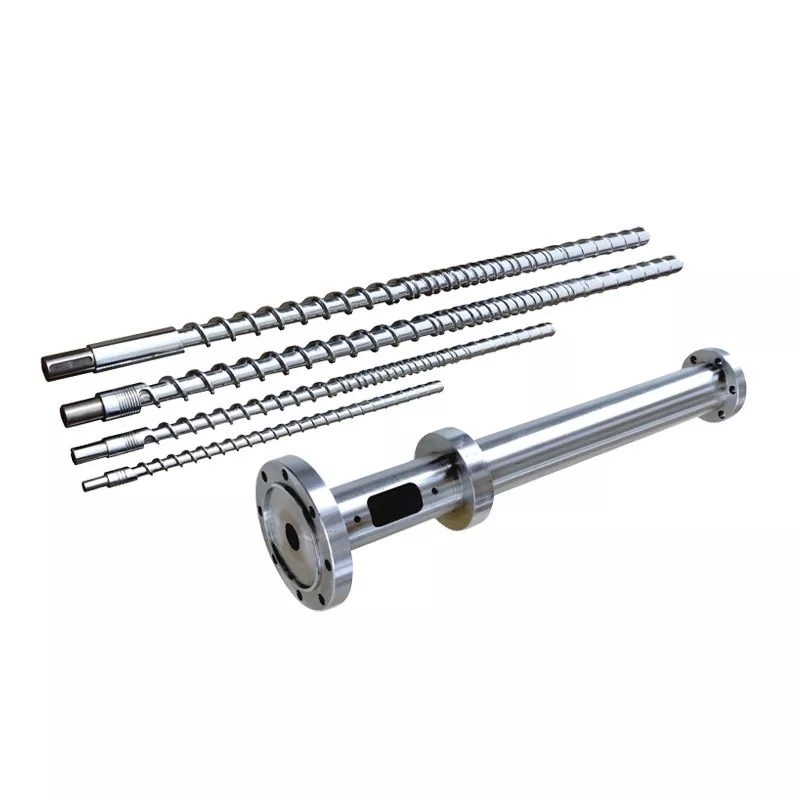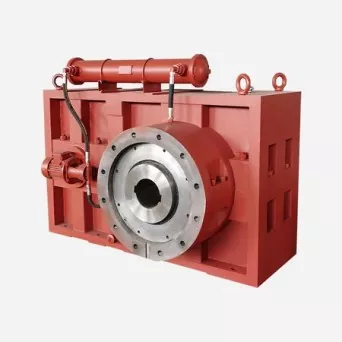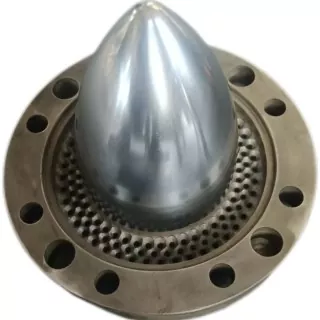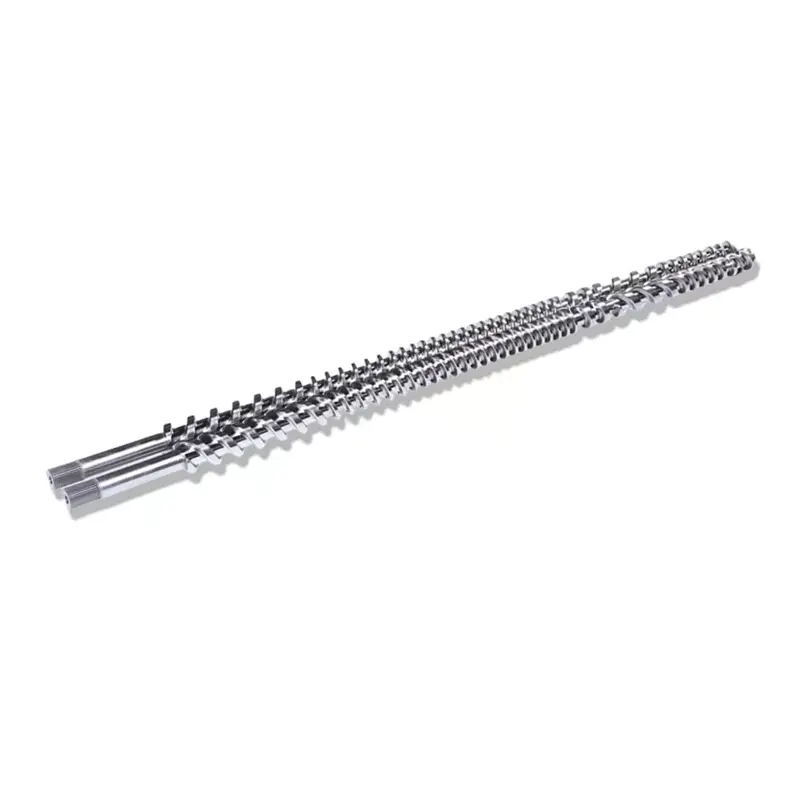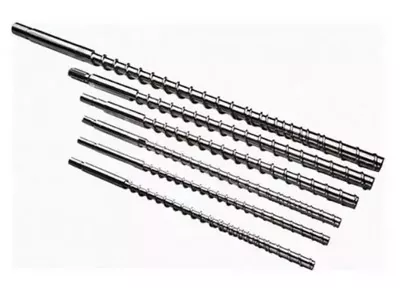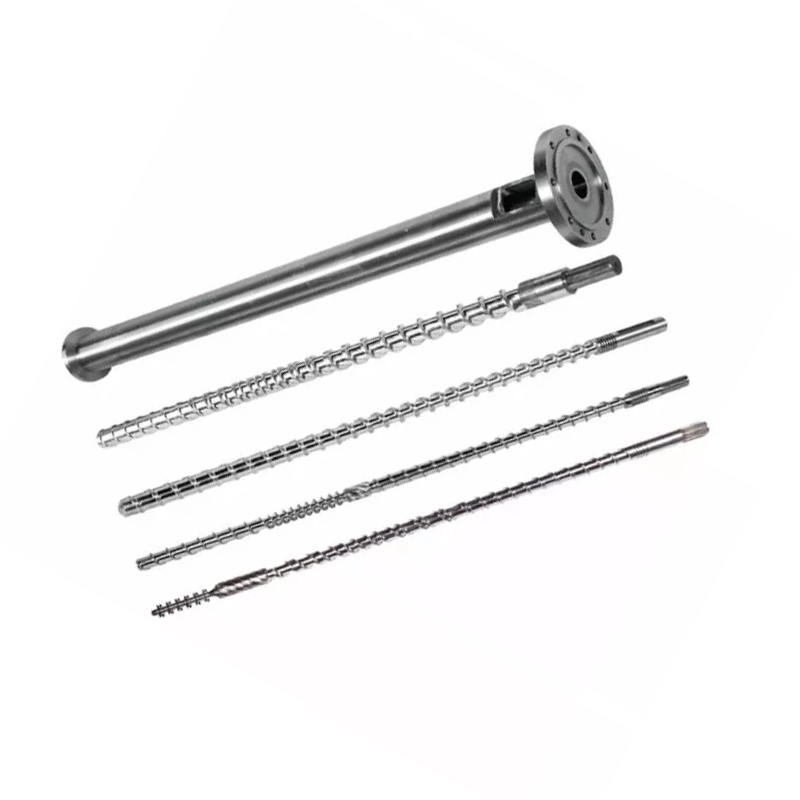

For PVC, the screw barrel has to survive corrosion as well as wear — PVC releases hydrochloric acid as it processes, and fillers like calcium carbonate add abrasion. That points to a bimetallic screw barrel with a corrosion-resistant alloy layer, not a plain nitrided one. Match it to the right machine — a conical twin screw for compact pipe and profile lines, parallel for higher output — and design the screw for low, even shear to protect this heat-sensitive material.
PVC is one of the most widely extruded plastics on earth. It is also one of the hardest on the equipment that processes it. Pick the wrong screw barrel for PVC and you do not just wear it out early — you get corrosion pitting, black specks, and a barrel that is scrap inside a couple of years.
So this guide is practical. What makes PVC tough on a barrel, the surface and machine choices that actually hold up, and how to specify one that lasts. We build screws and barrels for PVC pipe, profile, and board every week, so none of this is theory. And if you are sourcing a replacement because your current barrel is corroding or worn, the same logic tells you what to fix and how to spec the next one so it does not happen again. For the wider context on types, materials, and selection, see our extruder screw barrel guide.
Why PVC Is Hard on a Screw Barrel
Two things gang up on the steel. First, corrosion. As PVC heats and processes, it gives off hydrogen chloride — and with any moisture present, that is hydrochloric acid, which attacks ordinary steel and eats straight through a thin nitrided skin. Throw in flame retardants or an aggressive stabilizer package and the chemistry gets nastier still.
Second, abrasion. Most rigid PVC compounds carry fillers — calcium carbonate above all — plus pigments and modifiers that scour the flight lands and the bore like fine sandpaper. So a PVC screw barrel takes a double hit: chemical corrosion and mechanical wear, at the same time. A surface that handles one but not the other simply will not last.
On top of both, PVC works in a narrow temperature window. It needs enough heat to plasticize but degrades just above that — and degradation releases more hydrogen chloride, which feeds the corrosion. A vicious circle. So the barrel is not only fighting acid and filler; it is doing it while the process runs close to the edge of what the polymer will tolerate.
The Right Surface: Why Bimetallic Wins for PVC
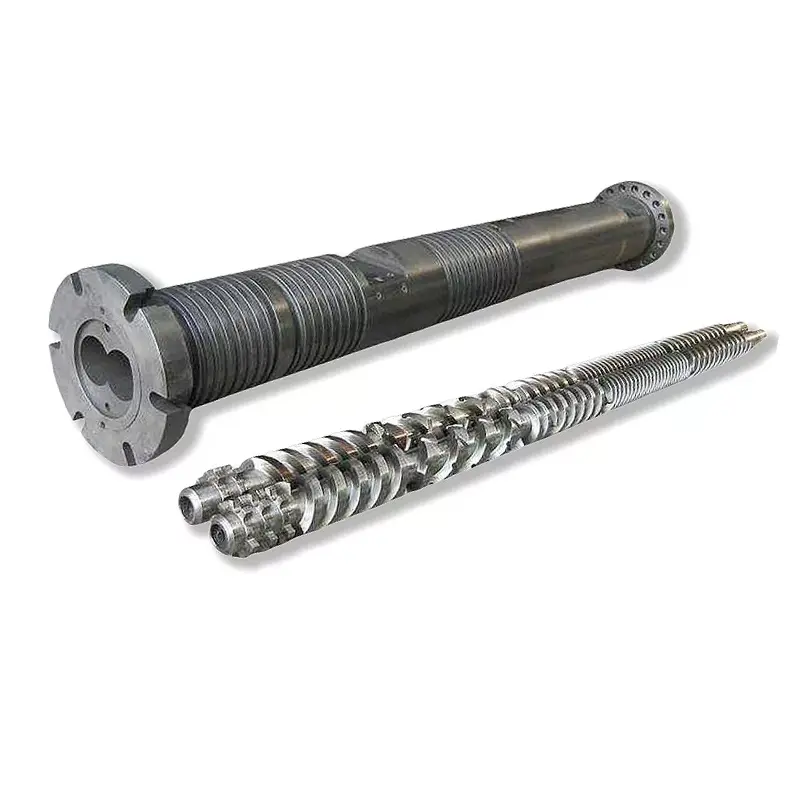
This is why bimetallic is the standard call for PVC. A bimetallic screw barrel fuses a corrosion- and wear-resistant alloy layer — nickel-based, to fight PVC’s corrosion — onto a tough base steel. That layer is several millimeters thick and far harder than a nitrided skin, so where a plain nitrided barrel pits and wears through, the bimetallic layer shrugs off both the acid and the filler.
On our own bimetallic barrels we take the bore to around 62 HRC, where many shops stop at 58. The full trade-off is in our guide to bimetallic vs nitrided screw barrels. For PVC, the short version is this: go bimetallic, and make sure the alloy is chosen for corrosion resistance, not just hardness. A hard layer that still corrodes is the wrong layer.
Single, Twin, or Conical for PVC?
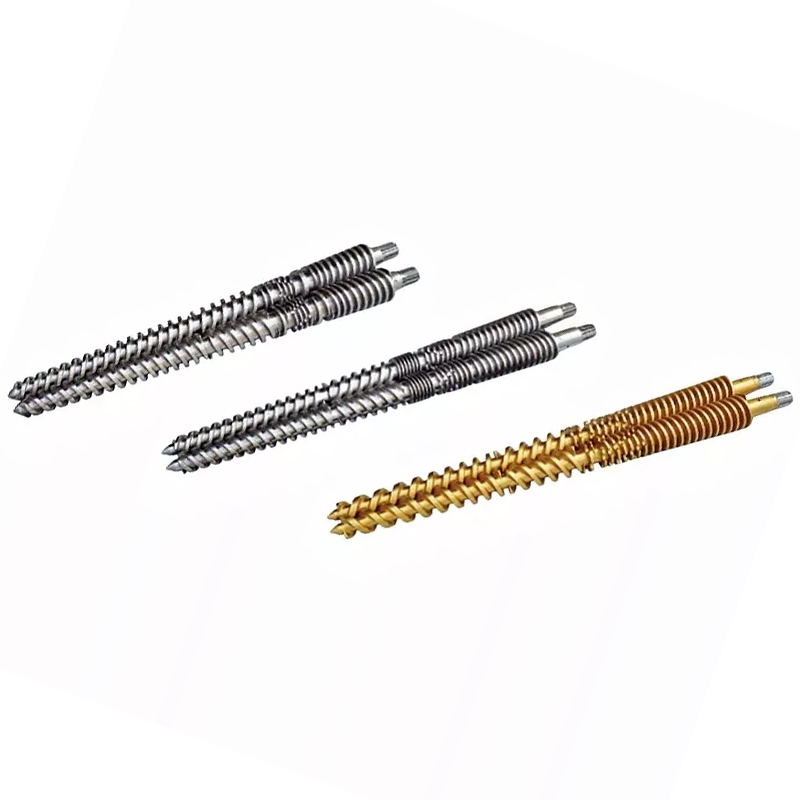
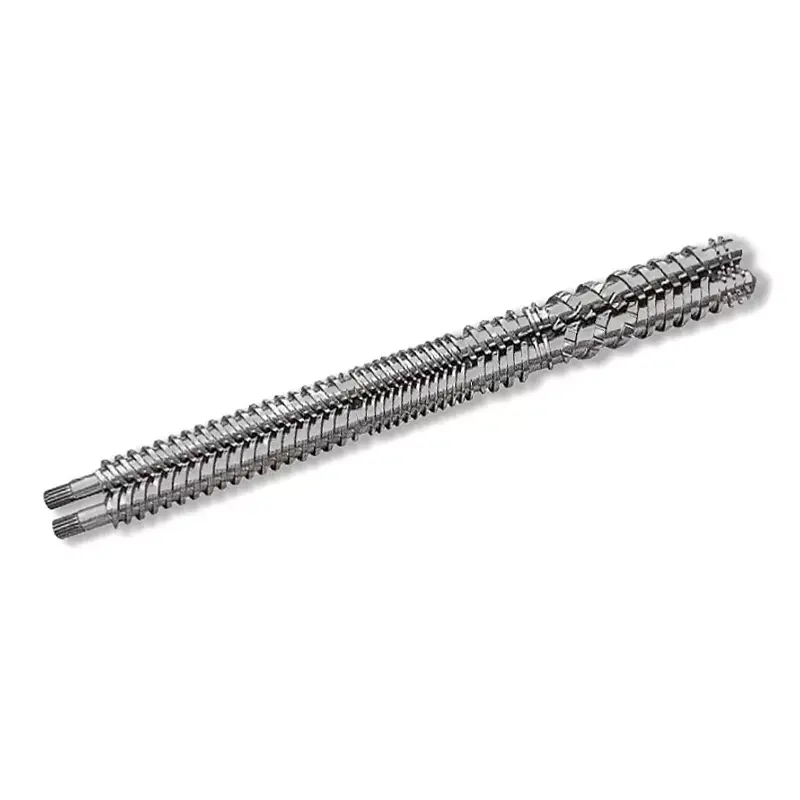
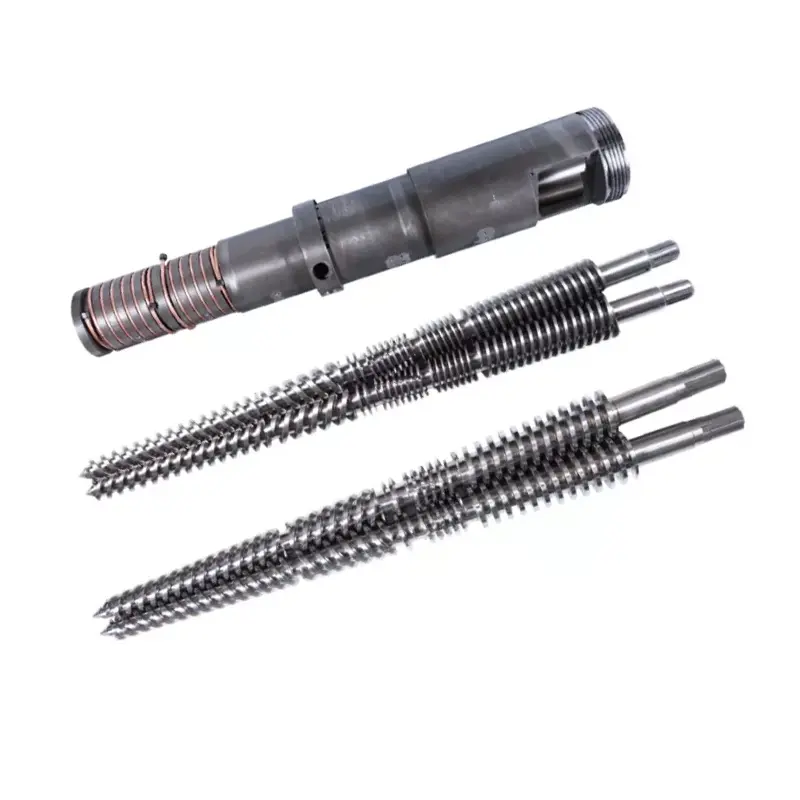
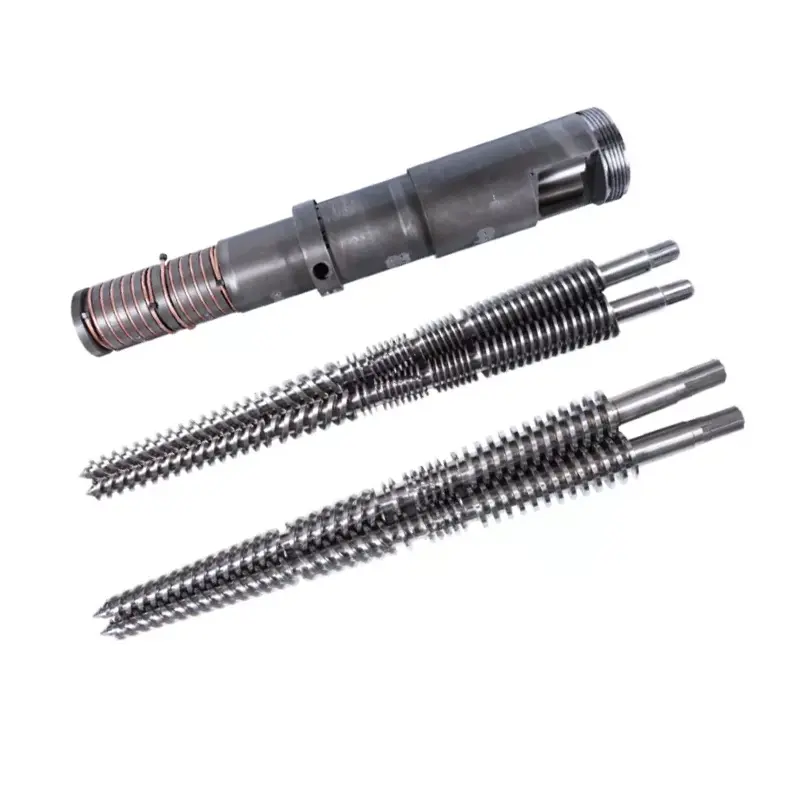
PVC runs on twin screws far more than single, because the positive conveying gives the precise, gentle heat control this heat-sensitive material needs. For compact pipe and profile lines, the conical twin screw is the traditional choice — the wide feed throat takes dry-blend powder and the machine makes high torque at low speed. For higher output, parallel counter-rotating machines take over.
We unpack that decision in conical vs parallel twin screw and single screw vs twin screw extruders. But whichever configuration you land on, the surface logic above does not change. For PVC, the answer is bimetallic.
Screw and Barrel Design for PVC
Surface is half the story; geometry is the other half. Because PVC degrades with heat and time, the screw is designed for low, even shear and a short, controlled residence — just enough to plasticize the material without scorching it. Temperature is held tight along the barrel. Get the compression profile or the heat zones wrong and PVC tells you at once, with discoloration and degradation streaking through the product.
This is engineered-to-the-material work, which is why a drawing-based, made-to-spec barrel beats a generic one for PVC. A barrel cut for a clean polyolefin and pressed into PVC service will fight you on quality long before it wears out.
L/D ratio and compression are set for that same gentle treatment. PVC generally favors a moderate L/D and a lower compression ratio than a polyolefin, so the material is worked and heated progressively rather than slammed. Push the compression too hard and you generate shear heat the polymer cannot take. It is a narrow window, and hitting it reliably is why PVC screws are designed around the specific compound, not pulled off a shelf.
Dry Blend or Pellets? It Changes the Feed
How you feed the PVC shapes the screw and barrel as much as the polymer does. Most rigid PVC runs as a dry blend — a low-density powder of resin, stabilizer, filler, and modifiers mixed in a high-speed blender. That powder is bulky and awkward to convey, which is exactly why the conical twin screw, with its wide feed throat, became the standard: it grabs the blend and compacts it efficiently. Pelletized PVC compound, by contrast, feeds more like a conventional resin and suits a parallel machine. So when you source a barrel, say which form you feed — it points straight to the feed-zone design, and often to the machine type itself.
PVC Pipe, Profile, UPVC and CPVC: Not All the Same
“PVC” covers a range of jobs, and the differences change the spec:
- Rigid UPVC pipe — the classic conical twin screw application; dry-blend powder feed, bimetallic barrel.
- Profile and window systems — similar setups, often with higher filler loads that raise the abrasion demand.
- CPVC (chlorinated PVC) — even more corrosive and heat-sensitive, so corrosion-resistant alloy and tight temperature control matter even more.
- Flexible PVC — plasticized and lower-temperature, a different screw design again.
Tell your barrel maker exactly which PVC and which product you run, because it drives the screw geometry and sometimes the alloy choice. “A PVC barrel” is not a complete spec on its own.
Common PVC Problems and What They Tell You
If your PVC line is already misbehaving, the symptoms point somewhere:
- Black specks and burning — material degrading in worn gaps or sitting on a corroded surface.
- Pitting on the screw or bore — corrosion, usually a sign the surface was the wrong spec for PVC.
- Output dropping at the same speed — wear opening up the clearance.
- Discoloration through the product — heat or residence time out of range.
The first three often mean the barrel was under-specified for PVC, or it is simply worn out. Our guide to when to replace a worn screw barrel walks through measuring it before you decide.
Keeping a PVC Barrel Alive
PVC punishes neglect harder than most plastics, and the single most important habit is this: never leave PVC sitting in a hot barrel. Held at temperature with no flow, it degrades, releases more hydrogen chloride, and corrodes the bore from the inside — a stopped line with a full barrel can do real damage in minutes. Purge with a stable, compatible material before any pause or shutdown, and bring the temperatures down promptly.
A few more habits stretch the life of a PVC screw barrel: keep the feed clean of metal and grit, hold the temperature profile tight so the polymer never overheats, and log clearance readings at each service so wear never surprises you. None of it is complicated. But on PVC, skipping it is how a good barrel turns into scrap years early.
How to Specify and Order a PVC Screw Barrel
A clean spec gets you an accurate quote and a barrel that drops in and runs. Send your maker:
- Machine make and model — to match fit, length, and mounting.
- Screw diameter and L/D, or the original drawing.
- Which PVC — UPVC, CPVC, flexible — and the filler load.
- Product and output — pipe size, profile, target kg/h.
- A sample or photos of the worn part, if it is a replacement.
From there a good maker specifies the surface (bimetallic for PVC), the screw geometry, and the alloy, then quotes against your real numbers rather than a generic catalogue.
No drawing? That is fine — a worn sample is enough to reverse-engineer an exact replacement, or an upgraded one with a tougher bimetallic surface than the part you are retiring. Either way you get a barrel matched to your PVC and your machine, not a near-enough catalogue part that fights you from day one.
Why Work With Nanhaiya
PVC is core to what we do. For more than twenty years we have built PVC pipe screw barrels, conical twin screw sets, and parallel barrels in 38CrMoAlA and bimetallic alloys, taking the bimetallic bore to around 62 HRC for the corrosion and wear PVC throws at it. We build replacements compatible with major brands such as KraussMaffei, Cincinnati, and Jwell, working from your model, a drawing, or a sample. Running into PVC corrosion or wear on a worn barrel? Browse our replacement range or send a drawing, and you will have a tailored quote within twelve hours.
Specifying or replacing a PVC screw barrel? Send your machine and PVC type — get a bimetallic recommendation and quote within 12 hours.
Get a PVC Barrel QuoteFrequently Asked Questions
Why does PVC corrode a screw barrel?
As PVC heats and processes, it gives off hydrogen chloride — and with any moisture around, that becomes hydrochloric acid, which attacks ordinary steel. It eats through a thin nitrided surface fast, which is why PVC lines need a corrosion-resistant bimetallic screw barrel.
What’s the best screw barrel material for PVC?
A bimetallic barrel with a nickel-based, corrosion-resistant alloy layer over a tough base steel. It takes on both the corrosion from PVC and the abrasion from fillers like calcium carbonate — the exact combination that pits and wears through a plain nitrided barrel.
Do I really need bimetallic for PVC, or is nitrided enough?
For rigid PVC, bimetallic is the standard call. PVC is corrosive and, with fillers, abrasive too, and a nitrided skin is just too thin to take that for long. Nitrided can get by on very mild, unfilled, low-volume work — but for production PVC, bimetallic is the safe choice.
Which extruder type is best for PVC pipe?
Usually a twin screw, for its precise, gentle heat control. Compact small and mid-size lines lean on a conical twin screw and its wide feed throat for dry-blend powder; higher-output lines move to parallel counter-rotating machines.
Can you make a replacement PVC screw barrel for my machine?
Yes. We build bimetallic PVC screw and barrel sets that fit major extruder brands — KraussMaffei, Cincinnati, Jwell — working from your machine model, a drawing, or a sample. Send the details for a quote within 12 hours.