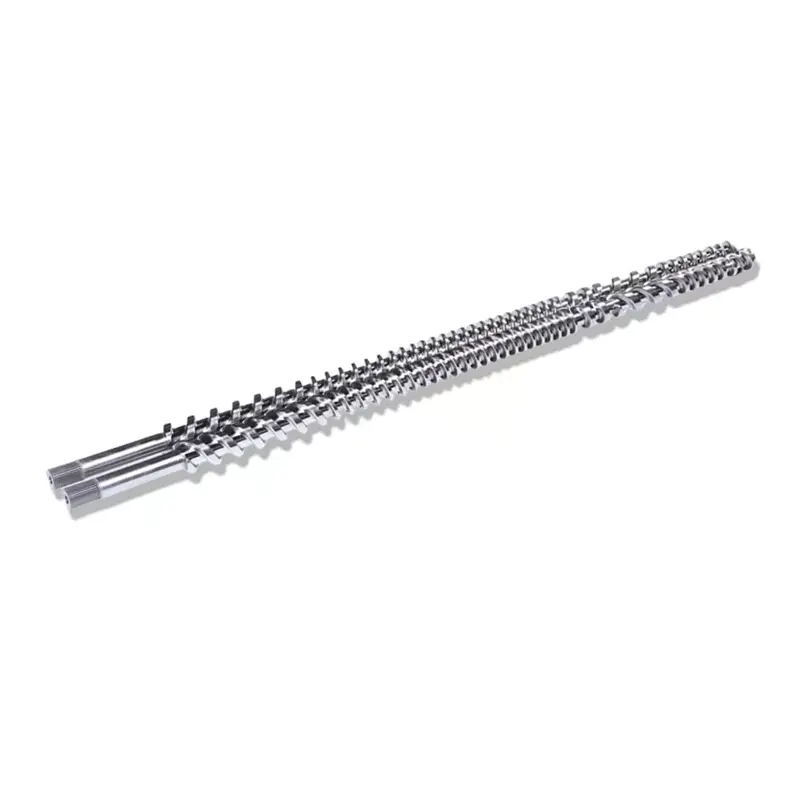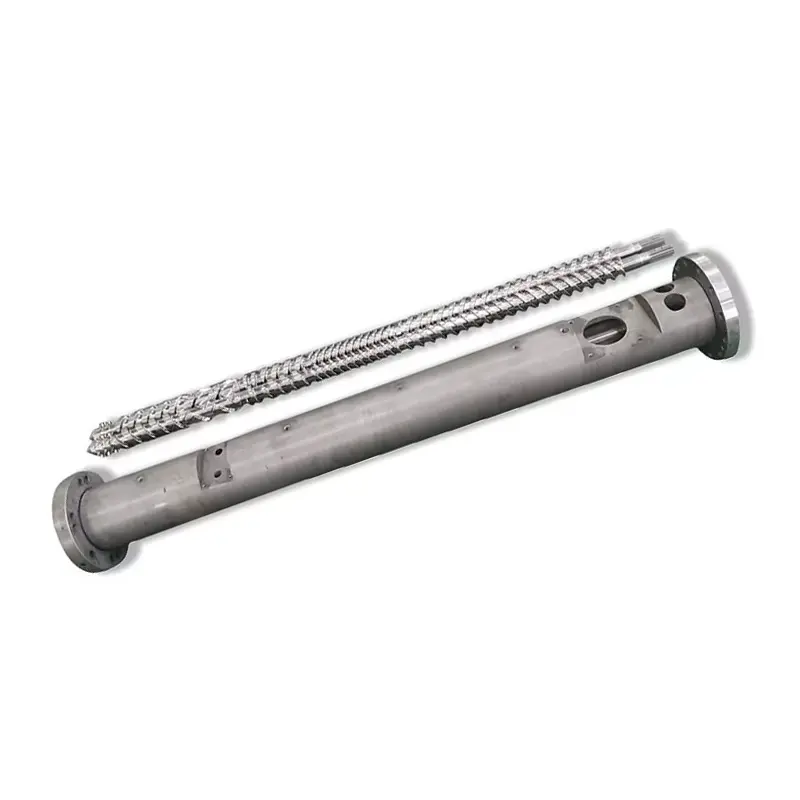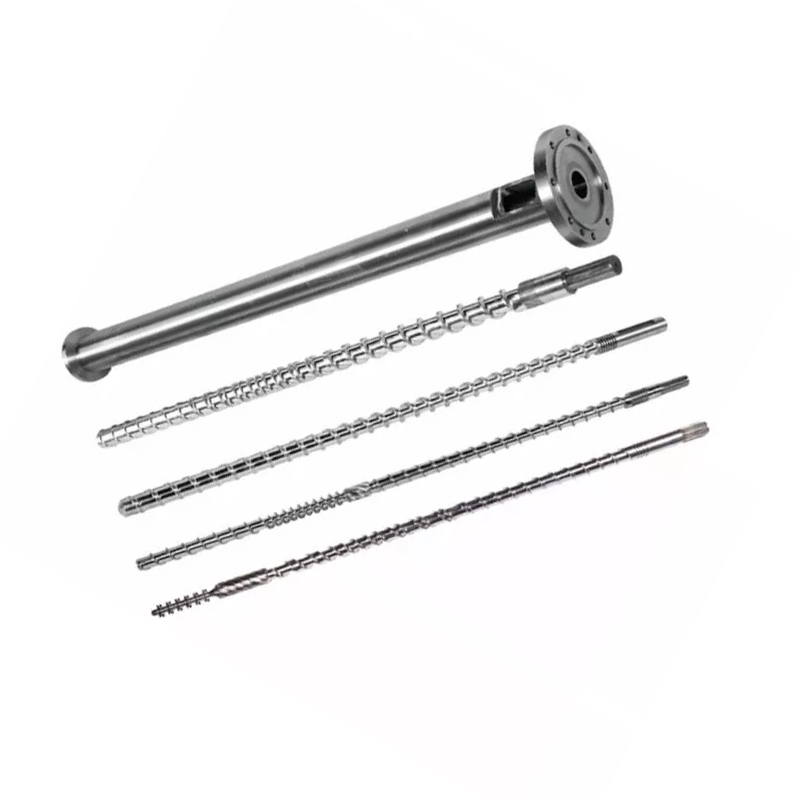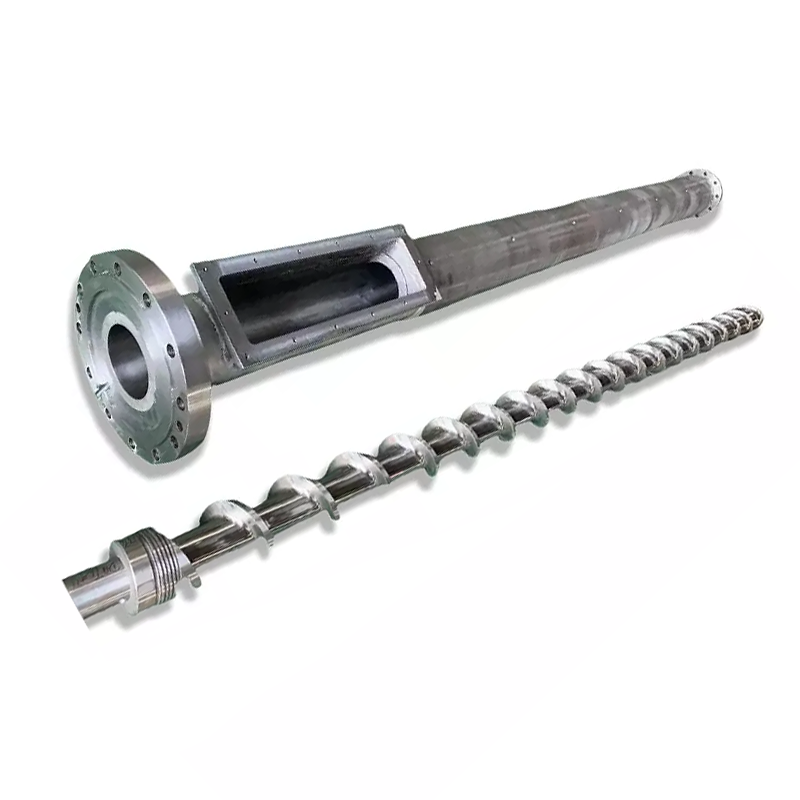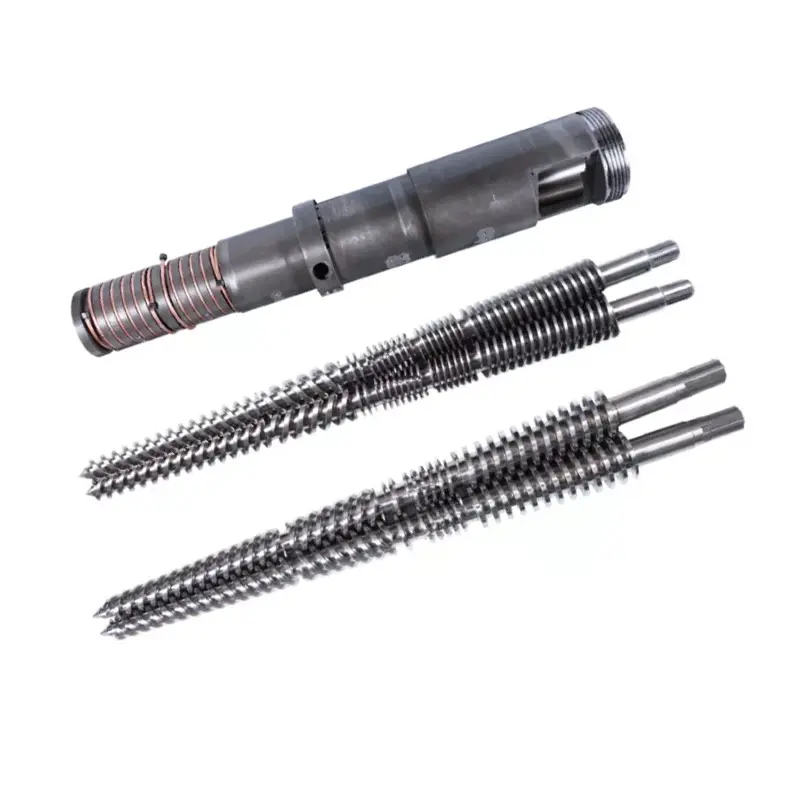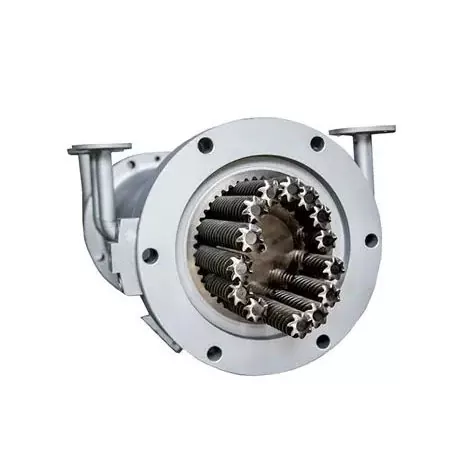

WPC grinds standard screw barrels down fast. Wood flour cuts like sandpaper, and mineral fillers make it worse. A screw barrel for WPC extrusion needs three things: a bimetallic wear surface, gentle compression that melts the plastic without burning the wood, and venting that pulls moisture out of the melt. Spec those three, and the set lasts. Skip them, and you buy screws every year.
WPC decking sells because it looks like wood and lasts like plastic. The screw and barrel that make it are not so lucky. They fight sandpaper all shift, every shift.
We build WPC screws and barrels every week, so we know where they die first. This guide shows you why WPC wears sets out, what design choices fight back, and how to order a WPC screw barrel that survives. For the full selection picture, read our extruder screw barrel guide.
Why WPC Destroys Standard Screw Barrels
Picture what happens inside the barrel. The screw squeezes a mix of plastic and wood dust against the barrel wall. Pressure rises, and the hard particles scrape the steel with every turn.
Clean PE or PP slides through and barely marks the surface. WPC scrubs it. That is the whole problem in one sentence — and every design choice below exists to fight it.
The wear concentrates where pressure peaks: the transition zone and the flight lands. A worn set leaks melt backward over the flights. Output drops, quality drifts, and the line loses money long before the screw looks bad.
What Is in WPC, and Why It Grinds Steel
WPC blends a plastic — usually PE, PP, or PVC — with wood flour or wood fiber. Wood often makes up half the mix or more. Most formulas also add mineral fillers such as talc or calcium carbonate, plus pigments and coupling agents.
Each ingredient adds its own attack:
- Wood flour scours the surface like fine sandpaper under pressure.
- Mineral fillers are harder than wood and grind deeper.
- Pigments such as titanium dioxide add still more abrasion.
- Moisture in the wood flashes to steam and attacks quality (next section).
Add it up, and WPC ranks among the most abrasive materials in extrusion. Spec the barrel for that reality, not for the clean resin the machine ran last year.
Moisture: The Second Battle
Wood soaks up water from the air. Plastic does not care; the melt does. Trapped moisture turns to steam inside the barrel and stays in the product.
The result shows up right away: foamed cores, voids, rough surfaces, and weak profiles. Customers reject boards that look like that. No screw geometry fixes a steam problem.
You have two weapons, and many lines use both. Dry the wood flour before it enters the hopper. Then vent the barrel — a vacuum vent zone pulls remaining moisture out of the melt during extrusion. Vented barrels are standard on serious WPC lines for this reason.
Heat: Melt the Plastic, Don’t Burn the Wood
Here is WPC’s trap: the plastic needs heat to melt, but wood chars at temperatures many plastics shrug off. The screw must melt one ingredient without cooking the other.
Push the shear too hard and the wood scorches. Scorched wood shows as brown streaks and dark specks in the profile. It also weakens the board, because burned fiber bonds poorly with the plastic.
The fix lives in the screw design: gentle compression, moderate speed, and tight temperature control. Our compression ratio guide explains the trade-off in depth.
What Screw Design Does WPC Need?
Put the three battles together — abrasion, moisture, heat — and the WPC screw design writes itself:
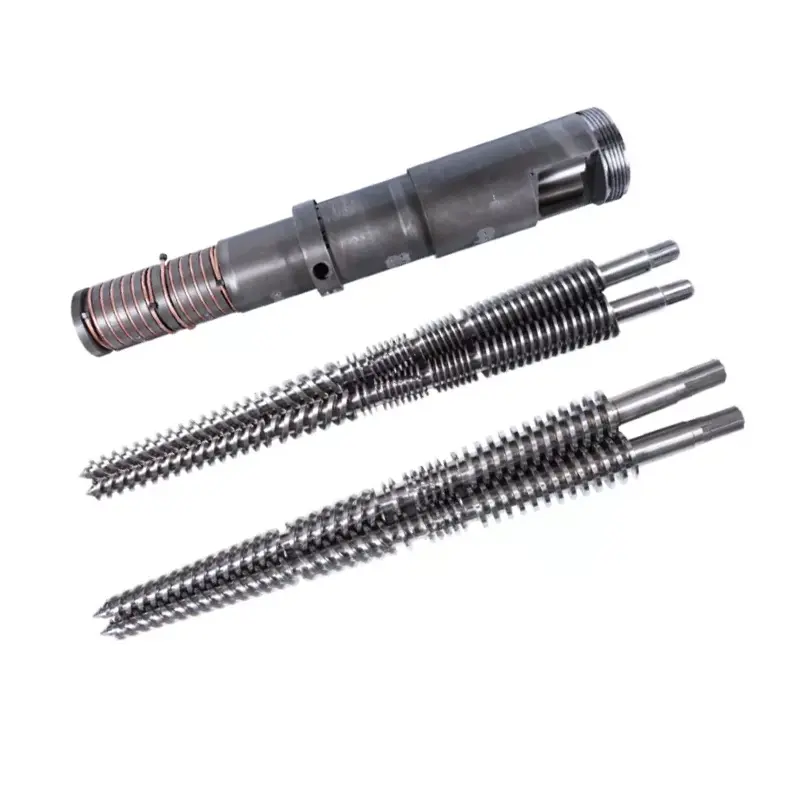
- Deep channels. They move the bulky, fluffy wood mix forward without packing it too hard too early.
- Gentle compression. Enough to melt the plastic, never enough to scorch the wood.
- A vent zone. Vacuum venting pulls out steam and volatiles mid-barrel.
- Good mixing, low shear. The wood must spread evenly through the melt without being beaten.
- A hard surface. Covered next — this choice decides how long the set lives.
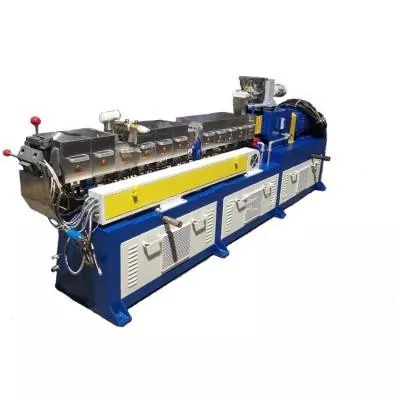
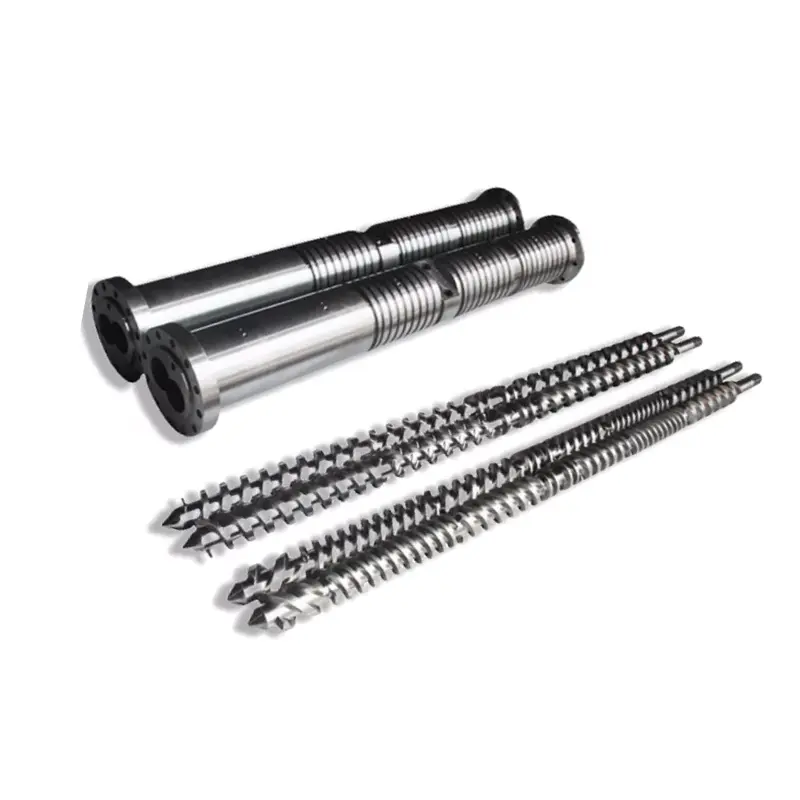
Machine type matters too. Conical and parallel twin screws both run WPC profile well; the choice depends on output and formula. Our conical vs parallel guide walks through it.
Nitrided or Bimetallic? Pick a Surface That Survives
The surface question decides the set’s lifespan, so treat it as the main event. Here is the honest comparison for WPC duty:
| Surface | How it works | On WPC duty |
|---|---|---|
| Nitrided (38CrMoAlA) | Nitrogen hardens a thin case on the steel surface | The wood and fillers grind through the thin case early. Fine for clean resin; outmatched here |
| Bimetallic | A separate wear alloy fuses into the bore — millimeters thick, not a thin case | The right answer for WPC. Carbide-rich alloys resist the grinding; the layer lasts years, not months |
On our bimetallic barrels, the alloy layer runs 2.5–3 mm deep with tungsten added. We harden the bore to 62 HRC, where many suppliers stop at 58. On a material this abrasive, those extra points matter.
The quick decision, as a flow:
Does your formula contain wood flour or mineral filler? WPC always does. → You need a hard surface.
Is wood half the mix or more, or do you run high output? → Bimetallic barrel, carbide-rich alloy.
Does your formula use PVC as the base? → Add corrosion resistance too — a nickel-bearing alloy option.
The full comparison, including cost logic, lives in our bimetallic vs nitrided guide. The base steel choices sit in the materials guide.
Wear Signs on a WPC Line
WPC wears sets faster than clean resin, so watch for the signals. Catch them early, and you replace on your schedule instead of during a breakdown.
- Output drops at the same screw speed. Melt leaks backward over worn flights.
- Scorch marks return even after cleaning. Worn clearance shears the melt harder and traps material in dead spots.
- Surface quality drifts. Rough boards and streaks point at moisture or wear — often both.
- The screw eats amps. Rising motor load at constant output signals growing resistance.
Confirm with a micrometer, not a hunch. Measure flight OD and bore ID against your build drawing at least once a year on WPC duty. Our measurement guide shows every step, and the maintenance guide covers the habits that slow the wear down.
How to Order a WPC Screw Barrel
A good quote starts with good inputs. Send your maker these seven items:
- Machine make and model — conical twin, parallel twin, or single screw.
- Screw diameter and L/D, or the original drawing.
- Your WPC formula — base plastic, wood content, fillers, pigments. This drives the surface choice.
- Wood moisture handling — pre-dried, vented, or both.
- The product — decking, fencing, board, profile.
- Target output and current pain points.
- A worn sample or measurements, if you are replacing a set.
With those in hand, the maker sets the geometry, designs the vent, and picks the alloy for your real formula. Guesswork leaves the quote — and the early failures leave with it.
Why Work With Nanhaiya
We build screws and barrels for WPC decking and profile lines every week. That work taught us where WPC kills sets, and how to build ones that last.
Every set is machined in 38CrMoAlA, 42CrMo, SKD-61, or stainless steel. For WPC we fit bimetallic bores with a 2.5–3 mm tungsten-bearing alloy layer, hardened to 62 HRC. We build parallel twin, conical twin, and single screw sets, plus replacements compatible with major machine brands.
Send your machine model and WPC formula. You get a tailored recommendation and quote within 12 hours.
Running WPC and tired of replacing worn sets? Send your machine model and formula — get a screw barrel built for wood-plastic, quoted within 12 hours.
Get a WPC Barrel QuoteFrequently Asked Questions
What screw barrel do I need for WPC extrusion?
One built for abrasion and moisture. That means a bimetallic wear surface, deep channels with gentle compression, and venting to pull moisture out. Match the geometry to your machine, and spec the surface for your real formula.
Why does WPC wear out a screw barrel so fast?
Wood flour acts like fine sandpaper inside the barrel. Many formulas run half wood or more, plus mineral fillers on top. The screw presses that grinding mix against the wall all shift long. Thin nitrided surfaces lose the fight early.
Do I need a vented barrel for WPC?
In most cases, yes — or serious pre-drying, and many lines use both. Wood holds moisture, and moisture turns to steam in the melt. Steam causes foaming, voids, and rough boards. A vacuum vent pulls it out during extrusion.
Should I choose nitrided or bimetallic for WPC?
Bimetallic, in almost every case. A nitrided case is thin, and WPC grinds through it early. Our bimetallic barrels carry a 2.5–3 mm tungsten-bearing alloy layer at up to 62 HRC. On WPC duty, that layer pays for itself.
Can I run WPC on my existing PE screw?
You can, but the screw pays for it. Wrong compression, no venting, and a soft surface add up to scorched product and a short life. WPC needs a screw designed for WPC.
How long does a screw barrel last on WPC?
Shorter than on clean resin — the fillers see to that. The real answer depends on your formula, output, and surface choice. So measure: check flight OD and bore ID against the build drawing yearly, and log the trend.
Can you make a replacement WPC screw barrel for my machine?
Yes. We build WPC sets for conical twin, parallel twin, and single screw machines, compatible with major brands. Send your machine model, drawing or worn sample, and formula — you get a quote within 12 hours.