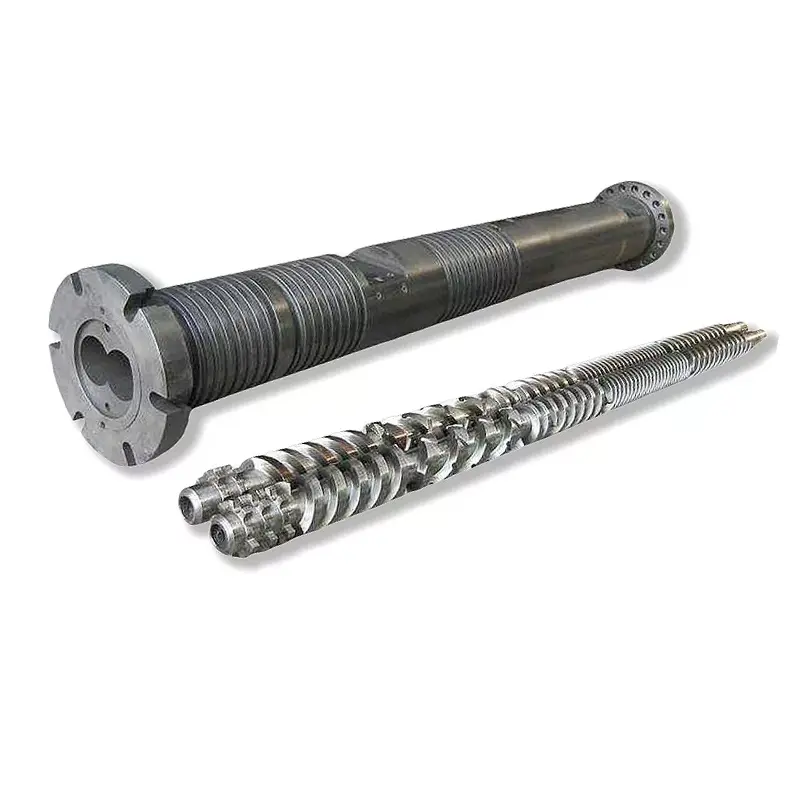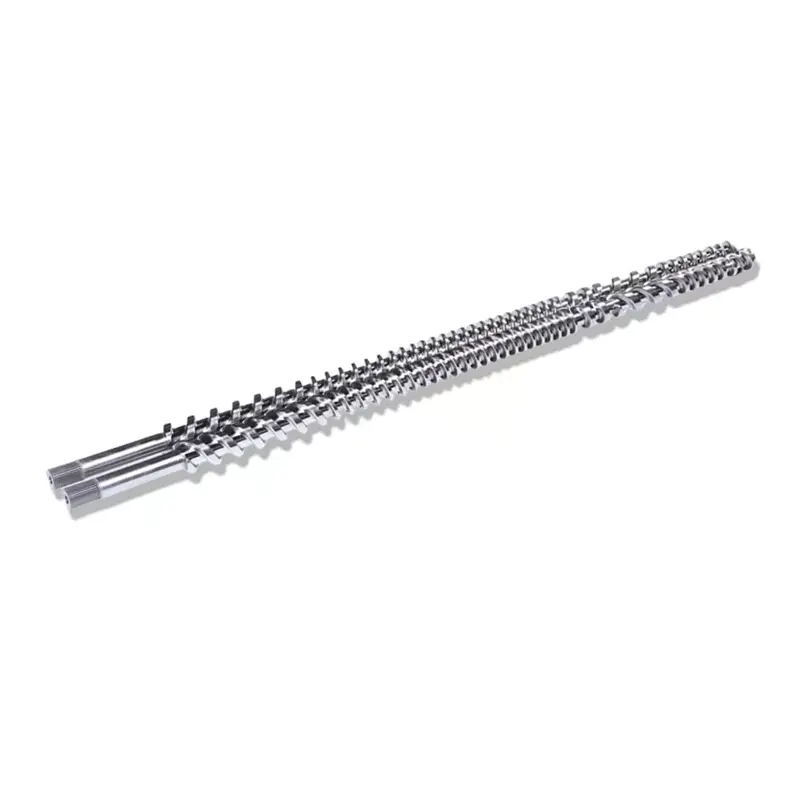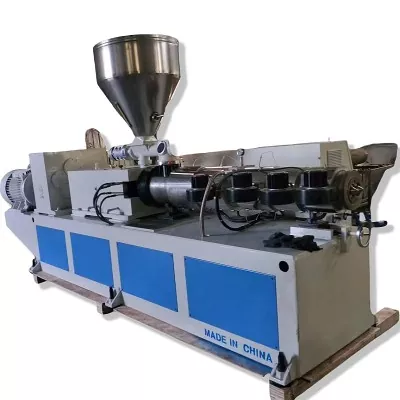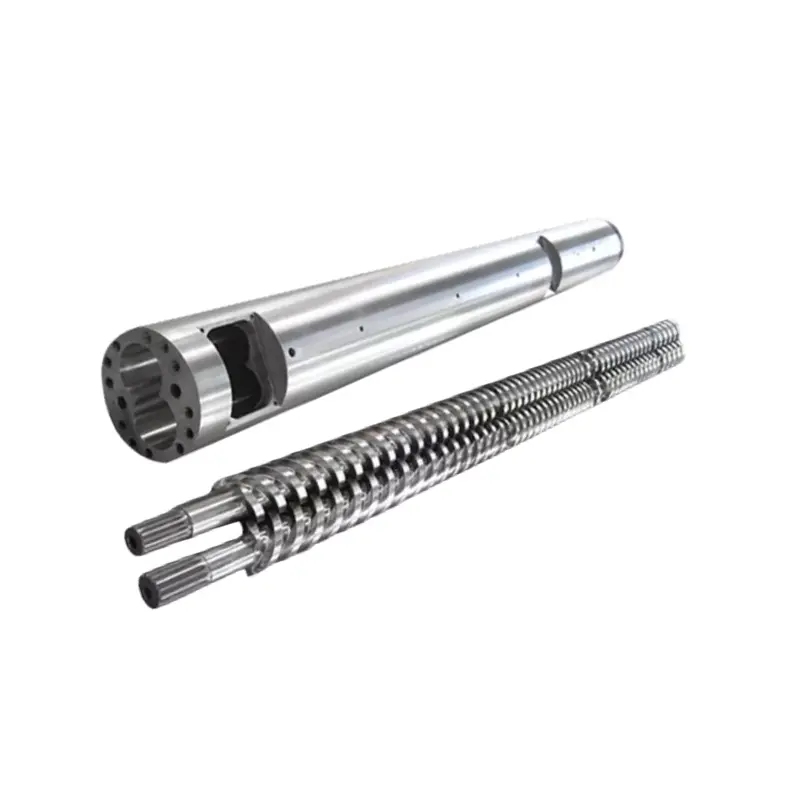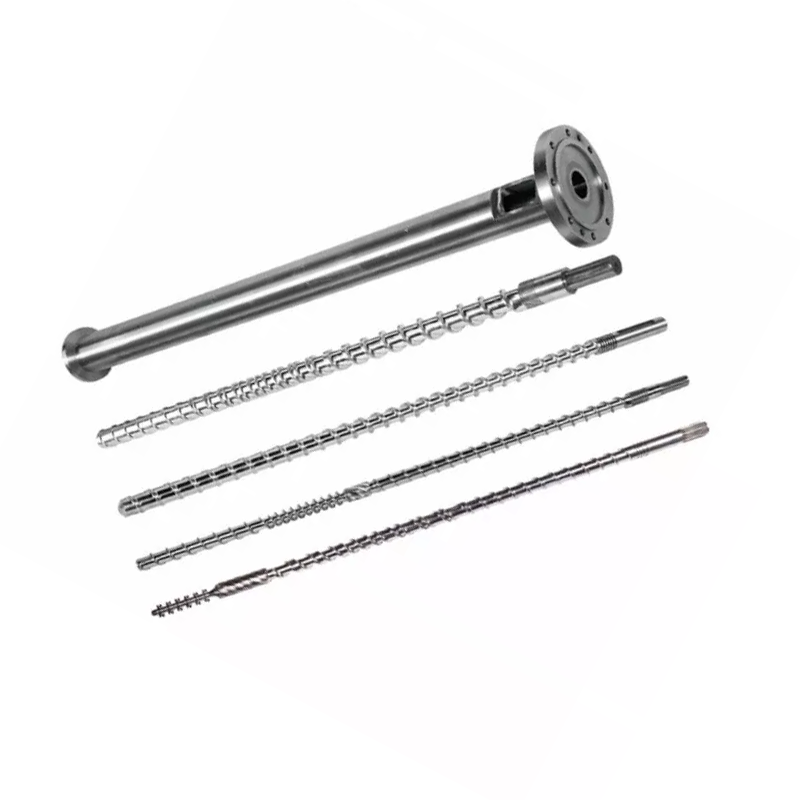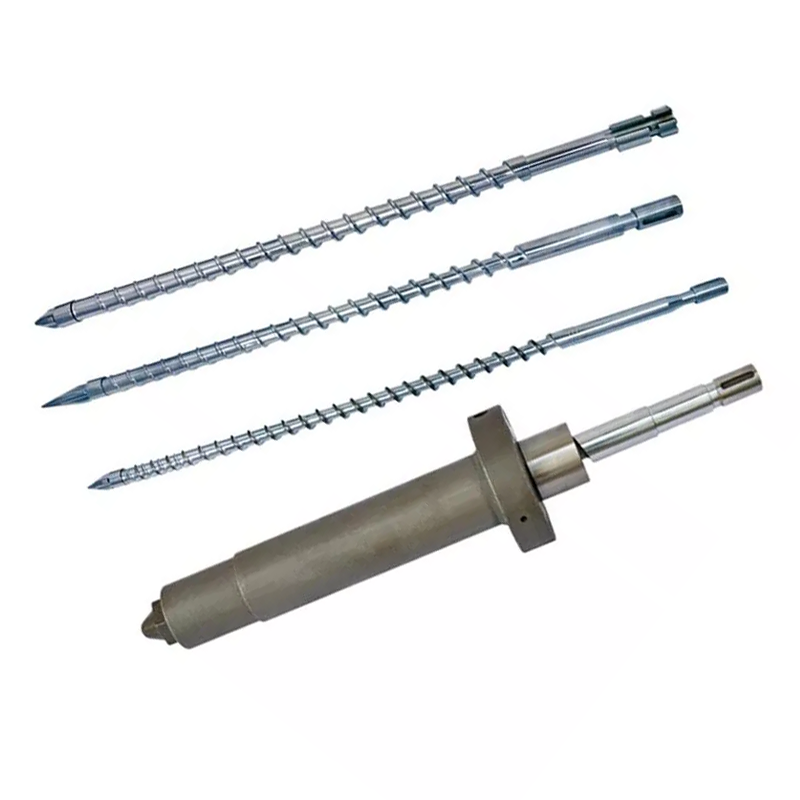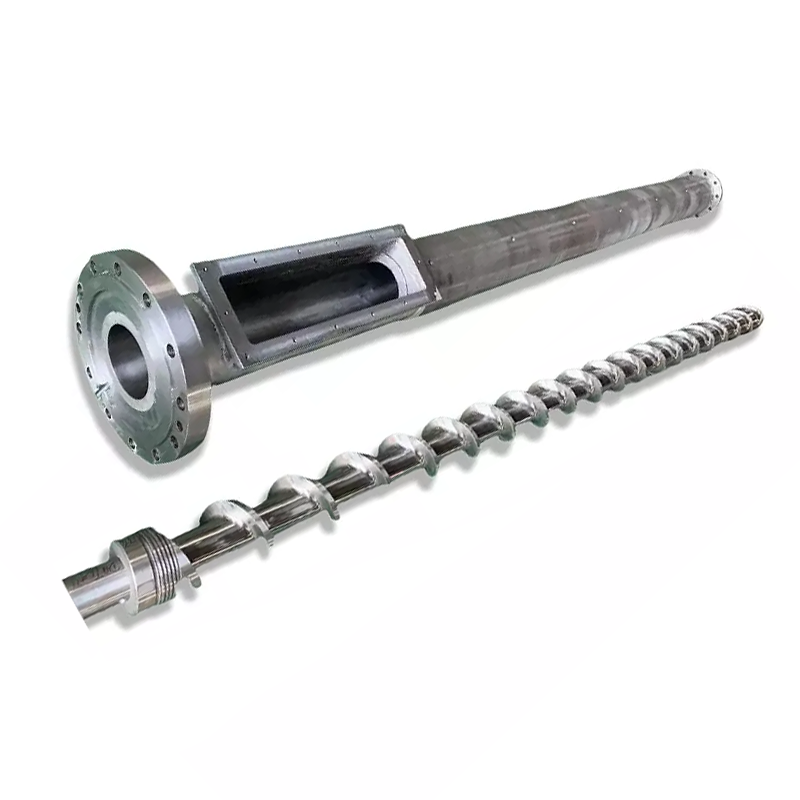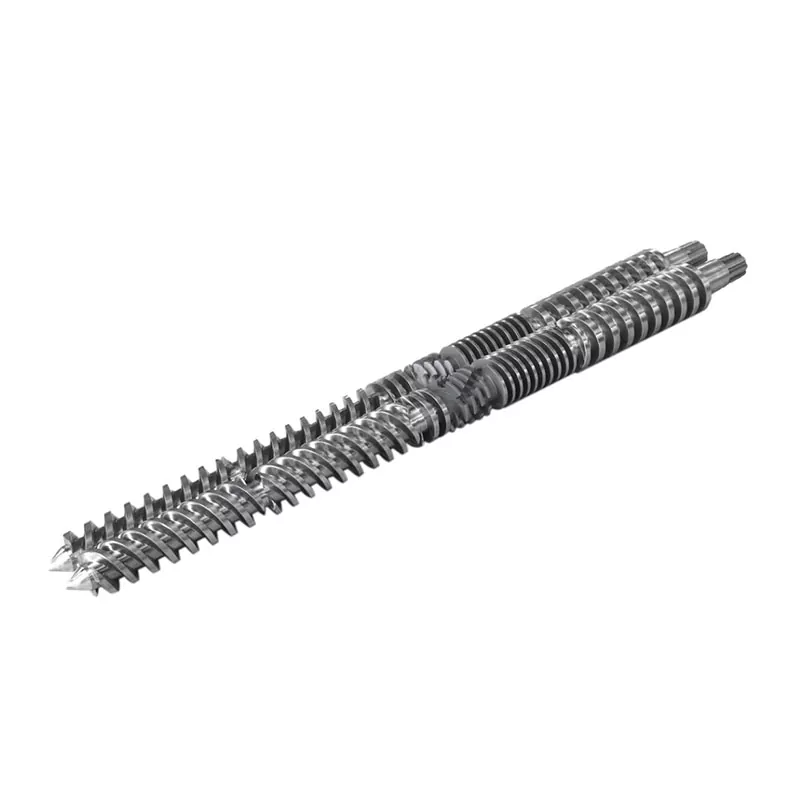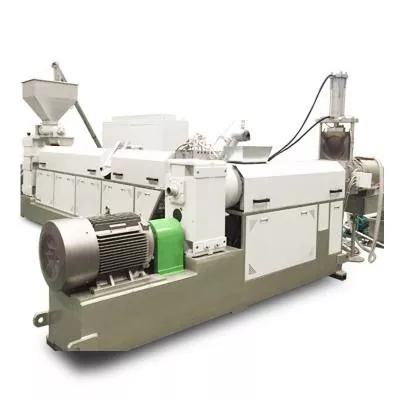

An extruder screw barrel is the heart of a plastic extruder — a rotating screw inside a heated barrel that melts plastic and pumps it forward at steady pressure. Choosing the right one comes down to three things: the type (single screw, twin screw, conical or parallel), the material it has to run (which sets the surface — nitrided for clean resins, bimetallic for abrasive or corrosive ones), and how it is specified and built. Get those right and it runs for years. This guide walks through all three.
Whatever you extrude — pipe, profile, film, sheet, compound, or pellets — the extruder screw barrel is the part doing the actual work. It is also the part that wears, and the one most likely to decide whether your line runs clean and in spec or fights you on quality and downtime. This guide pulls the whole subject together: what a screw barrel is, the types, the materials, how to match one to your material, and how to specify a replacement that lasts. We have built screws and barrels for more than 20 years, so we will keep it straight and practical, and point you to deeper guides where you need them.
What Is an Extruder Screw Barrel?
An extruder screw barrel is the core assembly of a plastic extruder: a precisely machined screw turning inside a heated cylindrical barrel. Solid plastic — pellets or powder — goes in at the feed end. As the screw rotates, heat from the barrel and shear from the screw melt the material, and the screw geometry conveys and pressurizes it, pushing a uniform melt out through the die at the far end.
The screw and the barrel are a matched pair, not two separate parts. The tiny clearance between the screw flights and the barrel bore is what controls output and melt quality — open that clearance up through wear and the machine loses both. That is why the two are designed, built, and replaced together, and why the screw barrel sits at the centre of any extrusion or injection process.
How a Screw Barrel Works
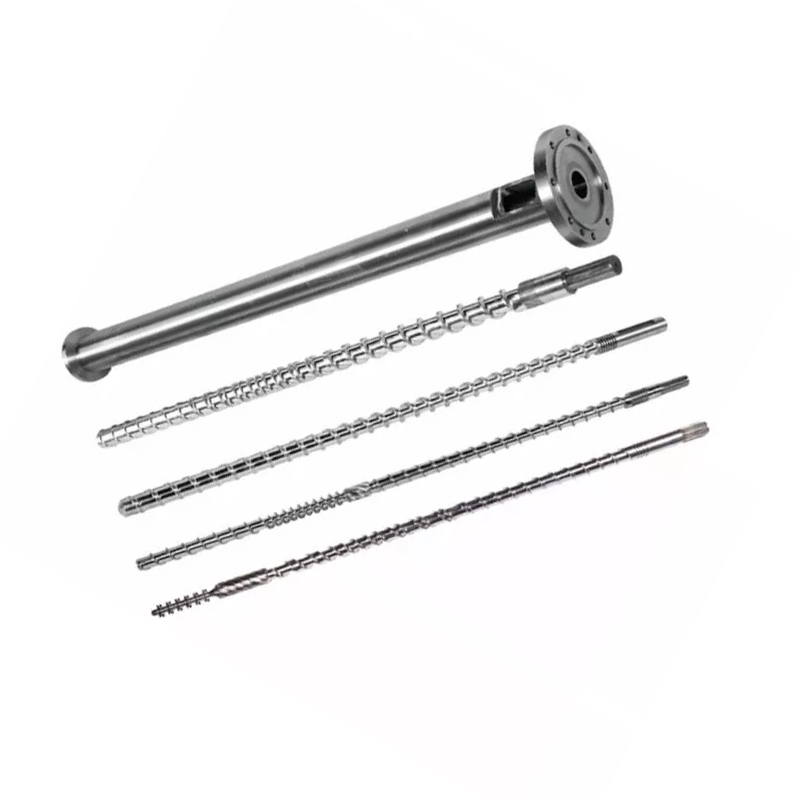
Most extruder screws do their job across three zones along the screw’s length. The feed zone takes in solid material and starts moving it forward. The compression zone — where the screw channel gets shallower — compacts and melts the plastic through heat and shear. The metering zone then pumps the molten plastic forward at a steady, controlled pressure, ready for the die.
Heat comes from two places: the barrel heaters and the mechanical shear of the screw working the polymer. Balance them well and the material plasticizes evenly without overheating. The whole thing only works because of that close screw-to-barrel clearance — it is what stops the melt slipping backward over the flights. Build tolerance and surface hardness keep that clearance tight over time, which is exactly why material choice and manufacturing quality matter as much as screw design.
Around the barrel sit heater bands grouped into zones, each held to a set temperature, with cooling on hand so the melt never overheats. At the far end, the die gives the melt its final shape. The job of the assembly is to hand that die a melt that is uniform in temperature and pressure — because any variation upstream shows up as a defect in the product downstream.
Types of Extruder Screw Barrel
“Screw barrel” covers several distinct machines. The right one depends on whether your process needs to pump a material or mix it.
Single Screw
A single screw runs one shaft in a round bore. It conveys and pumps extremely well, which makes it the economical workhorse for high-volume extrusion of one consistent material — pipe, profile, sheet, film, and wire coating. What it does not do is intensive mixing.
Twin Screw
A twin screw runs two intermeshing shafts in a figure-eight bore. That meshing is the point: it gives intensive mixing, positive conveying, and tight control over shear and residence time, which is why twin screws handle compounding, masterbatch, reactive extrusion, and difficult or filled materials. If you are weighing the two, our guide to single screw vs twin screw extruders goes deep on the trade-off.
Parallel vs Conical Twin Screw
Twin screws split again by shape. A parallel twin screw keeps a constant diameter and uses modular, reconfigurable elements — the versatile choice for compounding and high output. A conical twin screw tapers from a wide feed end to a narrow discharge, giving a big feed throat and high torque at low speed — the classic machine for rigid PVC pipe and profile. We compare them in detail in conical vs parallel twin screw extruders. Twin screws are also either co-rotating (best mixing) or counter-rotating (high pressure, common for PVC).
Injection Molding Screw Barrel
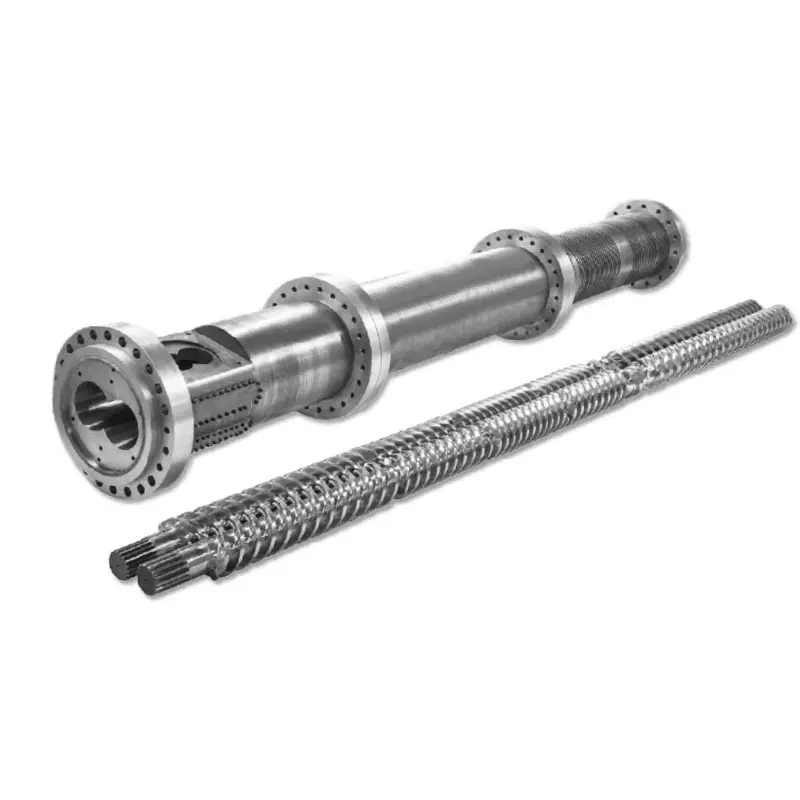
An injection molding screw barrel works on the same melt-and-convey principle but is built for the reciprocating cycle of an injection machine rather than continuous extrusion. The surface and material logic below applies to it just the same.
At a glance, here is how the main types line up:
| Type | Best for | Mixing | Typical products |
|---|---|---|---|
| Single screw | High-volume extrusion of one material | Low | Pipe, profile, sheet, film |
| Parallel twin | Compounding, high output, flexibility | High | Compounds, masterbatch, pellets |
| Conical twin | Compact PVC pipe & profile | High | UPVC pipe, profile, WPC |
| Injection screw | Injection moulding cycle | Varies | Moulded parts |
Where Extruder Screw Barrels Are Used
The same core component shows up across the whole plastics industry, configured for the job at hand. In pipe and profile lines it shapes PVC, PE, and PPR. In film and sheet it feeds the die that makes packaging and board. In compounding it blends polymers with fillers, pigments, and additives into pellets, and it runs masterbatch production too. It drives recycling lines that reprocess scrap and regrind, cable and wire coating, and the reciprocating barrels inside injection moulding machines. Wherever plastic is melted and shaped, a screw and barrel is doing the melting. What changes from one industry to the next is the type, the surface, and the geometry — which is exactly why a careful spec matters more than a catalogue part number.
Screw Barrel Materials and Surface Treatments
A screw barrel lives in a punishing environment — heat, pressure, friction, and often abrasive or corrosive materials. The base steel gives it strength; the surface treatment gives it wear and corrosion resistance. Two surfaces dominate.
Base Steel and Nitriding
The common base is a nitriding steel such as 38CrMoAlA. Gas nitriding hardens a thin case at the surface, giving good wear resistance for clean, unfilled resins like PE, PP, and ABS at a sensible cost. A nitrided screw barrel is the economical, reliable choice when the material is not especially abrasive or corrosive.
Bimetallic
For abrasive or corrosive duty, a bimetallic barrel fuses a much harder, thicker alloy layer inside the bore — nickel-based for corrosion, tungsten-carbide-rich for abrasion — over a tough base steel. It costs more, but it lasts far longer where a nitrided surface would wear through. On our own bimetallic barrels we take the bore to around 62 HRC, where many shops stop at 58. The full comparison is in our guide to bimetallic vs nitrided screw barrels.
The Screw Gets Treated Too
Surface hardening is not just a barrel job. As well as nitriding, screw flights are often hardfaced — a wear-resistant alloy welded onto the flight lands, the highest-wear point on the screw — so the screw keeps pace with the bore. If a screw and barrel wear at different rates, the clearance drifts off and quality suffers, so the two are hardened to work and wear as a matched pair, not as separate parts.
Matching the Screw Barrel to Your Material
This is where most screw-barrel decisions are won or lost. The material you run sets the surface you need — not the other way around. A quick map:
| Material | Main threat to the barrel | Recommended surface |
|---|---|---|
| Clean PE / PP / ABS | Mild wear | Nitrided |
| Rigid PVC | Corrosion + some abrasion | Bimetallic (nickel-based) |
| Glass-filled / mineral-filled | Heavy abrasion | Bimetallic (carbide-rich) |
| WPC (wood + filler) | Severe abrasion (+ corrosion if PVC-based) | Bimetallic (carbide-rich) |
| Recycled / contaminated feed | Abrasion + unknowns | Bimetallic |
Two materials deserve their own playbook. PVC is corrosive because it releases hydrochloric acid as it processes, so it needs a corrosion-resistant bimetallic surface. WPC is one of the most abrasive materials in extrusion, thanks to its wood and mineral filler, so it needs the hardest alloy layer you can put in the bore. Spec the surface for the material, every time.
Key Specifications: Diameter, L/D and Compression
Beyond type and surface, a few specifications shape how a screw barrel performs. You do not need to be a screw designer to source one, but it helps to know what they mean.
- Diameter — sized to your machine and target output. Screws and barrels are made across a wide range of diameters to suit everything from small profile lines to large extruders.
- L/D ratio — the screw’s length divided by its diameter. A longer L/D gives more time to melt and mix; a shorter one is more compact. The right value depends on the material and process.
- Compression ratio — how much the screw channel shallows from feed to metering. Higher compression works some materials harder; heat-sensitive polymers like PVC favour a gentler ratio.
These are set to the material and the job, which is exactly why a made-to-spec barrel beats a generic one. Give your maker the machine, the material, and the output, and the geometry follows from there.
Common Problems and What They Point To
When a line drifts out of spec, the trail often leads back to the screw and barrel. A quick diagnostic:
- Output falling at the same screw speed — worn clearance, the classic first sign.
- Surging or unstable pressure — wear, or a feed or temperature issue.
- Black specks and degradation — material lingering in worn gaps or sitting on a corroded surface.
- Poor mixing or unmelted material — the wrong screw type for the job, or a worn screw.
- Pitting on the screw or bore — corrosion, usually the wrong surface for the material.
Any one symptom can have several causes, but two or three together almost always point to a worn or wrongly specified barrel. Measuring the wear tells you which — and whether the fix is a repair or a replacement.
Wear, Maintenance and Replacement
Every screw barrel wears eventually — the only question is how fast, and that depends on the material and how the machine is run. Wear shows up as falling output at the same screw speed, surging, poor mixing, black specks, or rising melt temperature. The cause is the clearance between screw and barrel opening up past tolerance.
When you see those signs, measure before you act: the screw flight diameter, the barrel bore, and the radial clearance against the original spec. Sometimes the screw can be rebuilt while the barrel is still good; once the bore is worn past tolerance, replacement is usually the economical fix. Our guide to when to replace a worn screw barrel walks through measuring wear and deciding repair versus replace. A few habits stretch service life: match the surface to the material, keep contaminants out of the feed, hold temperatures in range, and log clearance readings at each service.
How to Choose and Specify an Extruder Screw Barrel
Pulling it together, choosing a screw barrel is three decisions in order: type, then surface, then specification. Work through them and you will not go far wrong.
- Type — does your process pump one material (single screw) or mix and compound (twin screw)? Compact PVC or profile work points to conical; high output and flexibility point to parallel.
- Surface — nitrided for clean resins, bimetallic for abrasive or corrosive materials. When in doubt on a filled or PVC material, go bimetallic.
- Specification — diameter, L/D, and compression matched to your machine, material, and output.
To get an accurate quote and a barrel that drops straight in, give your maker the machine make and model, the screw diameter and L/D (or the original drawing), the material and filler load, and the target output. No drawing? A worn sample is enough to reverse-engineer an exact replacement — or an upgraded one with a tougher surface than the part you are retiring.
Why Work With Nanhaiya
We have spent more than twenty years building extruder screws and barrels of every type — single screw, parallel twin screw, conical twin screw, and injection molding — in 38CrMoAlA nitrided steel and bimetallic alloys, with bimetallic bore hardness up to 62 HRC, tolerance control, and dynamic balance testing on every set. With more than 500 clients and over two decades of experience, we build replacements compatible with major brands such as KraussMaffei, Cincinnati, and Jwell, working from your machine model, a drawing, or a sample. Tell us your material, machine, and output, and you will have a tailored recommendation and quote within twelve hours.
Need the right screw barrel, or a replacement for your line? Send your machine, material, and output — get a recommendation and quote within 12 hours.
Get a QuoteFrequently Asked Questions
What is an extruder screw barrel?
It is the core working part of a plastic extruder — a rotating screw inside a heated barrel. It takes solid plastic at one end, melts it with heat and shear, and pumps a uniform melt out the other end at steady pressure. The screw and barrel work as a matched pair, and the small clearance between them controls output and quality.
What is an extruder screw barrel made of?
The base is usually a nitriding steel like 38CrMoAlA, hardened by gas nitriding for clean resins. For abrasive or corrosive materials it is bimetallic — a hard, wear- and corrosion-resistant alloy layer fused inside the bore over a tough base steel. The surface is chosen for the material you run.
What are the main types of screw barrel?
Single screw and twin screw. Twin screw splits into parallel and conical, and into co-rotating and counter-rotating, plus there are injection molding screw barrels. Single screws pump for high-volume extrusion; twin screws mix and compound; conical twins suit compact PVC and profile lines.
How long does an extruder screw barrel last?
A well-maintained one usually lasts between 3 and 10 years. It depends on the material, the surface treatment, the operating conditions, and maintenance — abrasive and corrosive materials shorten it, clean resins and a bimetallic surface extend it.
How do I choose the right one?
Three steps: pick the type your process needs, choose the surface for your material, then match diameter, L/D, and compression to the job. Give the maker your machine model, material, and output — a drawing or sample makes it exact.
Can you make a replacement for any machine brand?
Yes. We build replacement screws and barrels that fit major extruder and injection brands — KraussMaffei, Cincinnati, Jwell — from your machine model, a drawing, or a sample. Send the details for a quote within 12 hours.