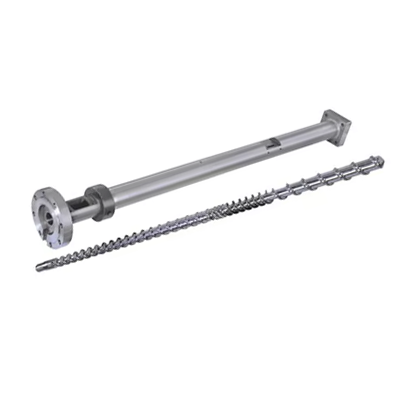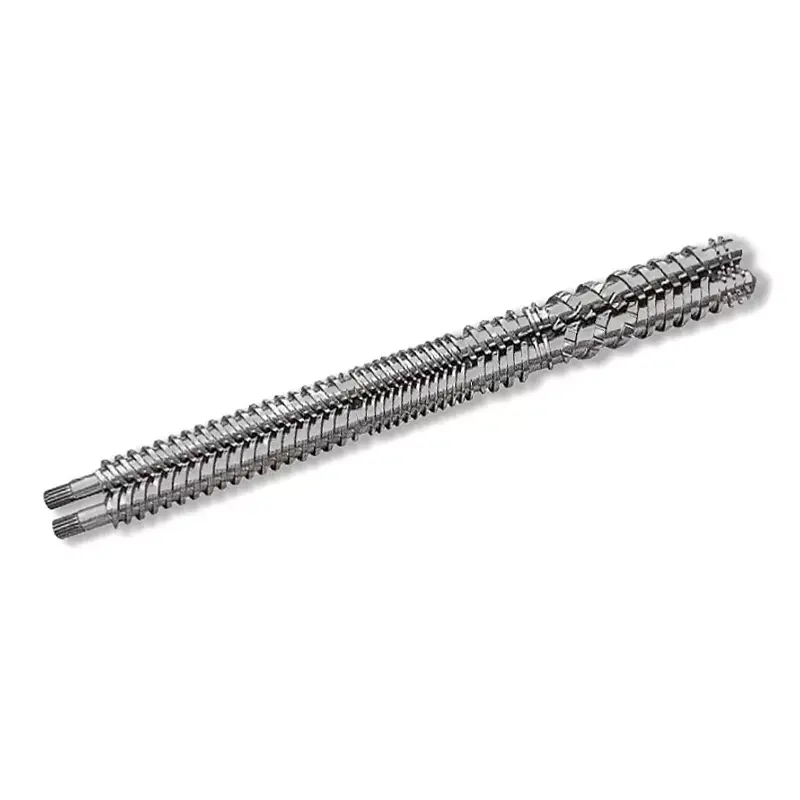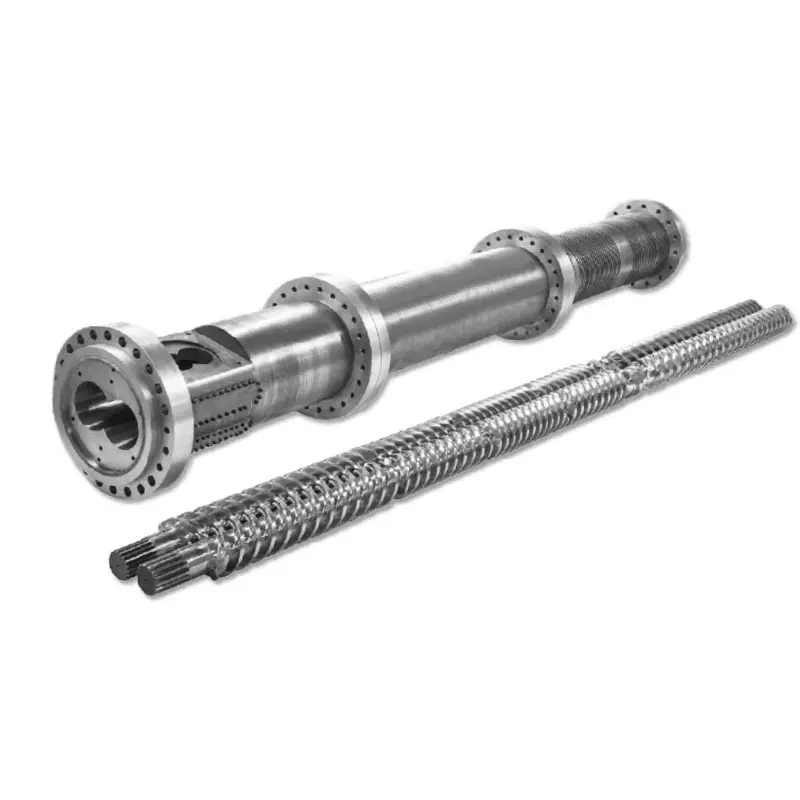
News

Conical Twin Screw Barrel: Complete Guide to Specs, Applications & Selection

2026-08-05 0 Leave me a message


Quick answer

A conical twin screw barrel is a tapered, twin-bore extrusion component in which two conical screws rotate inside a matching conical barrel. The tapered geometry delivers strong feeding and high compression in a short length, which is why the conical twin screw and barrel is the standard choice for PVC pipe, profile, sheet and WPC extrusion.

If you run a PVC or wood-plastic line, the conical twin screw barrel is one of the parts that most directly decides your output, melt quality and running cost. Choose the wrong size, material or clearance and you pay for it in wear, scrap and downtime. This guide covers how a conical screw barrel works, the specifications that matter when you buy, how it differs from a parallel twin screw barrel, and how to select, install and maintain one — written from the perspective of a factory that machines these parts every day.

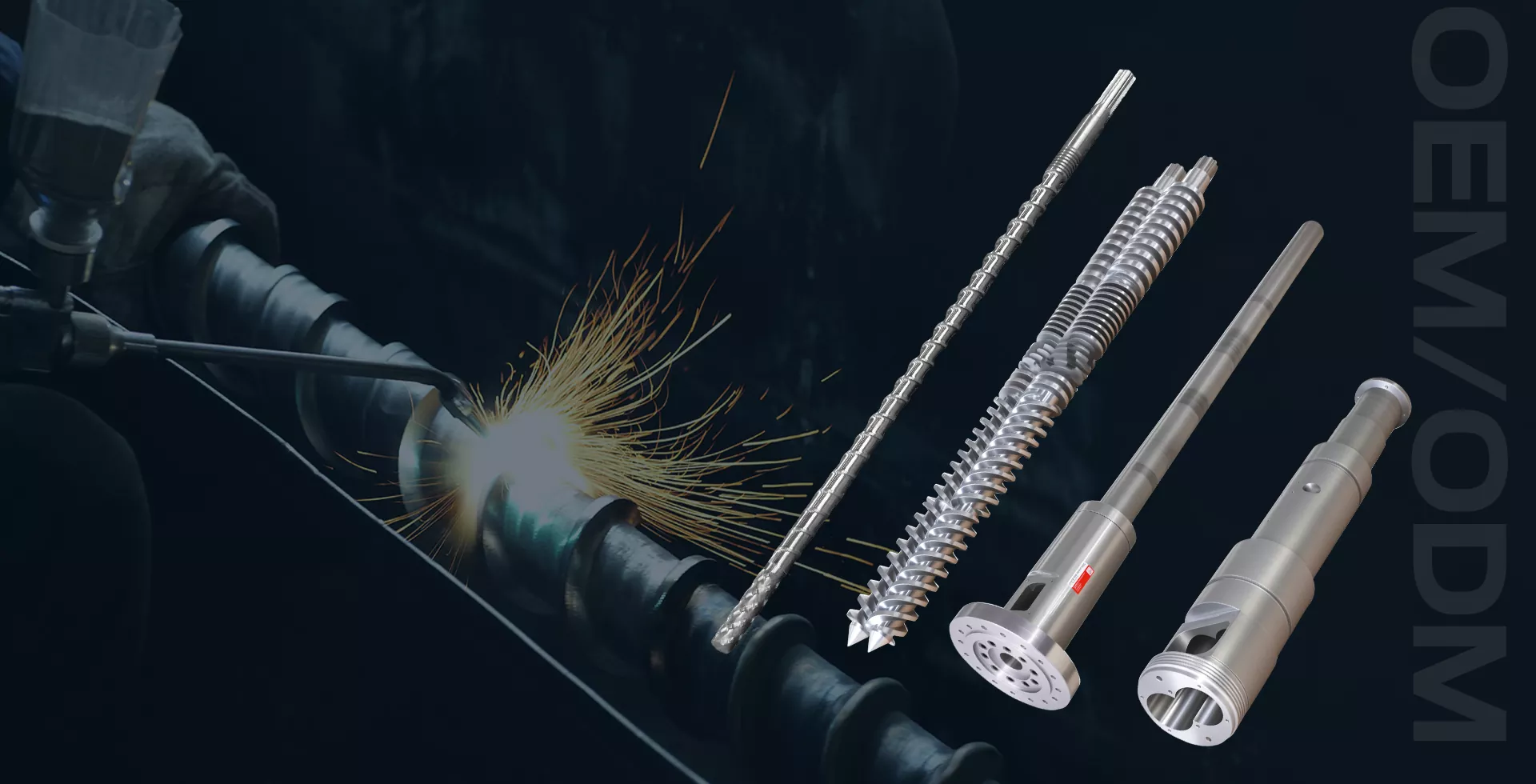
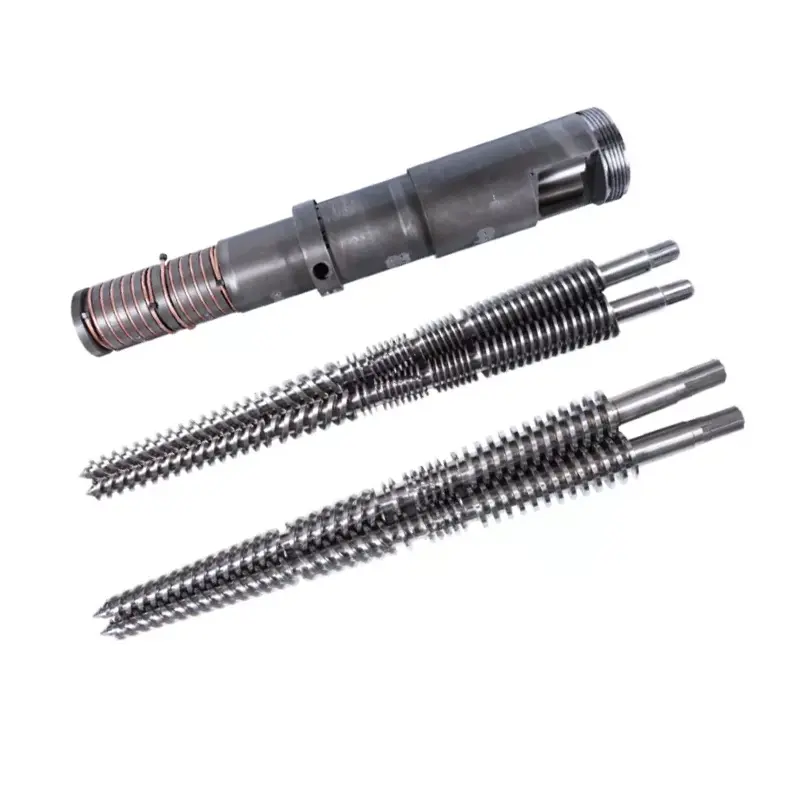
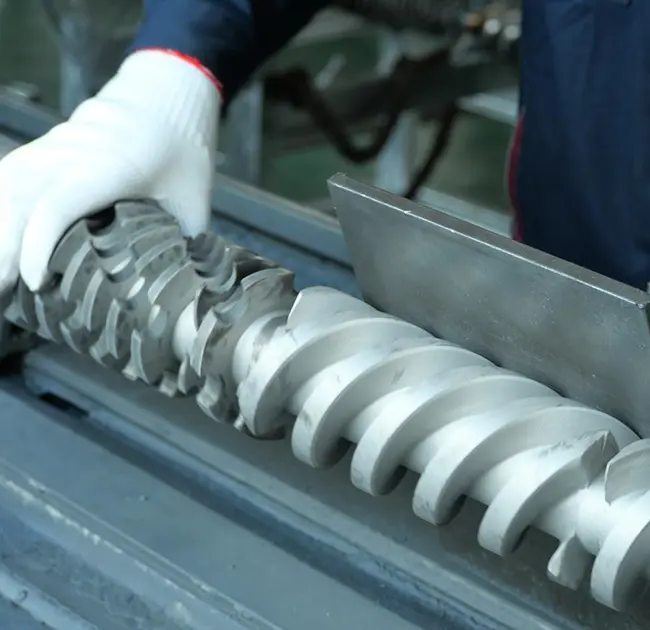
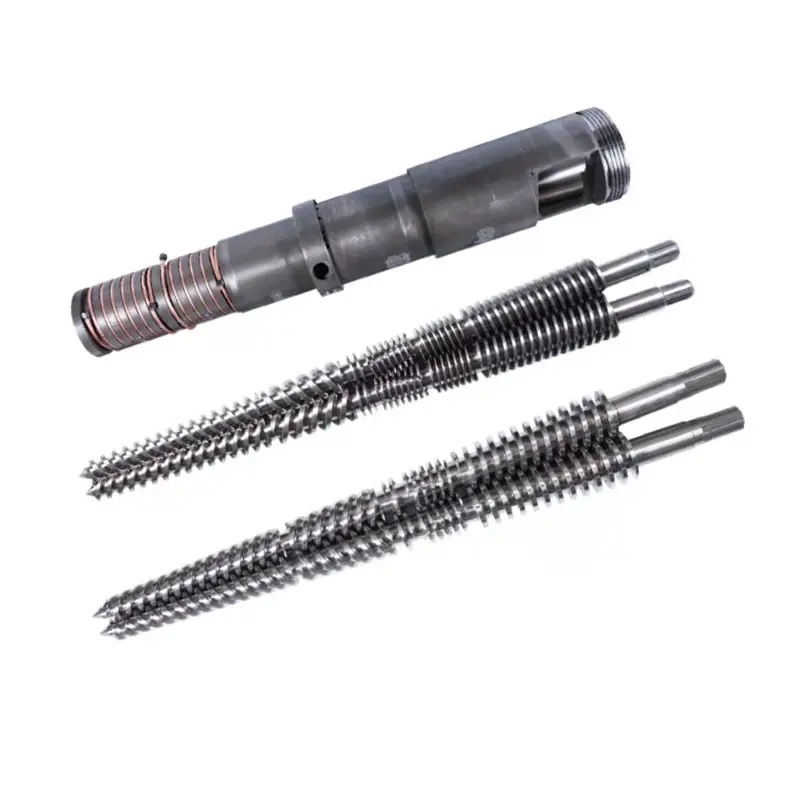
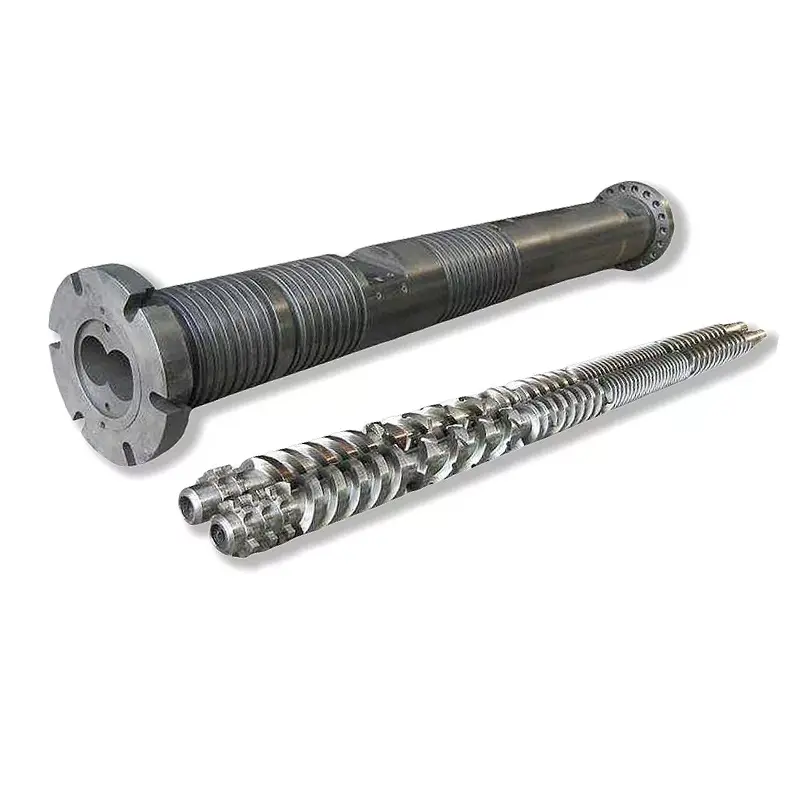
Conical twin screw barrel manufactured by Nanhaiya
A conical twin screw and barrel set — the tapered bores give short-length compression ideal for heat-sensitive PVC.

How a conical twin screw barrel works

In a conical twin screw extruder, two screws sit side by side at a slight angle, wide at the feed end and narrow at the die end. The barrel bores taper to match. As raw material moves from the large-diameter feed zone to the small-diameter metering zone, the shrinking volume compresses and plasticizes it while the intermeshing flights convey and mix. Because the two screws counter-rotate and fully intermesh, the conical twin screw and barrel acts almost like a positive-displacement pump — steady output at low, gentle shear, which protects heat-sensitive polymers such as PVC.

The process breaks down into three stages:

  1. Feed & conveying — the large feed-end diameter gives a big intake volume, so powder blends and low-bulk-density material (like PVC dry-blend) are pulled in reliably without bridging.
  2. Compression & plasticizing — the taper reduces channel volume along the length, compacting the material, driving out air and melting it through combined heat and mechanical work.
  3. Metering & discharge — the narrow metering zone builds a stable pressure and pushes a uniform, homogeneous melt through the die at a controlled rate.

The barrel does more than house the screws. It carries the heater and cooling zones that hold each stage at the right temperature. Nanhaiya barrels use a multi-zone heating and cooling design — typically feed, compression and homogenization zones — with optional vacuum venting to pull moisture and volatiles out of the melt, which matters for filled and hygroscopic compounds.

Key specifications to check before you buy

Two conical barrels can look identical and perform very differently. These are the specifications that decide fit, output and wear life — the numbers you should confirm on any quotation.

Spec item What it means Why it matters
Diameter ratio The feed-end / die-end diameter, e.g. 45/90, 50/105, 55/110, 65/132, 80/156, 92/188 mm Sets the machine class and output band — must match your extruder model exactly
L/D ratio Effective processing length vs diameter Longer effective length = more residence time for full fusion and degassing
Material grade 38CrMoAlA nitrided steel, W6Mo5Cr4V2, HIP powder steel, or bimetallic Directly drives wear life and corrosion resistance against filled/PVC compounds
Surface treatment & hardness Nitriding, chrome plating, bimetallic alloy or tungsten-carbide spray Nanhaiya sprays a tungsten-added alloy layer to reach 62 HRC inside the barrel vs a typical 58 HRC
Alloy layer depth Thickness of the wear-resistant inner layer Nanhaiya's bimetallic layer is 2.5–3 mm — a deeper layer means a longer usable service window
Screw/barrel clearance The gap between flight tip and bore wall Too large = pressure loss and low output; a tight, accurate gap keeps efficiency high
Tolerance / straightness Machining precision of the finished part Nanhaiya holds conical twin barrels to ±0.0005 mm for a consistent, repeatable fit
Output capacity (kg/h) Rated throughput for the size The bottom-line buyer number — match it to your line speed and product
General industry note: conical size designations such as 45/90 or 65/132 (feed/die diameter in mm) are common across SJZ-type conical machines, so a barrel specified this way can often be matched to an existing extruder. Always confirm against a drawing or sample before ordering. You can see standard sizes on our conical twin screw barrel page.

Conical vs parallel twin screw barrel

The most common question buyers ask is whether they need a conical or a parallel twin screw barrel. Both are twin-screw, both intermesh — but the geometry suits different jobs. In short: conical excels at direct PVC/WPC extrusion of pipe, profile and board; parallel is stronger for compounding, masterbatch and very high-filler formulations.

Factor Conical twin screw barrel Parallel twin screw barrel
Feed behavior Large feed opening — better intake for low-bulk-density powder More uniform feeding for compounding and pellet feeds
Compression High compression built into the tapered geometry More constant compression along a fixed diameter
Heat / shear Gentler, controlled processing — good for heat-sensitive PVC Higher shear — better for intensive mixing and dispersion
Typical use PVC pipe, profile, sheet, WPC, resin tile Masterbatch, compounding, high-CaCO₃ and glass-filled work
Maintenance Wear and clearance need close monitoring at the taper Often easier geometry standardization and element replacement

A useful rule of thumb: if your end product is the extrudate (a pipe or a board straight off the die), a conical twin screw barrel is usually the right tool. If you are making pellets or dispersing a demanding additive package, look at a parallel twin screw barrel — especially the counter-rotating type for very high carbonate loadings. Not sure which suits your line? Our single screw, conical and parallel ranges are all shown on the products page.

Common applications

Because it combines strong feeding, high compression and gentle shear, the conical twin screw and barrel is the workhorse of rigid-PVC and wood-plastic extrusion. It performs best for:

  • PVC pipe — water-supply, drainage and conduit pipe from dry-blend PVC.
  • PVC profile — window and door profiles, edge banding and trim.
  • PVC board & sheet — foam board, marble-look sheet and free-foam board (see our PVC board conical twin screw barrel).
  • WPC (wood-plastic composite) — decking, wall panels and profiles from wood-fiber-filled compounds.
  • PE-based and resin-tile products — including corrugated resin roofing tile and PE-filled profiles.
  • PVC pelletizing — turning PVC dry-blend into granules for downstream use.
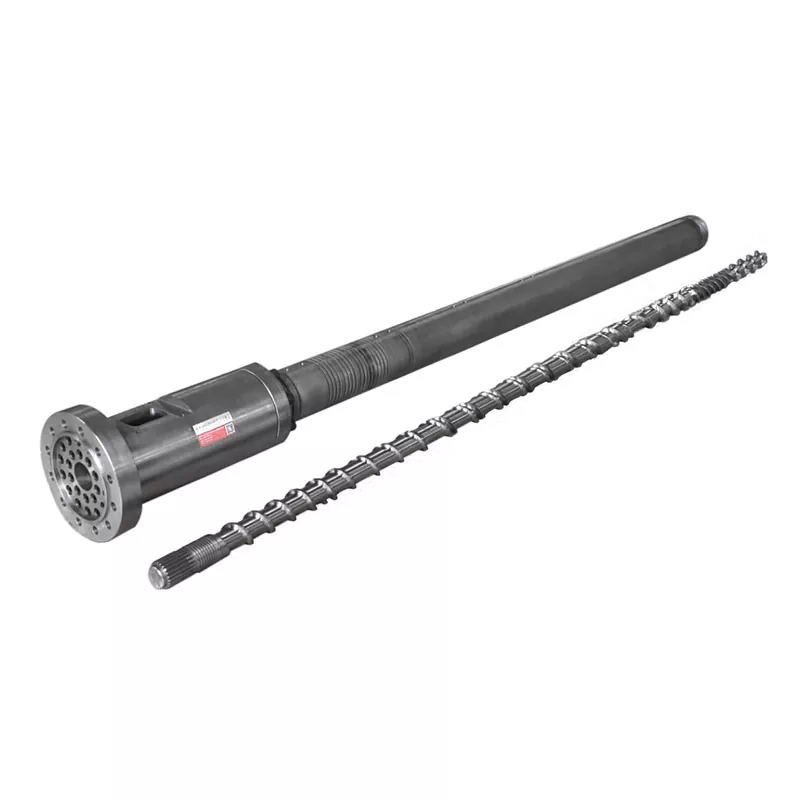
PVC board conical twin screw barrel for foam and marble sheet extrusion
Conical twin screw barrel configured for PVC board and foam-sheet extrusion.

How to choose the right conical twin screw barrel

Selection comes down to three questions: what material are you running, what output do you need, and how abrasive is your formulation? Use the matrix below as a starting point, then confirm the exact size against your machine.

Your material / need Suggested configuration Surface / material choice
Rigid PVC pipe & profile Standard conical geometry sized to your extruder (e.g. 55/110, 65/132) Nitrided 38CrMoAlA for clean, low-filler PVC
PVC + high CaCO₃ filler Conical with reinforced wear zone, or step up to parallel counter-rotating Bimetallic / tungsten-carbide layer (62 HRC) for abrasion
WPC / wood-fiber compounds Conical with strong venting and wear protection Bimetallic — wood fiber + fillers are highly abrasive
PVC foam board / sheet Conical tuned for controlled melt temperature and stable pressure Nitrided or bimetallic depending on filler level
High output on same footprint Larger diameter ratio and/or longer effective length Match hardness to run hours and filler load

Whatever the answer, the single most important step is matching the barrel to your existing machine. Conical parts are effectively custom to the extruder they run in, so a drawing — or a sample with the key dimensions (feed/die diameter, center distance, overall length and flange details) — lets us quote an exact-fit replacement rather than a "close enough" part. If you need the whole line rather than the component, we also build complete extruder machines.

Installation and wiring basics

A precision barrel only performs if it is installed square, clean and correctly heated. The steps below are a general overview — always follow your machine builder's manual and lock-out procedures.

  1. Power down & lock out. Isolate the drive and all heaters before removing the old barrel. Confirm zero energy before you start.
  2. Clean the mating faces. Remove old sealant, carbon and burrs from flanges and locating faces so the new barrel seats without distortion.
  3. Mount and align. Fit the conical barrel to the gearbox/feed housing, checking concentricity and that the screws turn freely by hand before power is applied.
  4. Wire the heater zones. Reconnect band heaters and cooling per zone (feed → compression → metering), and pair each thermocouple to the correct controller channel so no zone is cross-wired.
  5. Set a soak profile. Bring the barrel up to temperature slowly and let it soak so steel and melt equalize before you start the screws — starting cold risks torque damage.
Heater-zone tip: keep the feed zone coolest and step temperatures up toward the die. Uneven or mis-mapped zones are one of the most common causes of surging and black streaks — worth double-checking after any barrel change.

Troubleshooting and wear

Most conical barrel problems announce themselves as unstable output, overheating or degraded product. Use this table to move quickly from symptom to likely cause to fix.

Symptom Likely cause Fix
Output fluctuates / surging Feed inconsistency, worn flights, or temperature drift Check feed, verify zone temps, measure screw/barrel clearance
Overheating Heater imbalance, excess friction, or blocked cooling Inspect each zone and cooling circuit; re-map thermocouples
Poor plasticizing Wrong screw setup or a worn barrel bore Verify configuration; check for enlarged clearance from wear
Black lines / streaks Dead spots holding degraded material, or scored bore Purge and clean thoroughly; inspect bore and screw surface
Excessive / fast wear Abrasive filler, poor maintenance, or under-spec hardness Upgrade to a bimetallic / tungsten-carbide barrel; tighten upkeep

Wear is normal — the goal is to make it slow and predictable. Abrasive fillers (CaCO₃, wood fiber, glass) attack the bore and flights fastest, which is exactly why a deeper, harder inner layer pays for itself. A 62 HRC tungsten-added surface simply lasts longer against those compounds than a standard 58 HRC finish, stretching the interval between rebuilds.

Maintenance checklist

Short, regular checks prevent the expensive failures. Build these into your routine:

Interval Check Action
Every shift Zone temperatures & amps Log readings; investigate any drift from baseline
Weekly Melt quality & surface finish Watch for new streaks, gels or output change
Monthly Purge & visual bore/screw check Clean dead spots; look for scoring or discoloration
Quarterly Screw/barrel clearance Measure the gap; compare to spec to track wear rate
As needed Heater & thermocouple integrity Replace failed bands/sensors before they cause bad product

Frequently asked questions

What is a conical twin screw barrel?

It is a tapered twin-bore extrusion component in which two conical screws rotate inside a matching conical barrel. The taper compresses and plasticizes material over a short length, making the conical screw barrel ideal for PVC pipe, profile, sheet and WPC extrusion.

What materials is it best used for?

Rigid PVC (pipe, profile, board and sheet), wood-plastic composite, PE-based profiles and resin tile, plus PVC pelletizing. It handles low-bulk-density dry-blend powders especially well thanks to its large feed-end intake.

How is it different from a parallel twin screw barrel?

A conical barrel tapers and builds high compression with gentle shear, suiting direct PVC/WPC extrusion. A parallel twin screw barrel keeps a constant diameter and higher shear, which suits compounding, masterbatch and very high-filler formulations.

What is the typical clearance between screw and barrel?

Clearance is the small gap between the flight tip and the bore wall. It is set tight and accurate on a new part; as it opens up from wear, output and pressure drop. Measuring it periodically is the clearest way to track barrel wear.

How do I install a conical twin screw barrel?

Power down and lock out, clean the mating faces, mount and align so the screws turn freely, wire each heater zone and thermocouple correctly, then bring the barrel up to temperature slowly and soak it before starting the screws.

What causes wear in conical twin screw barrels?

Mainly abrasive fillers such as calcium carbonate, wood fiber and glass, made worse by corrosion from PVC processing, poor maintenance and under-specified hardness. A deeper bimetallic or tungsten-carbide layer resists all three far better.

How often should the barrel be inspected or replaced?

Do visual and purge checks monthly and measure clearance quarterly. Replacement timing depends on filler load and run hours — track the wear trend rather than waiting for a failure, and rebuild or replace once clearance moves past spec.

How do I choose the right size for my extrusion line?

Match the diameter ratio and length to your extruder model and target output, then pick a surface treatment based on how abrasive your formulation is. Send a drawing or a sample with key dimensions so the barrel is an exact fit, not an approximation.

Need a conical twin screw barrel matched to your machine?

Send us your drawing — or a sample with the key dimensions — and our engineers will spec an exact-fit conical twin screw and barrel with the right hardness for your material. With in-house nitriding, bimetallic and tungsten-carbide processing, we build parts that reach 62 HRC inside the bore for long service life.

Get a quote within 12 hours →
Nanhaiya (Zhoushan) Plastic Machinery · 500+ global clients · single, conical twin & parallel twin screw barrels
Related News
Leave me a message
X
We use cookies to offer you a better browsing experience, analyze site traffic and personalize content. By using this site, you agree to our use of cookies.Privacy Policy
RejectAccept