News

Which Conical Twin Screw Barrel for PVC? Pipe vs Board vs Sheet

2026-08-09 0 Leave me a message


Quick answer

PVC pipe, board and sheet all run on a conical twin screw barrel, but the right one differs in screw profile, output and — most of all — wear protection. Pipe favours steady output and pressure; foam board and sheet run higher filler and need stronger abrasion resistance. Get the size to match your extruder, then choose nitrided or bimetallic based on how much filler your formula carries.

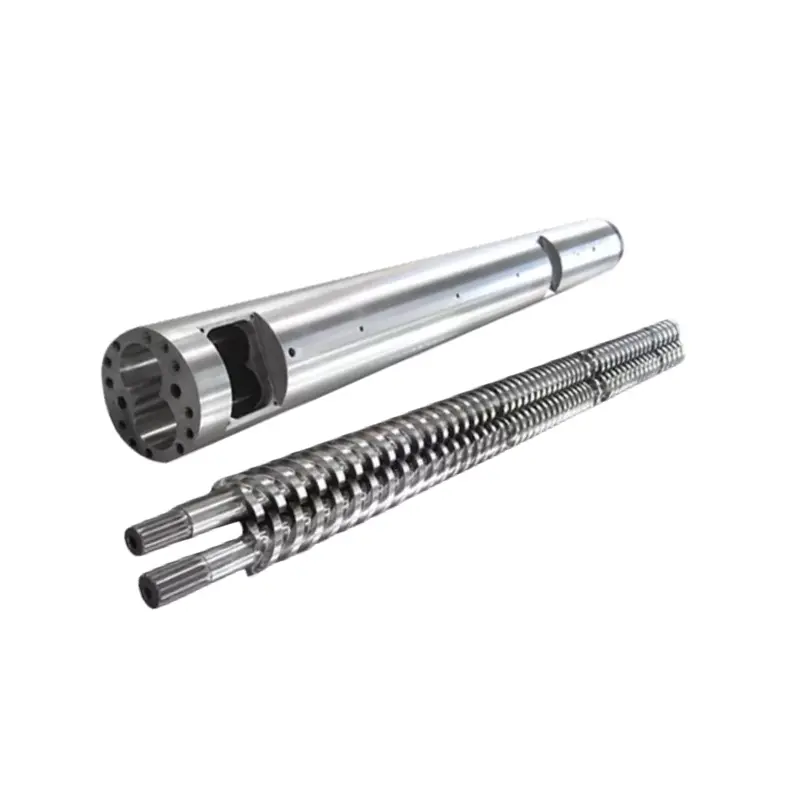
PVC pipe, PVC board and PVC sheet are the three biggest jobs for a conical twin screw barrel — and buyers often assume one barrel covers all three. It nearly does: the conical twin screw and barrel is the right machine for every rigid-PVC extrusion. But the screw profile, output band and surface treatment that suit PVC pipe are not identical to what a heavily filled foam board needs. This guide walks through each product, then shows how to size and specify the right one.

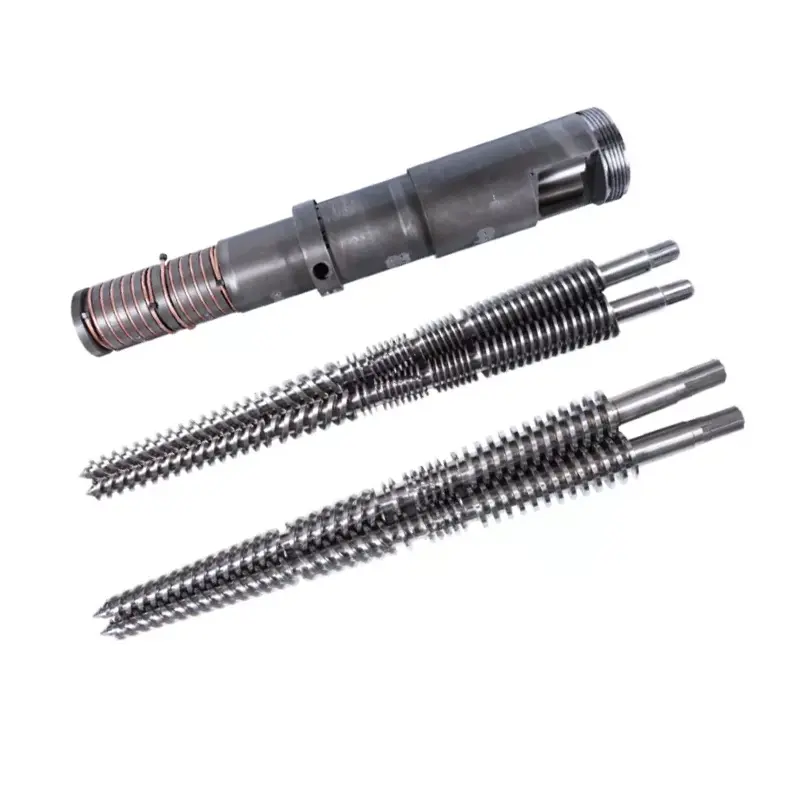
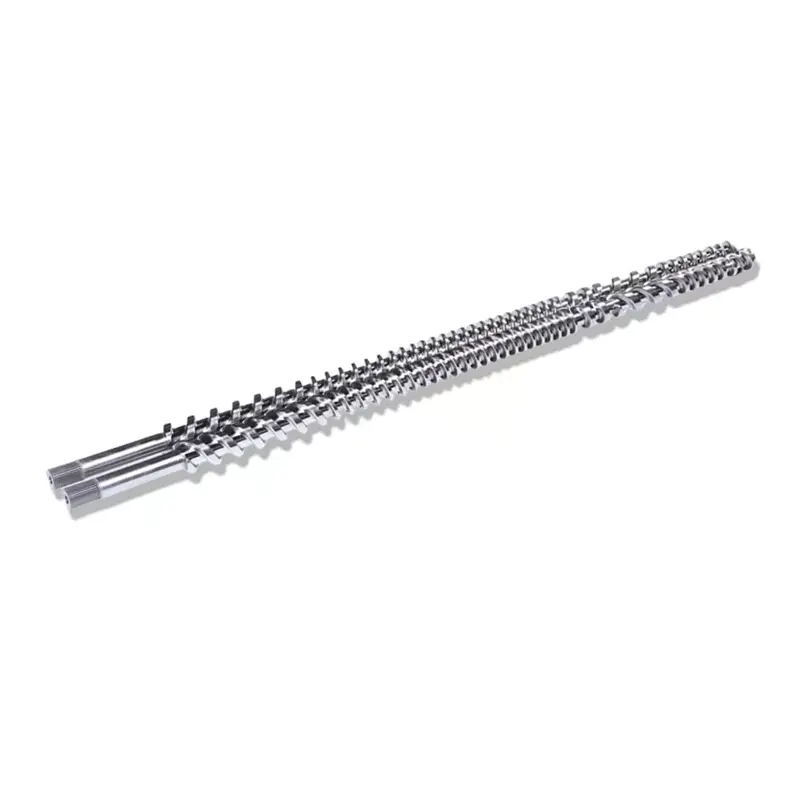
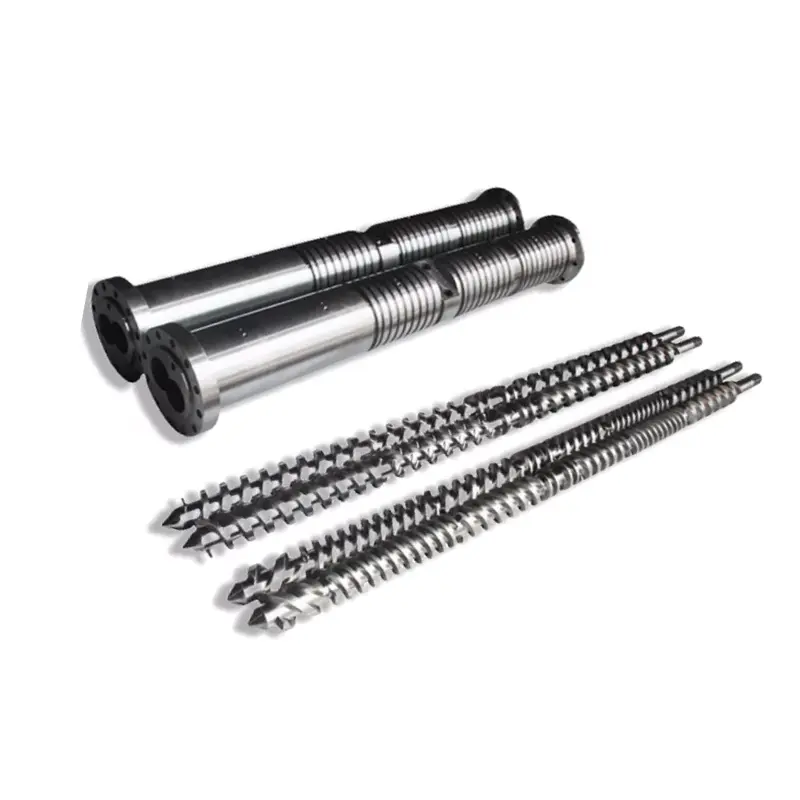
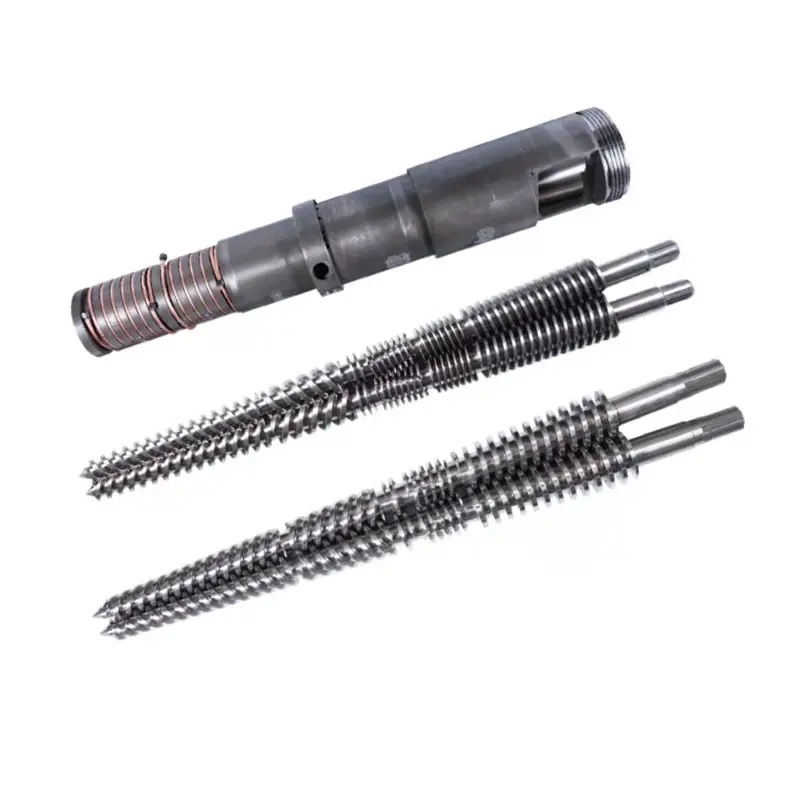
Conical twin screw barrel for PVC board, pipe and sheet extrusion

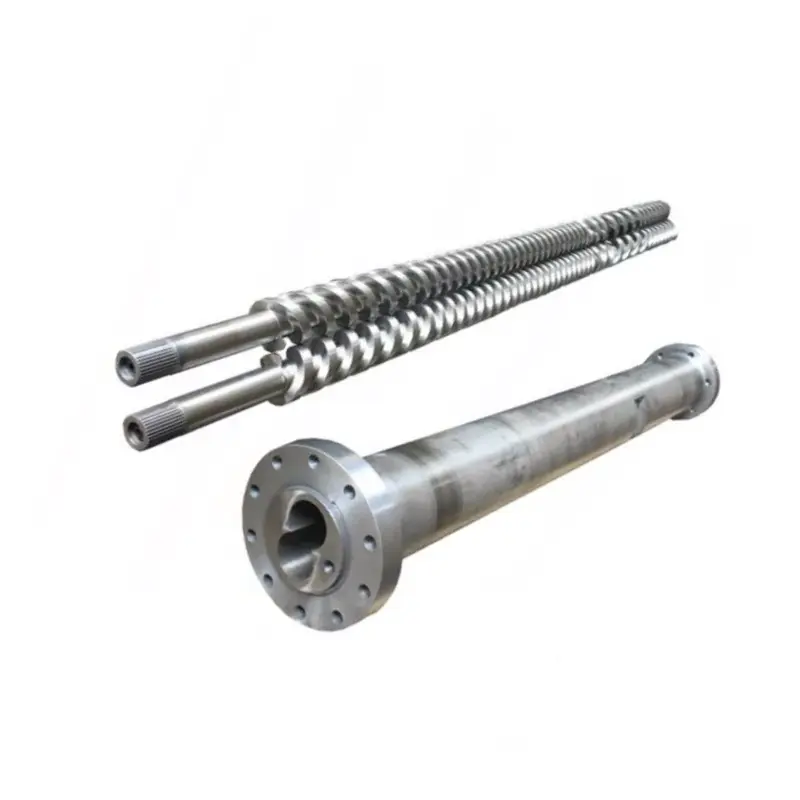
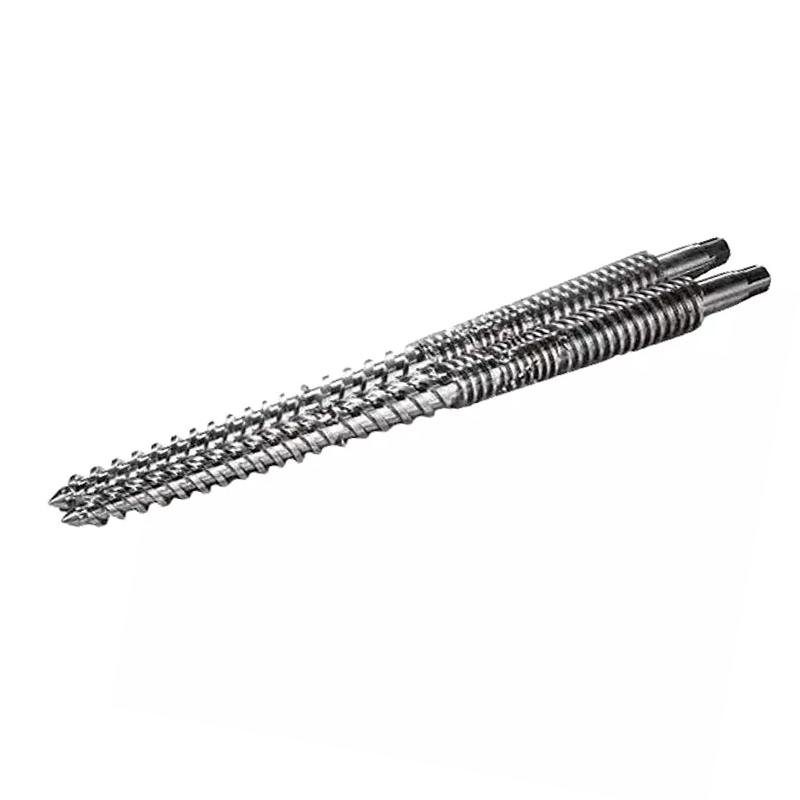
PVC pipe conical twin screw barrel

PVC pipe is the classic conical application. The line runs rigid PVC dry-blend, usually with light-to-moderate calcium carbonate, and what matters most is stable output and steady melt pressure so wall thickness stays consistent along the pipe. A conical screw barrel handles this well: the large feed end pulls in the light powder, and the tapered compression builds a uniform, low-shear melt that protects heat-sensitive PVC.

For a PVC pipe conical twin screw barrel, prioritise:

  • Consistent metering — a screw profile tuned for steady pressure and output.
  • Sizing to output — larger diameter ratios for bigger-diameter pipe (more on sizing below).
  • Wear protection to match filler — nitrided for clean formulas, bimetallic once CaCO₃ climbs.

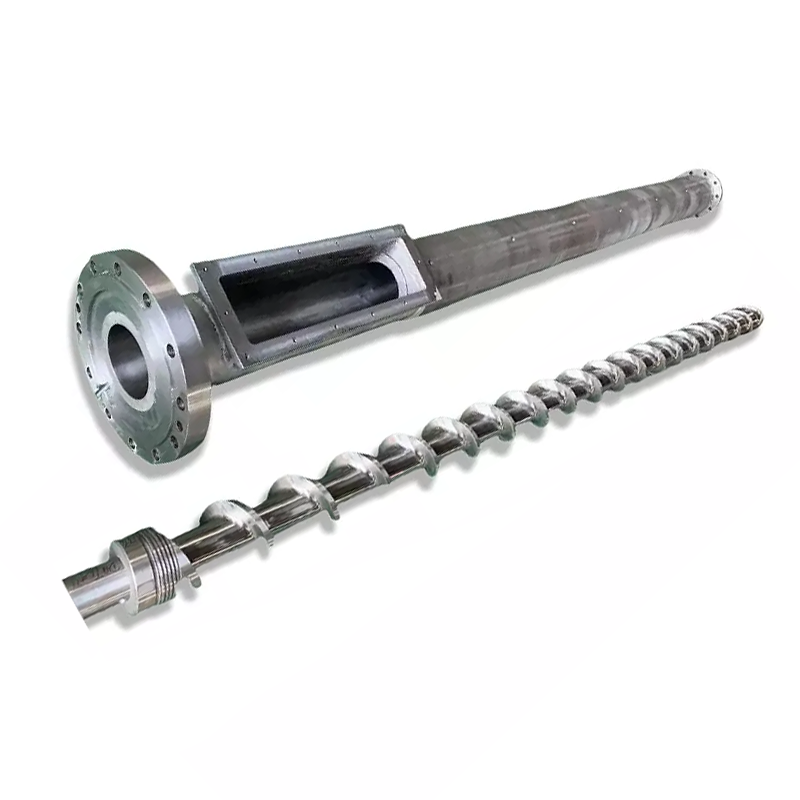
See our conical twin screw barrel range for pipe configurations, or the higher-throughput PVC pipe parallel screw barrel if you run a parallel line.

PVC board conical twin screw barrel

PVC board — especially foam board and free-foam board — is a more demanding job. Formulations often carry higher filler, and foaming adds sensitivity to melt temperature and pressure stability, since uneven conditions show up as inconsistent cell structure and density. A PVC board conical twin screw barrel is therefore built around controlled melt temperature, good venting and stronger wear resistance than a clean pipe barrel needs.

Higher filler means abrasion, so board barrels are where bimetallic protection starts to earn its keep — a tungsten-added alloy layer resists the calcium carbonate that would grind through a thin nitrided case far faster on a foam-board line.

PVC sheet conical twin screw barrel

PVC sheet — from thin rigid sheet to marble-look and soft PVC sheet — sits between pipe and board in its demands. Output uniformity drives surface quality and thickness tolerance across the web, so a stable, well-homogenised melt is the priority. Filler levels vary widely by product, which is exactly why the surface-treatment choice matters: a marble-look sheet with heavy mineral filler needs bimetallic protection, while a cleaner rigid sheet may run happily on nitrided.

Because sheet formulations differ so much, a PVC sheet conical twin screw barrel is almost always specified to the exact formula and line — there is no single "sheet barrel". Share your material and filler level and the screw profile and surface can be matched to it.

PVC pipe vs board vs sheet: what changes

Factor PVC pipe PVC board (foam) PVC sheet
Priority Steady output & pressure Melt-temp control & cell uniformity Output uniformity & thickness
Typical filler Light–moderate CaCO₃ Higher filler Varies widely by product
Screw focus Stable metering Controlled temp & venting Good homogenisation
Surface treatment Nitrided or bimetallic Bimetallic preferred Depends on filler level
Product page Conical range PVC board barrel Conical range

The takeaway: geometry stays conical for all three, but as you move from clean pipe toward filled foam board, wear protection becomes the deciding spec.

Sizing and machine compatibility

Conical barrels are built to standard size designations — the feed and die diameters in millimetres. Match the size to your extruder and your target output:

General industry note: common conical sizes run from about 45/90 and 51/105 (small profile and pipe) through 55/110 and 65/132 (general PVC pipe and profile) up to 80/156 and 92/188 (large-diameter pipe), with many intermediate sizes such as 55/120, 60/125, 65/120, 70/140 and 80/143. Conical barrels are also commonly matched to popular extruder brands — for example JWELL, LIANSU, KANGDA, Battenfeld-Cincinnati (CM/CMT series) and Krauss Maffei (KMD series). Always confirm your machine model when ordering.

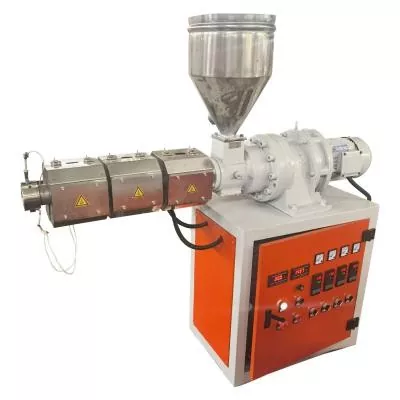
Getting the size right is non-negotiable: a conical barrel is effectively custom to the machine it runs in, so the feed/die diameter, centre distance, overall length and flange details must match your extruder exactly. For the machine itself, see our twin screw extruder range and complete extruder machines.

Nitrided or bimetallic for PVC?

This is the choice that most affects how long a PVC barrel lasts. In short: clean, low-filler PVC can run nitrided; heavily filled PVC — most foam board and mineral-filled sheet — should be bimetallic. PVC is both abrasive (from filler) and corrosive (HCl released on thermal decomposition), so on demanding formulas a thick, hard alloy layer pays back through longer service life.

Nanhaiya sprays a tungsten-added hard alloy around the easy-wear section of the barrel, reaching 62 HRC inside the bore — versus a common 58 HRC — with a 2.5–3 mm alloy layer. We build these on 38CrMoAlA, W6Mo5Cr4V2 or HIP powder-steel bodies. For the full comparison, see our guide on choosing between a bimetallic conical twin screw and standard surfaces.

How to order the right conical barrel for PVC

To get an exact-fit barrel rather than an approximation, send us:

  1. Product & formula — pipe, board or sheet, plus filler type and level (e.g. CaCO₃ loading).
  2. Machine details — extruder brand/model, or a drawing with feed/die diameter, centre distance, length and flange.
  3. Target output — kg/h and line speed, so the screw profile and size match.
  4. Run conditions — hours per day and how abrasive the formula is, so we recommend nitrided or bimetallic honestly.

With those four inputs, our engineers can quote a conical screw barrel matched to your PVC line within 12 hours.

Frequently asked questions

What is a conical twin screw barrel for PVC?

It is a tapered twin-screw plasticizing unit used to extrude rigid and soft PVC into pipe, profile, board and sheet. The conical geometry feeds light PVC powder well and compresses it gently, protecting heat-sensitive PVC while delivering steady output.

Is the same conical barrel used for PVC pipe, board and sheet?

The conical geometry is the same, but the ideal screw profile, output and surface treatment differ. Pipe favours steady metering; foam board runs higher filler and needs stronger wear protection; sheet varies by formula. Each is specified to the product and machine.

Which conical barrel size do I need for PVC pipe?

It depends on pipe diameter and target output. Small pipe and profile often use 45/90–55/110, general PVC pipe around 65/132, and large-diameter pipe steps up to 80/156 or 92/188. Match the size to your extruder model.

Should a PVC conical barrel be nitrided or bimetallic?

Clean, low-filler PVC can run nitrided. Heavily filled formulas — most foam board and mineral-filled sheet — should be bimetallic, because a thick tungsten-added alloy layer resists the abrasion and corrosion of filled PVC far longer.

What causes fast wear in PVC conical barrels?

Mainly calcium-carbonate filler (abrasion) combined with corrosion from HCl released during PVC processing. High filler levels and poor maintenance accelerate it. A bimetallic, tungsten-carbide-reinforced surface resists both far better than a thin nitrided case.

Can one conical twin screw extruder make both pipe and board?

Yes, with the right screw and downstream tooling a conical extruder can switch between PVC products, though a barrel and screw optimised for one job give the best results. Heavily filled board benefits from a bimetallic barrel even if the same machine also runs pipe.

What extruder brands do conical barrels fit?

Conical barrels are commonly matched to popular brands such as JWELL, LIANSU, KANGDA, Battenfeld-Cincinnati (CM/CMT series) and Krauss Maffei (KMD series). Confirm your exact machine model, or send a drawing, so the barrel is an exact fit.

How do I order the right conical twin screw barrel for my PVC line?

Send your product and formula (with filler level), extruder brand/model or a drawing, target output, and run conditions. With those, we can specify the correct size, screw profile and surface treatment and quote within 12 hours.

Get a conical twin screw barrel matched to your PVC product

Tell us whether you run PVC pipe, board or sheet, your filler level and your extruder model — our engineers will specify the right size, screw profile and surface. For filled PVC, our tungsten-added bimetallic barrels reach 62 HRC inside the bore for long service life.

Get a quote within 12 hours →
Nanhaiya (Zhoushan) Plastic Machinery · 500+ global clients · conical & parallel twin screw barrels, PVC board barrels & extruder machines
Related News
Leave me a message
X
We use cookies to offer you a better browsing experience, analyze site traffic and personalize content. By using this site, you agree to our use of cookies. Privacy Policy
RejectAccept