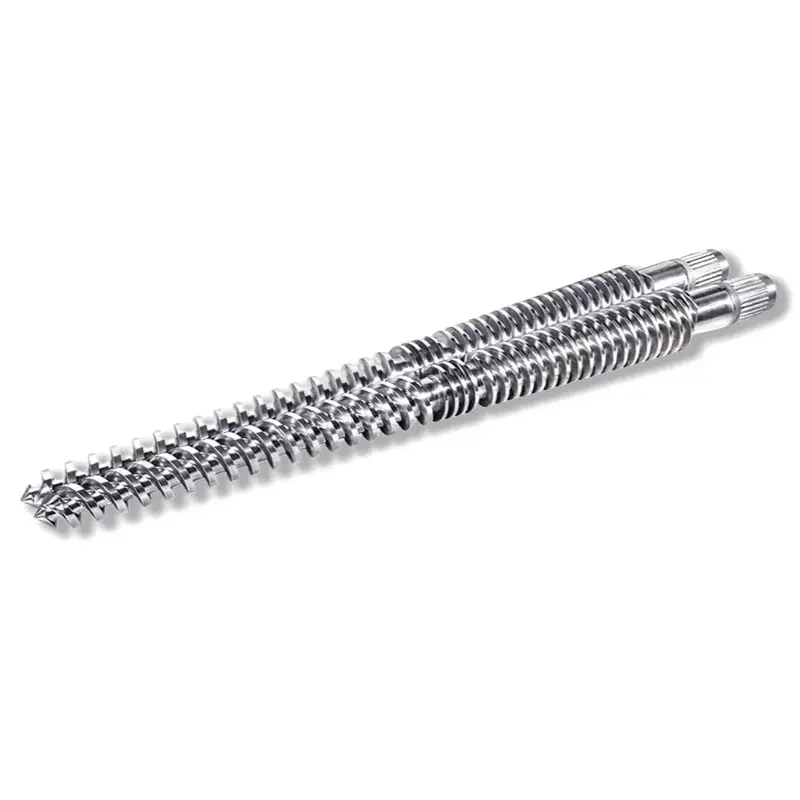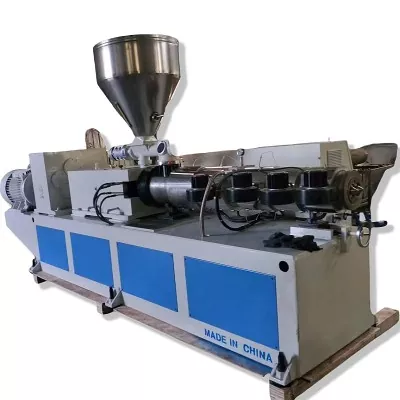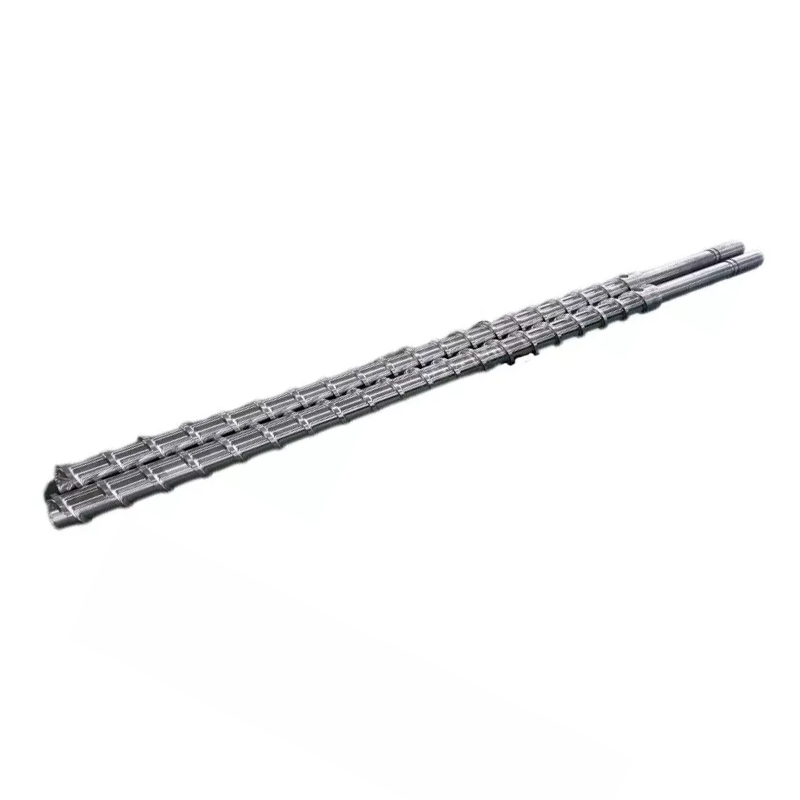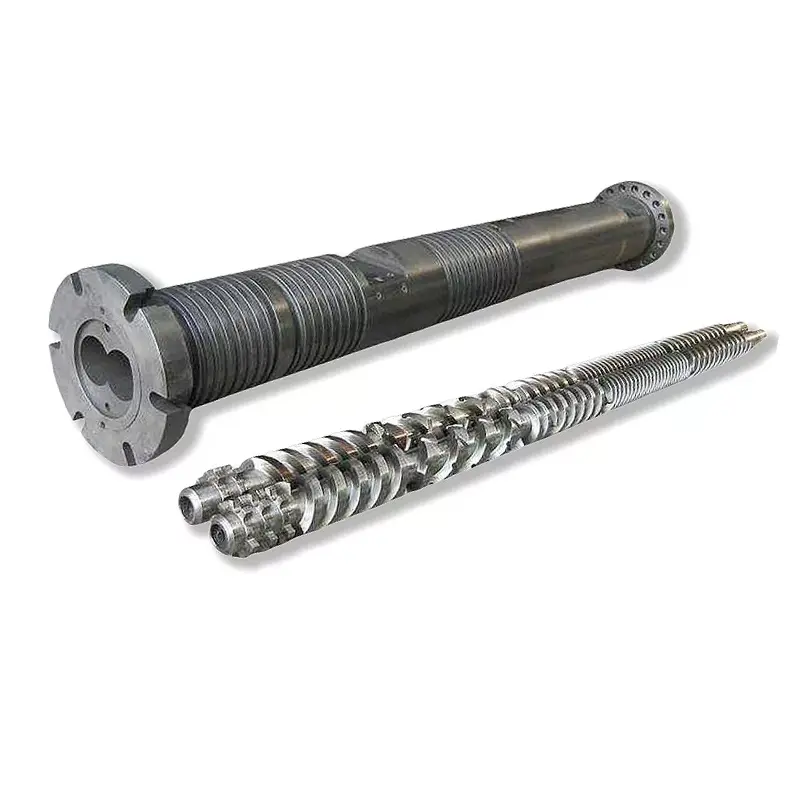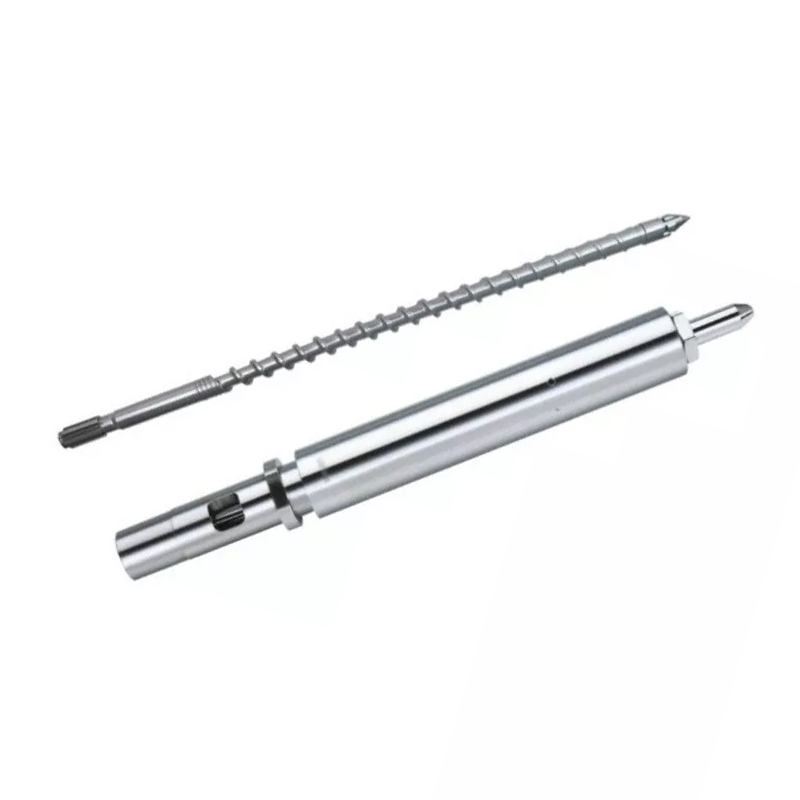

A screw for PS foam should be judged by the melt and foam product it helps the whole line deliver—not by diameter, L/D or a claim of “high mixing” in isolation.
Quick answer
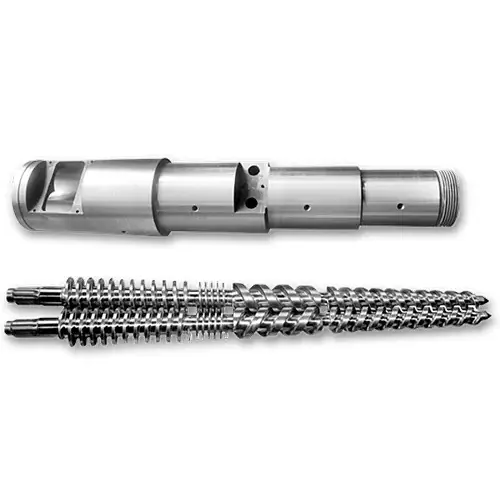
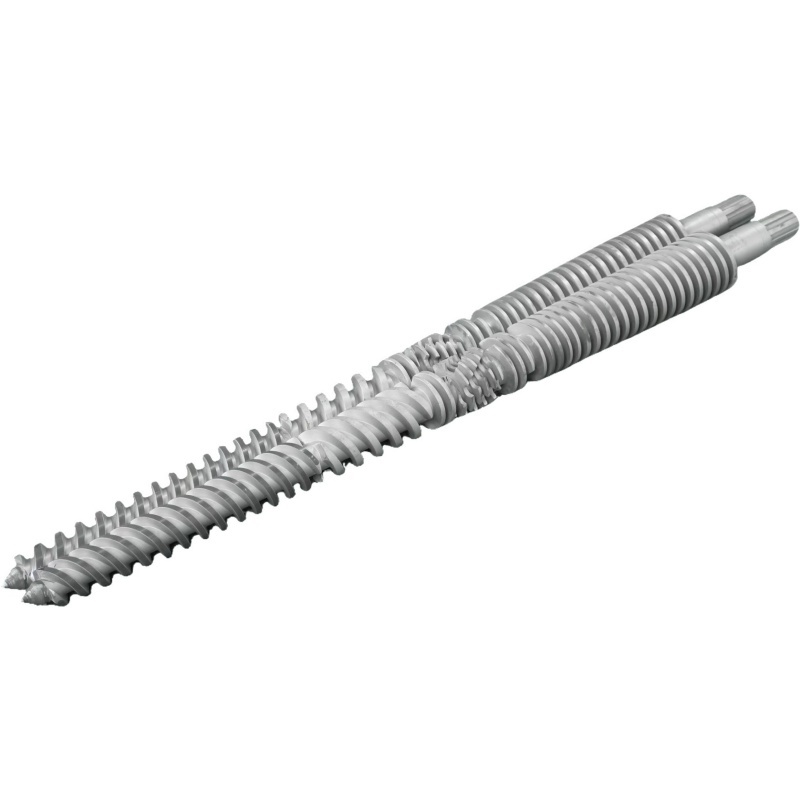
Specify a PS foaming single screw by stating the feed form and recipe, what must be melted and mixed before gas expansion, the existing barrel and die interfaces, and the foam product's measurable acceptance criteria. Nanhaiya's PS foaming single screw uses a longer L/D design concept, a feed section intended to move recycled PS and nucleating agents, and a choice of Maddock-type or pin mixing section. None of those features substitutes for your actual line data.
1. First, define which PS foaming job you are buying for
“PS foam” is not a complete screw specification. A line making sheet and a line making decorative profiles can share the resin family yet need different output, die pressure, cooling and product checks. Nanhaiya lists PS foam sheet among its single-screw applications; its PS foaming screw page also discusses decorative ceiling strips.
Tell the screw supplier whether the feed is virgin PS pellets, regrind, another recycled form or a controlled blend. Give the actual resin grades, recycled-content range, nucleating agent and any other additives. State the blowing system and where it enters the process. A design decision made for one route should not quietly be assumed to work for another.
Our factory-side rule: I want to see the product and the feedstock on the same RFQ. If the buyer sends only “PS foaming, 90 mm screw,” we can discuss a diameter, but not the feeding behavior, mixing duty or likely restrictions before the die. The useful conversation starts when the line operator's real inputs are on the page.
| Tell the screw maker | Why it changes the design discussion |
|---|---|
| Product: sheet or profile; target dimensions and apparent density | Defines what must remain stable after the melt leaves the die. |
| Virgin/recycled PS ratio and feed form | Changes hopper delivery and how consistently the channel fills. |
| Nucleating agent and other solids | Sets a dispersion and wear question, not just a resin name. |
| Blowing-system type and introduction point | Determines which process zone must be ready before expansion. |
| Existing machine, barrel, die and output target | Bounds the available geometry, pressure and operating window. |
2. The feed section deserves more attention than a catalog L/D number
Nanhaiya's PS foaming product page describes greater depth in the feed section to transport PS particles, especially recycled material, and nucleating agents such as talcum powder. The point is practical: a downstream mixer cannot repair a feed rate that changes every time the regrind bulk density changes or the hopper bridges.
Before changing the screw, observe whether the feed throat is actually supplied at a steady rate. Record the blend, hopper behavior, screw speed and motor load during good and poor production. If the problem begins at the hopper, fix that supply condition before asking a new flight profile to conceal it.
For a replacement, compare the old screw with the machine drawing at the feed throat, barrel bore, shank and discharge end. If the old screw is worn, a physical copy of its flights can copy the wear too. Our replacement single-screw measurement guide explains why machine references matter as much as the removed part.
3. Choose the mixing section for a measurable problem
The Nanhaiya product design places a barrier-type Maddock mixing section or a pin mixing section near the end of compression or metering. It also describes a longer L/D ratio and an efficient mixed-shear section. These are design options, not proof that one fixed geometry suits every PS foam line.
In a foam process, the upstream melt must be consistent enough for the downstream foaming and shaping steps. Poorly melted particles, uneven additive distribution or a changing melt temperature can show up in the finished product. But adding mixing without studying the line can increase pressure demand and thermal exposure. The question is not “Which mixer sounds stronger?” It is “What is the present defect, and where does it first appear?”
When to discuss a Maddock-type section
Ask about it when melt uniformity is the defined gap. Show resin and regrind details, evidence of unmelt, current melt measurements and the pressure margin the machine can support.
When to discuss a pin section
Ask how it would distribute the actual additive package and what it does to pressure, cleanout and temperature history. A pin section is a design decision, not an automatic upgrade.
When to leave the mixer alone
If the feed rate, gas addition, die or cooling is unstable, replacing a mixer may not change the first cause. Establish the baseline before redesigning the screw.
Nanhaiya's broader guide to screw speed, melt temperature and output is useful here: moving the speed dial changes more than kilograms per hour. For a PS foam RFQ, record the operating window rather than only the machine's maximum RPM.
A trade-off we would put on the drawing review: if more shear improves melting but raises the measured melt temperature beyond the line's workable window, that is not a win. Compare the whole process result—melt condition, pressure and finished foam—not the mixing feature alone.

4. The screw is one part of a PS foam system
The screw and barrel must fit each other, but they also hand material to a filter, gas-introduction system where used, die and cooling equipment. When a buyer asks us to guarantee foam density from a screw drawing alone, I would stop that promise. The responsible purchase specification ties the screw to the equipment and process controls that follow it.
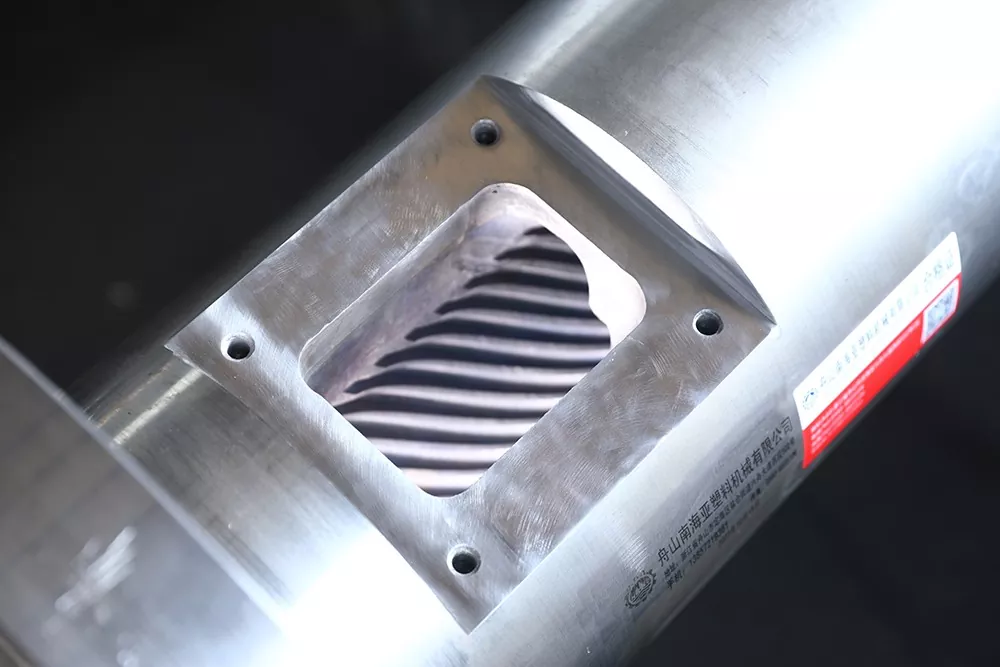
Check shaft connection, overall length, barrel inside diameter, feed location, temperature-control zones and available drive load. Map any injection or vent ports on the existing barrel. Ask who supplies the mating barrel and whether it is being reused; a new screw against a damaged bore can make a replacement look worse than it is.
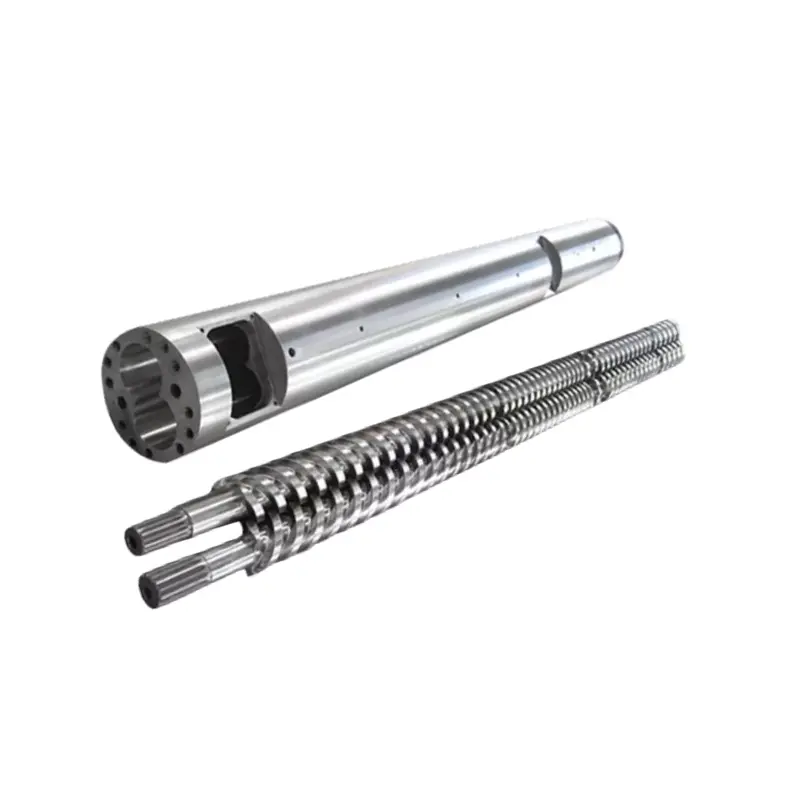
Nanhaiya's single-screw category publishes general model ranges for L/D, output, speed and motor. Those are a starting catalog, not PS-foam performance guarantees. Convert the product duty into a line-specific target, then confirm the selected geometry and allowable operating window on the order drawing.
One useful factory question: where did the old system lose control first—at feed, in melting, at the die, or after the die? If we cannot answer that, an expensive new screw can become a very neat copy of the wrong solution.
5. Read foam defects as clues, not automatic screw failures
A density change or poor surface can be a screw-related symptom. It can also begin with resin, dosing, pressure, gas delivery, die or cooling. Use the first point of change to narrow the cause. If the process changed recently, compare it with a recorded good run before ordering a new part.
| Observed problem | Check first | When the screw deserves a closer look |
|---|---|---|
| Apparent density drifts during a run | Feed mass, blend, gas delivery, temperature, die and cooling conditions | Those inputs are stable but output or pressure changes with measured screw/barrel wear. |
| Unmelt or visible specks | Resin contamination, regrind size, temperature sensing and screen condition | Inputs are clean and stable, yet melt sampling shows persistent inadequate melting. |
| Pressure surges | Hopper bridging, feed dosing, gas system and screen restriction | Upstream supply and downstream restriction are controlled, while wear or geometry explains the surge. |
| Surface collapse or irregular cells | Formulation, gas control, die gap, cooling and puller conditions | Melt history is inconsistent before the die after the other causes are excluded. |
| Unexpectedly rapid wear | Regrind contamination, solids content, barrel alignment and old wear map | Measurements locate a repeatable wear zone that should change the specified construction. |
If abrasive solids or recycled material are part of the duty, review the surface construction as well as the flight design. Nanhaiya's super wear-resistant single screw presents wear-resistant options. A harder surface is useful only if it protects the zone that is actually wearing and remains compatible with the rest of the assembly.
6. Turn the RFQ into a testable purchase
A drawing approval proves dimensions and construction, not product performance by itself. Write a short trial plan before the part is made. For PS foam, state the product shape, target throughput, feed formulation, operating window and how many stable samples will be taken. Agree who supplies the reference resin and records the line conditions.
For cellular plastics, ISO 845 gives a method for apparent density. It distinguishes overall and core density where that matters. ISO 1923 covers linear dimensions of cellular plastics and rubbers. These standards help define how to measure; they do not set one universal density, thickness or width limit for your product. Put those acceptance limits in your purchase specification.
| Acceptance item | Write down before the trial |
|---|---|
| Part fit | Approved screw and barrel drawing, connection dimensions, finish and inspection record. |
| Process window | Feed blend, output target, screw-speed range, temperature and pressure measurement locations, stabilization rule. |
| Foam product | Apparent-density method and target range, dimensions and tolerances, sample positions, visible defect criteria. |
| Comparison | Baseline run or agreed reference sample, same material lot where practical, and named decision-maker for sign-off. |
If you are replacing an existing screw, send the current production data even when it is poor. A measured baseline gives our team something useful to change. Without it, “less scrap” and “better foam” sound attractive but cannot be accepted or rejected fairly.
RFQ checklist
- Extruder make, model and barrel drawing
- Old screw drawing or measured part
- PS grade and feed form
- Recycled-content range and particle size
- Nucleating agent and other additives
- Blowing system and introduction point
- Sheet or profile drawing and die details
- Target output, density and dimensions
- Current RPM, temperatures and pressures
- Wear map, problems and trial criteria
Frequently asked questions
What is different about a PS foaming single screw?
Its feed, melting and mixing zones are selected for the PS feedstock and the foam line's process. Nanhaiya's PS foaming single screw page describes a longer L/D approach, a feed section intended to move recycled PS and nucleating agent, and a Maddock-type or pin mixing option near the end of compression or metering. The actual geometry must follow the buyer's machine and formulation.
Does a longer L/D ratio guarantee better PS foam?
No. More processing length may help a particular melting and mixing duty, but it also changes residence time and thermal exposure. Nanhaiya describes a longer L/D design for its PS foaming screw without publishing one universal PS foam L/D value. Choose the dimensions against the machine, throughput, formulation and product target.
Should I choose a Maddock mixer or a pin mixer?
Neither is universally better. Nanhaiya lists both as possible mixing sections. Describe the incoming PS, recycled fraction, nucleating agent, melt-uniformity problem, pressure available before the die and allowable temperature history so the mixer can be selected for the duty.
Can I use general single-screw output ratings as PS foam capacity?
No. Nanhaiya's single-screw category lists general model ranges, not a guaranteed PS foaming output for every formulation, die and blowing system. Ask for a duty-specific capacity and acceptance basis instead.
How should we check density on a PS foam trial?
Agree the product, sampling locations, conditioning and target range before the trial. ISO 845 provides a method for apparent density of cellular plastics and rubbers. Where skins affect interpretation, agree whether the overall or core density is required; also record dimensions and line conditions.
What information does Nanhaiya need for a quotation?
Send the current screw and barrel drawings or measurements, extruder model, connection details, PS grade and feed form, recycled-content range, nucleating additives, blowing system and introduction point, target product and output, known melt and pressure data, wear history and an agreed trial acceptance plan.