News

Twin Screw Extruder: Types, How It Works & How to Choose

2026-08-13 0 Leave me a message


Quick answer

A twin screw extruder uses two intermeshing screws inside a twin-bore barrel to feed, melt, mix and pump plastic through a die. The two main families are conical (tapered screws, best for direct PVC pipe, profile and board extrusion) and parallel (constant-diameter, segmented screws, best for compounding, granulation and high-filler mixing).

The twin screw extruder is the most versatile machine in plastics processing. Two screws instead of one means better conveying, far better mixing and much tighter control over what happens to the material along the barrel — which is why twin screw machines dominate PVC extrusion, compounding and pelletizing. But "twin screw extruder" covers several quite different machines. This guide explains how they work, the conical-versus-parallel and co-versus-counter-rotating splits that decide which one you need, real model sizes and outputs, and how to specify the right machine.

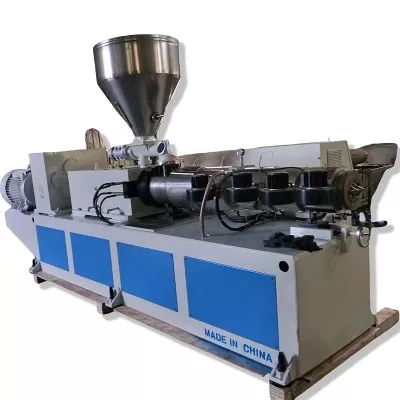
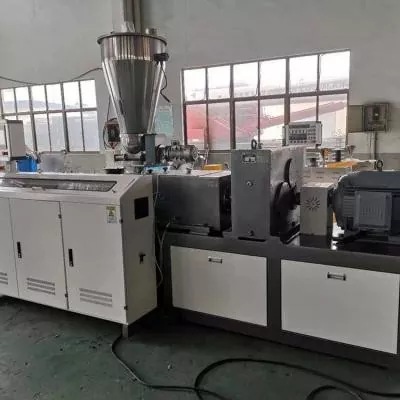
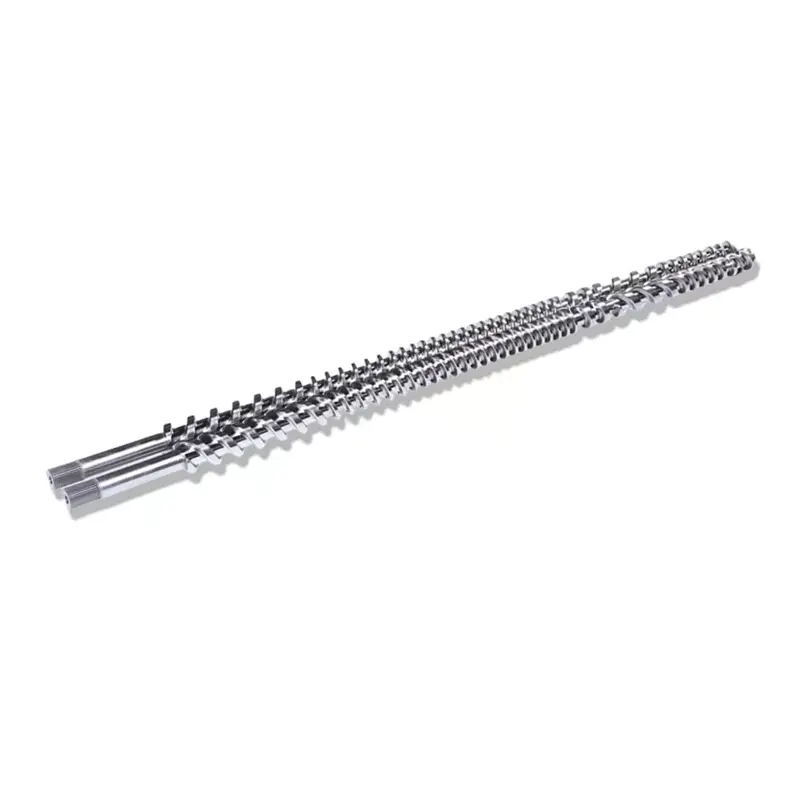
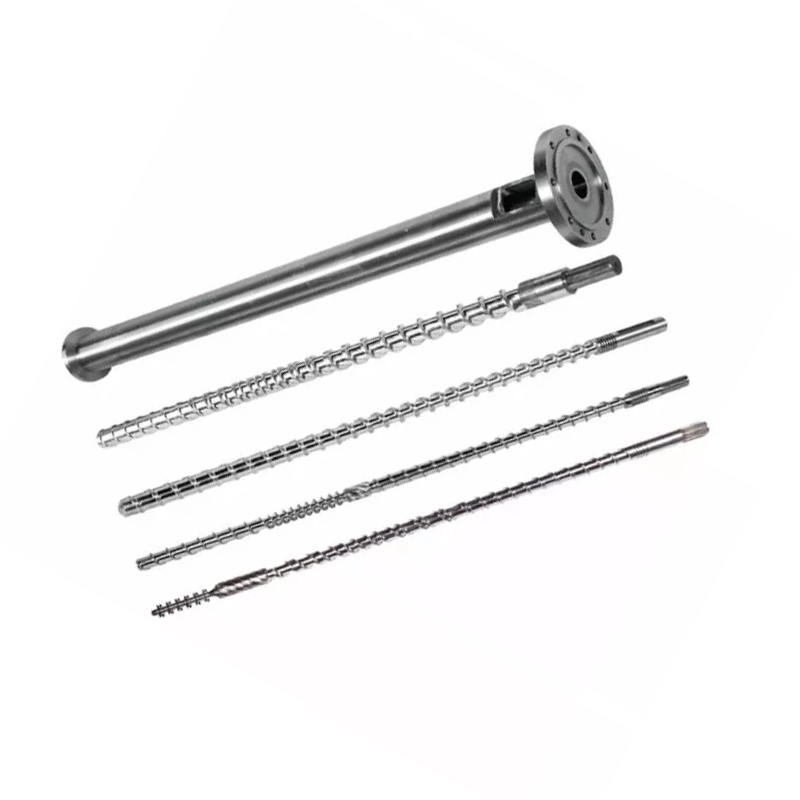
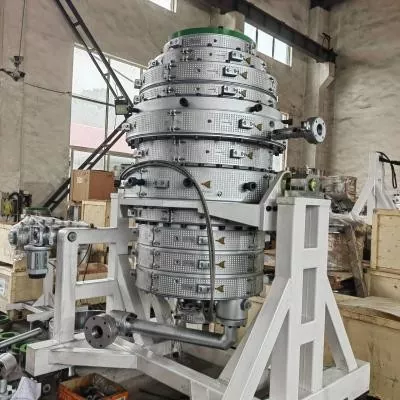
Twin screw extruder manufactured by Nanhaiya
A Nanhaiya twin screw extruder — two intermeshing screws in a matching twin-bore barrel.

How a twin screw extruder works

Material enters the feed opening, is conveyed forward by two meshing screws, compressed and melted through combined heat and mechanical shear, homogenised, then pumped through a die at steady pressure. Because the screws intermesh, material is positively transferred from one screw to the other rather than simply dragged along a wall — which gives twin screw machines their characteristic steady output and strong mixing.

The barrel is divided into heating and cooling zones so each stage sits at the right temperature, and many machines include a vacuum vent to pull moisture and volatiles out of the melt before the die. The core sequence:

  1. Feeding — gravity or a forced (crammer) feeder pushes material into the feed zone; forced feeding is essential for low-bulk-density powders like PVC dry-blend.
  2. Melting & compression — heat from the barrel plus shear from the screws melts and compacts the material, driving out air.
  3. Mixing & venting — mixing elements disperse fillers and additives; vent sections remove moisture and volatiles.
  4. Metering & discharge — a stable pressure builds and a uniform melt is pushed through the die.

Twin screw vs single screw extruder

A single screw extruder is simpler and cheaper, and it is excellent at what it does: pumping an already-uniform material at high output. A twin screw machine is the choice when the job needs mixing, venting or handling of difficult feedstock.

Factor Single screw extruder Twin screw extruder
Conveying Drag flow — depends on friction Positive, intermeshing transfer
Mixing Limited (add mixing sections) Strong dispersive & distributive mixing
Powder feeding Struggles with low bulk density Handles powders well, especially with forced feeder
Venting Possible but limited Effective multi-stage venting
Best for Film blowing, pipe from pellets, simple profiles PVC, compounding, pelletizing, filled/recycled material
Cost Lower Higher
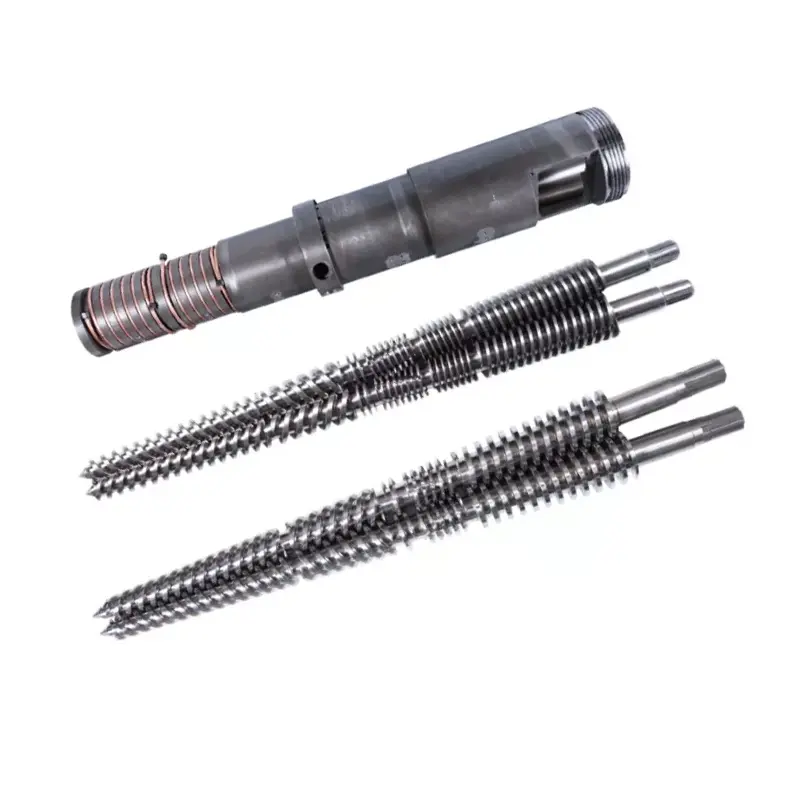
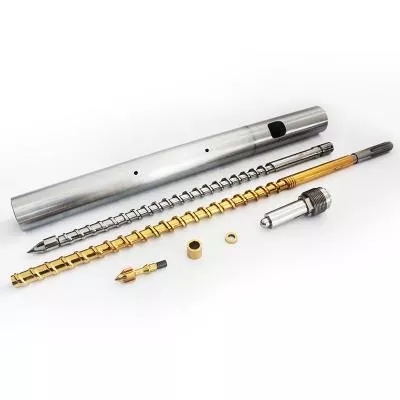
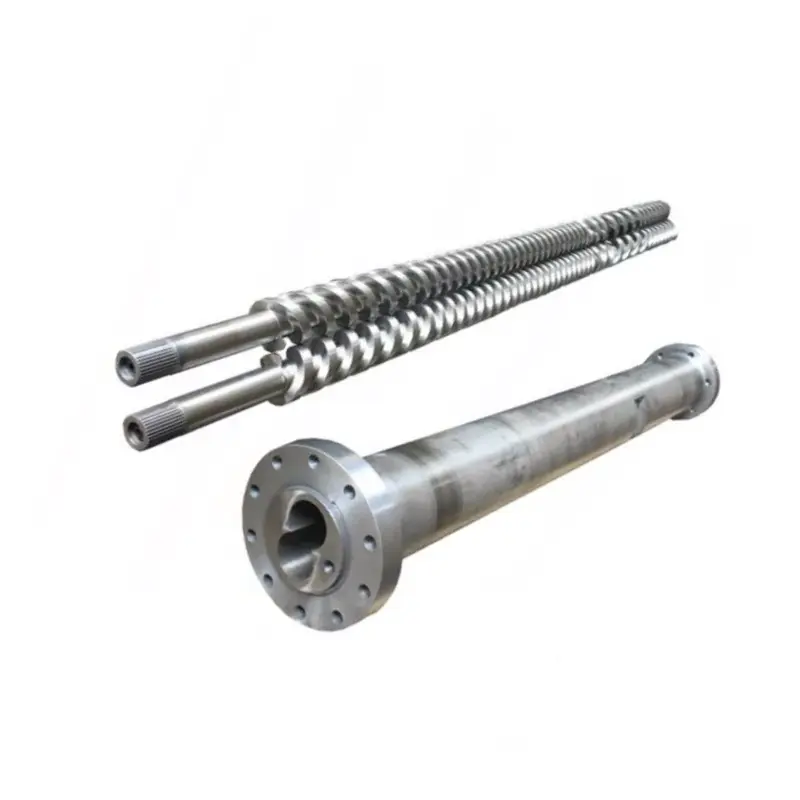
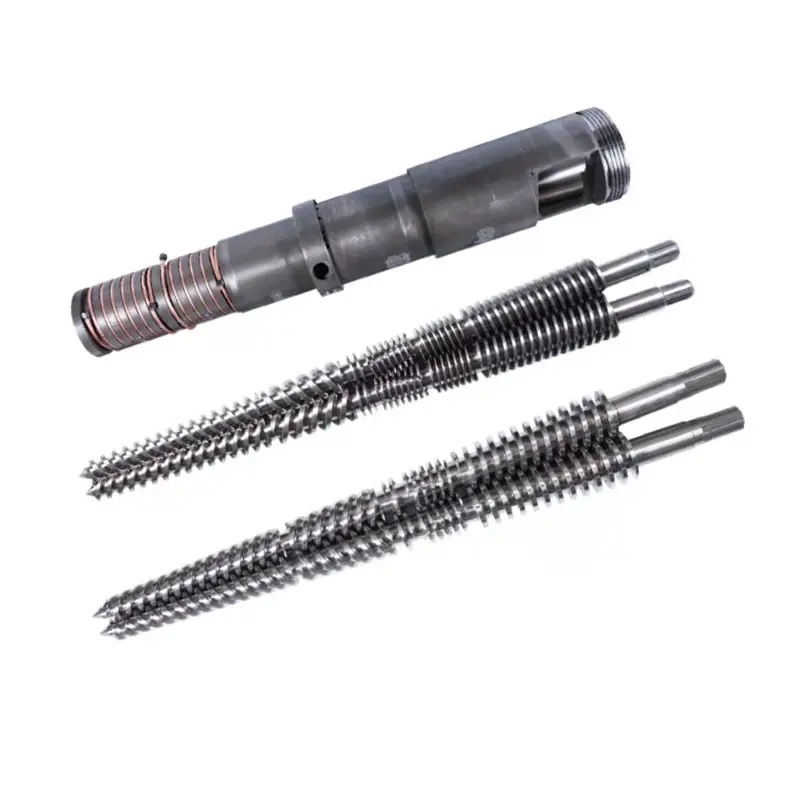
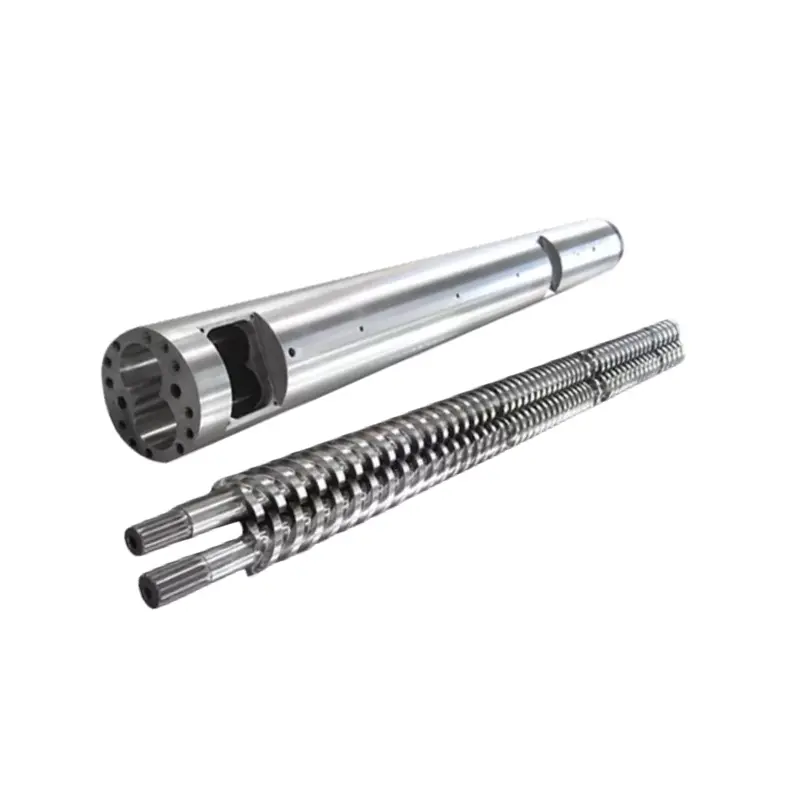
Conical twin screw and barrel for PVC extrusion
Conical: tapered screws for direct PVC pipe, profile and board extrusion.

Conical vs parallel twin screw extruder

This is the first real decision. Both are twin screw, both intermesh — the difference is the screw geometry, and it decides what the machine is good at.

Factor Conical twin screw extruder Parallel twin screw extruder
Screw shape Tapered — large feed end, small die end Constant diameter, built from segments
Strength Strong feeding & high compression in short length Flexible, reconfigurable mixing
Best for PVC pipe, profile, board, sheet, WPC Compounding, granulation, masterbatch, high filler
Screw change Fixed geometry per size Rebuild the profile for a new recipe
Typical layout Direct extrusion to a die Often ends in a pelletizing line

The short rule: if the extrudate is your product (a pipe, a board, a profile), look at a conical twin screw extruder. If you are making pellets or dispersing a demanding additive package, look at parallel — see our parallel twin screw barrel guide.

Co-rotating vs counter-rotating

Within the parallel family there is a second split, and it matters as much as conical-versus-parallel. Co-rotating screws turn the same direction and give high-shear, high-speed mixing — the standard for compounding and masterbatch. Counter-rotating screws turn in opposite directions with gentler, pump-like conveying, which suits heat-sensitive PVC and very high filler loads.

General industry note: conical twin screw machines for rigid PVC are typically counter-rotating and fully intermeshing, giving positive-displacement conveying at low shear. Most compounding lines, by contrast, run co-rotating parallel machines at much higher screw speed.
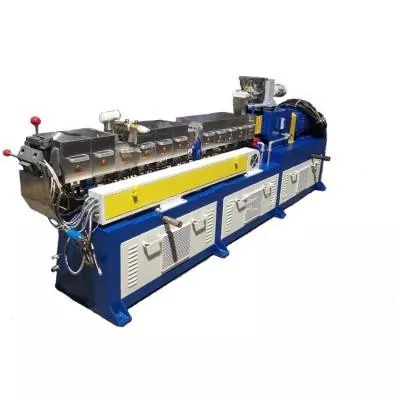
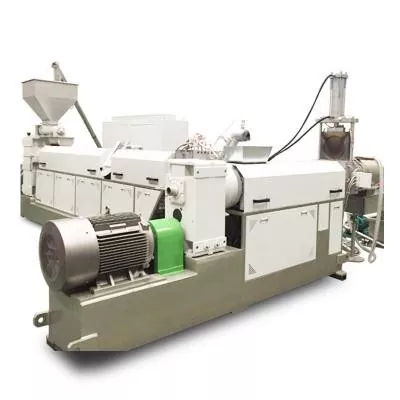
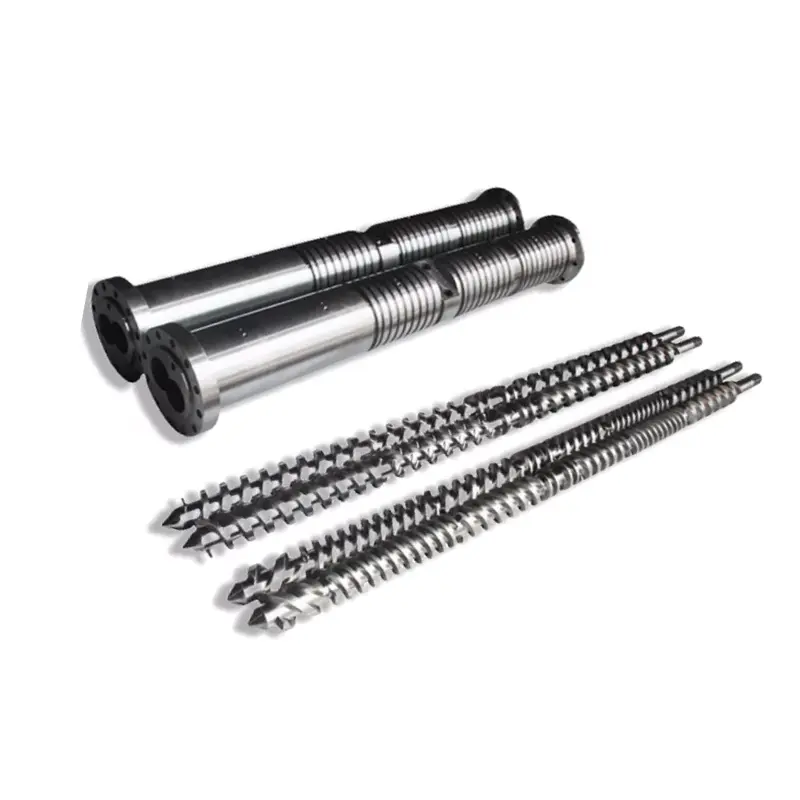
Parallel twin screw pelletizing line

Twin screw extruder models & output

Machine size is quoted by screw diameter — feed/die diameters for conical, single diameter for parallel. Here is the real size-to-output map for our conical range, which covers most PVC pipe and profile work:

Model Screw diameter Motor power Output (kg/h) Application focus
SJSZ-45/90 Φ45/90 mm 15–18.5 kW 100–180 Small profile
SJSZ-51/105 Φ51/105 mm 18.5–22 kW 150–250 Profile, soft PVC
SJSZ-65/132 Φ65/132 mm 37–45 kW 250–380 PVC pipe / profile
SJSZ-80/156 Φ80/156 mm 55–75 kW 350–500 Medium pipe
SJSZ-92/188 Φ92/188 mm 110–160 kW 600–900 Large pipe / extrusion

Output also depends on formulation, screw design and downstream capacity, so treat these as bands rather than guarantees. For parallel machines, output is set mainly by diameter and screw speed, and the configuration is built to the recipe.

What twin screw extruders are used for

  • PVC pipe, profile & board — the classic conical application.
  • WPC (wood-plastic composite) — decking, wall panels and profiles.
  • Compounding & masterbatch — dispersing pigments, additives and fillers.
  • Granulation & pelletizing — see our parallel twin screw pelletizing line.
  • PS foaming — foam sheet and board production.
  • Recycling — reprocessing filled or contaminated feedstock into usable pellets.

How to choose a twin screw extruder

  1. Define the product. Direct extrusion (pipe, profile, board) points to conical; pellets or compounds point to parallel.
  2. Set the output. Match target kg/h to a machine class with headroom — running flat out shortens component life.
  3. Check the feedstock. Powder needs forced feeding; moist or volatile material needs vacuum venting.
  4. Assess abrasion. High CaCO₃, wood fibre or glass fibre means you should upgrade the screw and barrel surface.
  5. Confirm the fit. If you are replacing parts rather than the machine, send the extruder brand/model or a drawing.

Nanhaiya designs and builds both structures in-house, so the machine can be matched to your product — see our full plastic extruder machine range and twin screw extruder models.

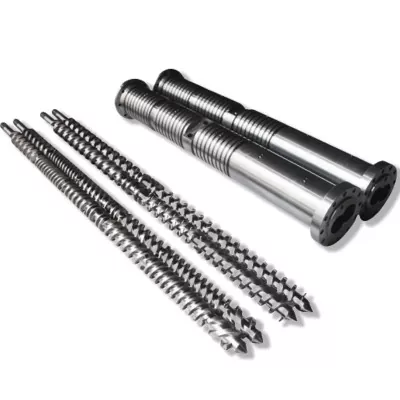
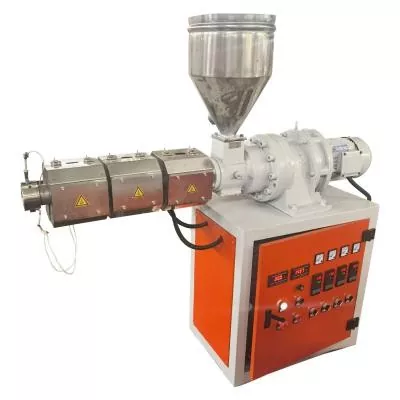
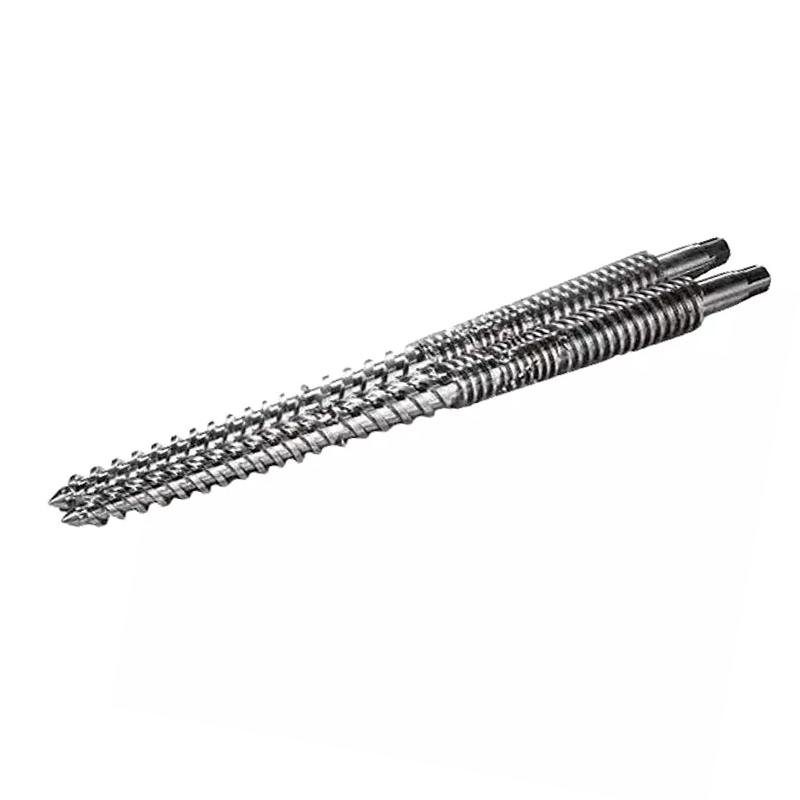
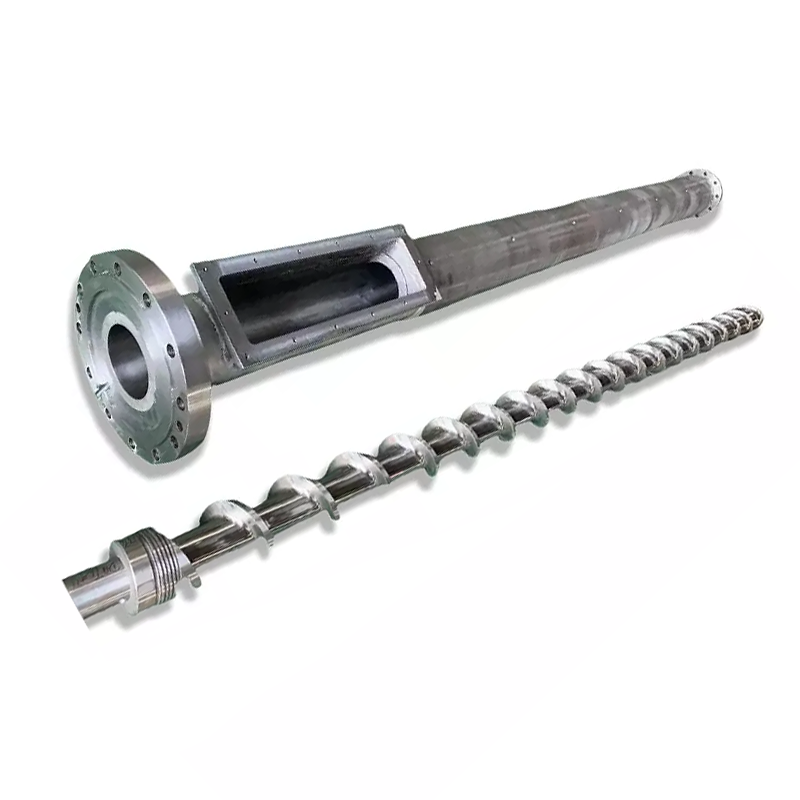
Twin screw extruder built by Nanhaiya
Machines and wear parts are built in the same Zhoushan factory.

The screw and barrel: what actually wears

Whatever machine you buy, the screw and barrel is the part that wears out and the part that most affects melt quality, output and running cost. It is also what you will replace during the machine's life — which makes its steel and surface treatment worth getting right up front.

Nanhaiya machines screws and barrels from 38CrMoAlA nitrided steel, W6Mo5Cr4V2 or HIP powder steel, and sprays a tungsten-added hard alloy around the easy-wear section to reach 62 HRC inside the bore — versus a common 58 HRC — with a 2.5–3 mm alloy layer. For the choice between surfaces, see our comparison of a bimetallic vs nitrided screw barrel; for the conical component itself, our conical twin screw barrel guide. Wear parts are available through our spare parts range.

Frequently asked questions

What is a twin screw extruder?

It is an extrusion machine with two intermeshing screws inside a twin-bore barrel. The screws feed, melt, mix and pump plastic through a die. Compared with a single screw machine it conveys positively, mixes far better and handles powders and difficult feedstock more reliably.

What is the difference between a conical and parallel twin screw extruder?

Conical machines have tapered screws — large at the feed end, small at the die — giving strong feeding and high compression in a short length, ideal for PVC pipe, profile and board. Parallel machines keep a constant diameter and use segmented screws, making them better for compounding, granulation and high-filler mixing.

Twin screw or single screw extruder — which do I need?

Choose a single screw extruder for simple, high-output pumping of uniform material such as film blowing or pipe from pellets. Choose a twin screw extruder when you need mixing, venting, powder feeding or the ability to run filled and recycled material.

What is the difference between co-rotating and counter-rotating?

Co-rotating screws turn the same direction and give high-shear mixing at high speed, standard for compounding and masterbatch. Counter-rotating screws turn oppositely with gentler, pump-like conveying, better for heat-sensitive PVC and very high filler loads.

What output can a twin screw extruder produce?

It depends on size. In our conical range a 45/90 machine runs about 100–180 kg/h, a 65/132 around 250–380 kg/h, and a 92/188 machine 600–900 kg/h. Formulation, screw design and downstream capacity also affect real output.

What materials can a twin screw extruder process?

Rigid and soft PVC, WPC, PE and PP compounds, PS for foaming, masterbatch and additive compounds, and filled or recycled feedstock. Twin screw machines are especially good with low-bulk-density powders and highly filled recipes.

What is the twin screw extruder barrel made of?

Typically 38CrMoAlA nitrided steel, W6Mo5Cr4V2 or HIP powder steel. For abrasive compounds a bimetallic surface is used — a tungsten-added alloy layer of 2.5–3 mm reaching about 62 HRC inside the bore for longer wear life.

How do I choose the right twin screw extruder size?

Start from your product and target output, then pick a machine class with headroom. Confirm feeding (forced feeder for powder), venting needs, and how abrasive the recipe is so the screw and barrel surface is specified correctly.

Related products from our factory

Get a twin screw extruder sized for your product

Tell us your product, material and target output and our engineers will recommend conical or parallel, the right model size, and a screw and barrel spec matched to your formulation. In-house screw and barrel machining means we control the part that matters most.

Get a quote within 12 hours →
Nanhaiya (Zhoushan) Plastic Machinery · 500+ global clients · twin screw extruders, conical & parallel screw barrels & spare parts
Related News
Leave me a message
X
We use cookies to offer you a better browsing experience, analyze site traffic and personalize content. By using this site, you agree to our use of cookies. Privacy Policy
RejectAccept