News

Conical Twin Screw Extruder: How It Works, Specs & Selection Guide

2026-08-06 0 Leave me a message


Quick answer

A conical twin screw extruder is a PVC-focused extrusion machine with two tapered, intermeshing screws — wide at the feed end, narrow at the die end. The conical geometry gives high torque and strong compression in a compact length, making it the standard machine for PVC pipe, profile, board and WPC production.

The conical twin screw extruder is the machine behind most of the world's rigid-PVC pipe, profile and board. Its tapered twin-screw design solves a specific problem: feeding light PVC dry-blend powder and compressing it hard, fast and gently enough not to burn a heat-sensitive polymer. This guide explains how the machine works, the model sizes and outputs to expect, how it compares with a parallel twin screw machine, and how to choose the right one — with the real specification data buyers actually need.

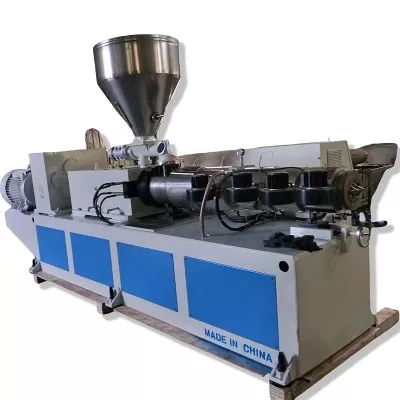
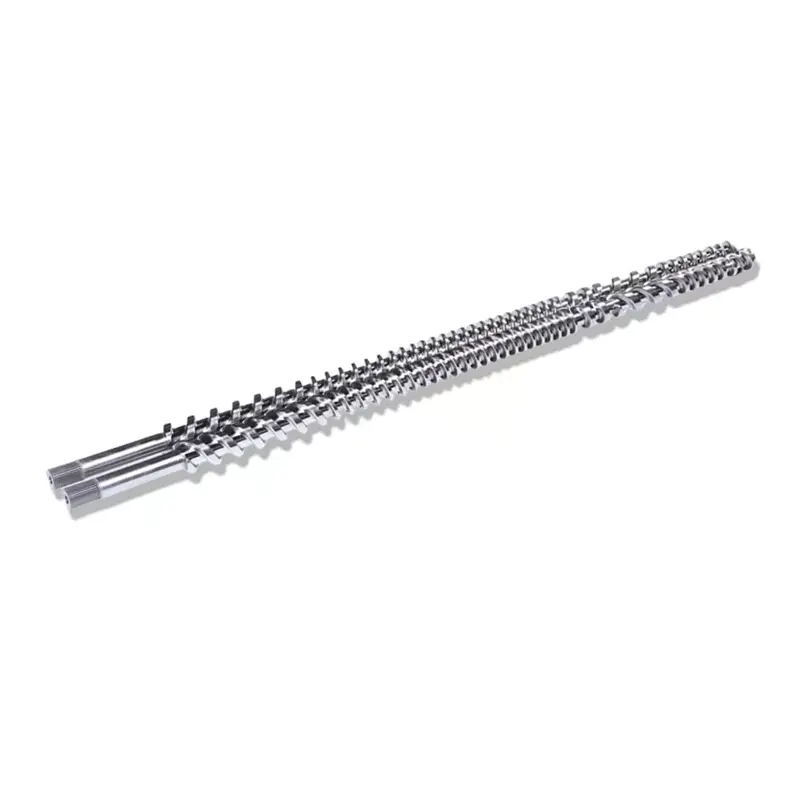
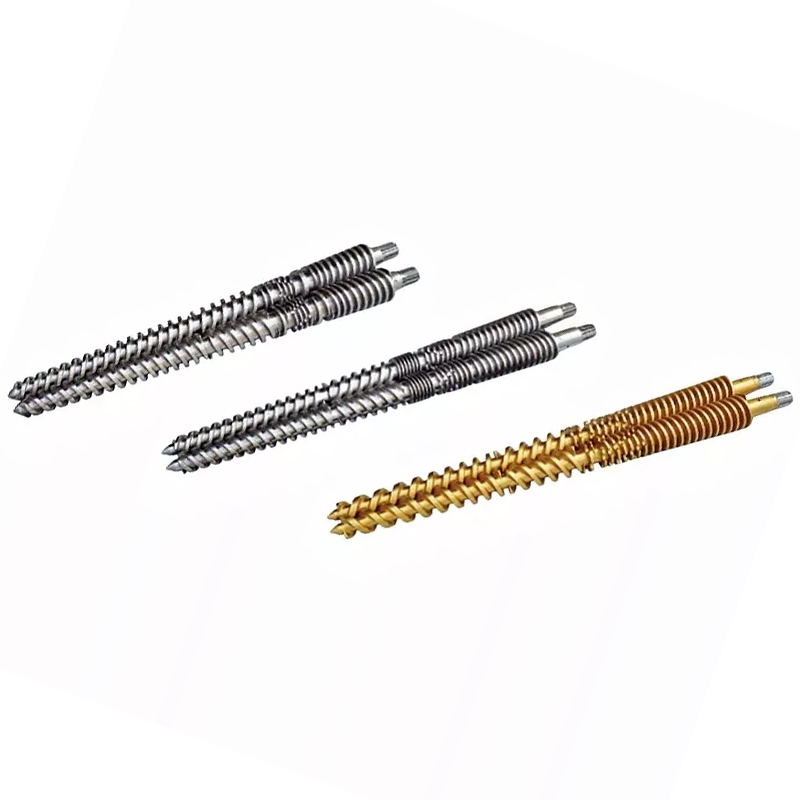
Conical twin screw extruder manufactured by Nanhaiya for PVC pipe and profile
A Nanhaiya conical twin screw extruder configured for PVC pipe and profile lines.

How a conical twin screw extruder works

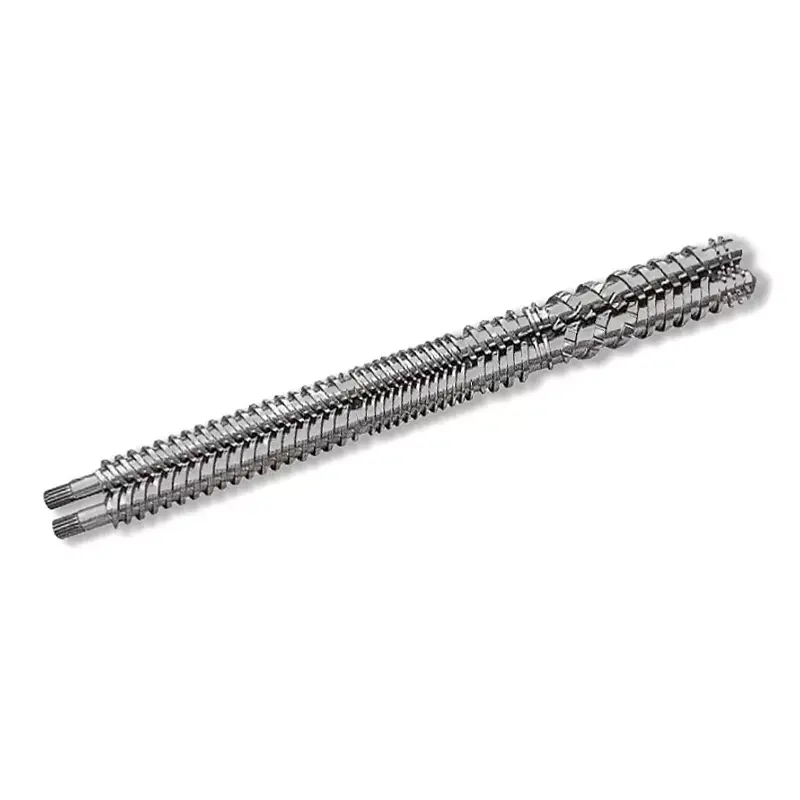
Two conical screws sit side by side inside a matching tapered barrel, meshing with each other as they turn. Material moves from the large-diameter feed end to the small-diameter die end, and because the channel volume shrinks along the way, the compound is progressively compressed, de-aerated, melted and homogenized before it reaches the die. A forced feeder pushes light PVC powder into that large feed opening so intake stays stable.

The cycle has four stages:

  1. Forced feeding — a crammer feeder drives low-bulk-density PVC dry-blend into the wide feed zone without bridging.
  2. Compression & plasticizing — the taper squeezes the material, drives out air, and melts it through combined heat and shear at low, controlled temperature.
  3. Metering & venting — a stable pressure builds in the narrow metering zone; optional vacuum venting removes moisture and volatiles from filled compounds.
  4. Die discharge — a uniform melt is pushed through the die to form pipe, profile, sheet or pellets.
General industry note: conical twin screw extruders for rigid PVC are typically counter-rotating and fully intermeshing — this acts like a positive-displacement pump, giving steady output at gentle shear, which is exactly what heat-sensitive PVC needs.

Conical vs parallel twin screw extruder

Both machines use two intermeshing screws, but the geometry pushes them toward different jobs. As a rule: choose conical for direct PVC pipe/profile/board extrusion, and a parallel twin screw machine for compounding, pelletizing and very high-filler dispersion.

Factor Conical twin screw extruder Parallel twin screw extruder
Screw geometry Tapered — large feed, small die end Constant diameter along the length
Torque & compression High torque and compression in a short length More constant compression; long L/D for mixing
Feeding Large feed intake — ideal for PVC dry-blend powder Even feeding for pellets and compounds
Best for PVC pipe, profile, board, sheet, resin tile Granulation, masterbatch, WPC compounding, recycling
Filler tolerance Good; step up to parallel for very high CaCO₃ Best for very high filler loads and dispersion

Nanhaiya builds both structures, so the machine can be matched to your product rather than the other way around. Many pipe and profile plants run conical; compounders and WPC pelletizers lean parallel — and some plants run both, sharing downstream lines.

Conical twin screw extruder models & output chart

Output is the number buyers care about most, so here is the real size-to-output map for our conical range. Use it to match a machine class to your target line speed — then confirm the exact configuration for your product.

Model Screw diameter Motor power Output (kg/h) Application focus
SJSZ-45/90 Φ45/90 mm 15–18.5 kW 100–180 Small profile
SJSZ-51/105 Φ51/105 mm 18.5–22 kW 150–250 Profile, soft PVC
SJSZ-65/132 Φ65/132 mm 37–45 kW 250–380 PVC pipe / profile
SJSZ-80/156 Φ80/156 mm 55–75 kW 350–500 Medium pipe
SJSZ-92/188 Φ92/188 mm 110–160 kW 600–900 Large pipe / extrusion

As a quick read: a small window-profile line often runs a 45/90 or 51/105; general PVC pipe and profile sits around 65/132; and large-diameter pipe steps up to 80/156 or 92/188. Output also depends on formulation, screw design and downstream capacity, so treat these bands as a starting point.

Key components that decide performance

A conical twin screw extruder is only as good as its core sub-systems. These are the parts worth checking on any specification:

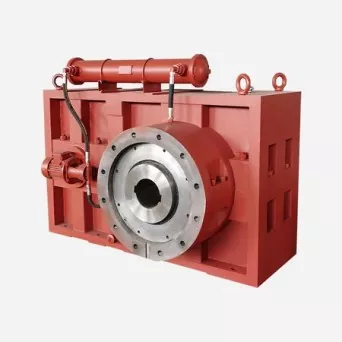
  • Gearbox — a high-torque design with extended bearing life keeps transmission stable under heavy PVC load.
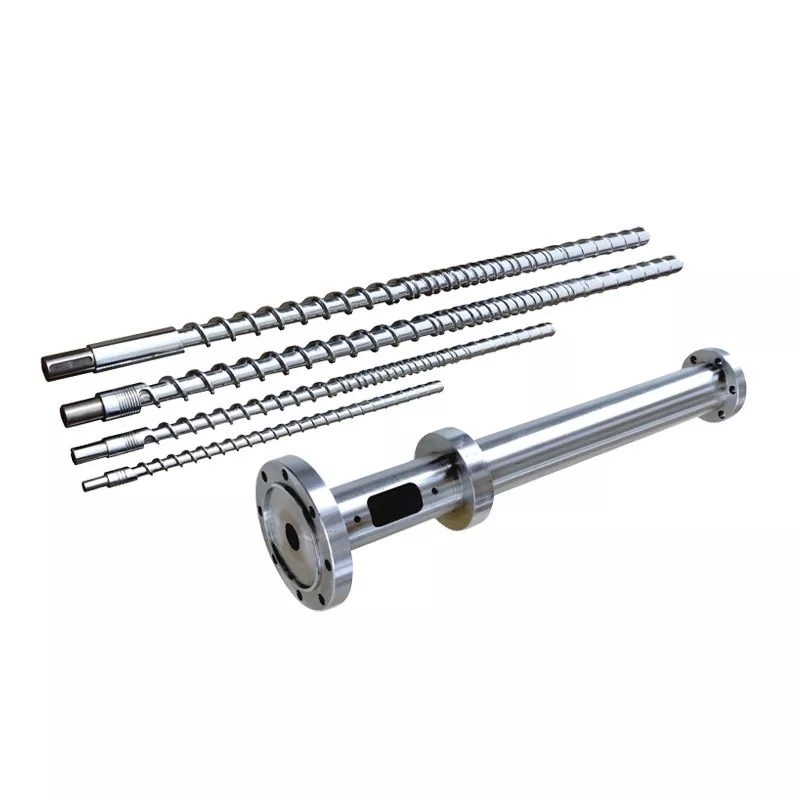
  • Screw & barrel — the wear heart of the machine, built from 38CrMoAlA nitrided steel, W6Mo5Cr4V2 or HIP powder steel for wear resistance.
  • Barrel heating/cooling — multi-zone heating with cooling and optional vacuum venting for moisture and volatile removal.
  • Forced feeder — a crammer feeder suited to light PVC powder and high-filling formulations.
  • Temperature control — PID intelligent control with independent zone regulation for a stable melt profile.
  • Electrical system — international brands optional (Siemens, ABB or Schneider) for reliability and easy servicing.

Common applications

Because it feeds powder well and compresses gently, the conical twin screw extruder is the default machine for rigid-PVC and wood-plastic products:

  • PVC pipe — water-supply, drainage and conduit pipe.
  • PVC profile — window/door profiles, trim and edge banding.
  • PVC board & sheet — foam board and marble-look sheet.
  • WPC — wood-plastic decking, wall panels and profiles.
  • Resin tile & PE profiles — corrugated roofing tile and filled PE products.
  • PVC pelletizing — converting dry-blend into granules.

How to choose the right conical twin screw extruder

Work through three questions in order:

  1. What product and size? Pipe diameter or profile size sets the machine class — small profile (45/90–51/105), general pipe/profile (65/132), or large pipe (80/156–92/188).
  2. What output do you need? Match target kg/h to the chart above, leaving headroom so the machine is not running flat out.
  3. How abrasive is your formula? High CaCO₃ or wood-fiber loading means you should upgrade the screw and barrel to a harder, bimetallic surface (more on that below).

For a conical twin screw extruder for PVC specifically, prioritise a forced feeder, strong venting and a wear-protected barrel — PVC is both abrasive (with filler) and corrosive (from HCl on thermal decomposition), so surface treatment matters as much as size. If you need the whole line rather than the machine alone, we also supply complete extruder machines and pelletizing lines.

The screw and barrel: the part that wears

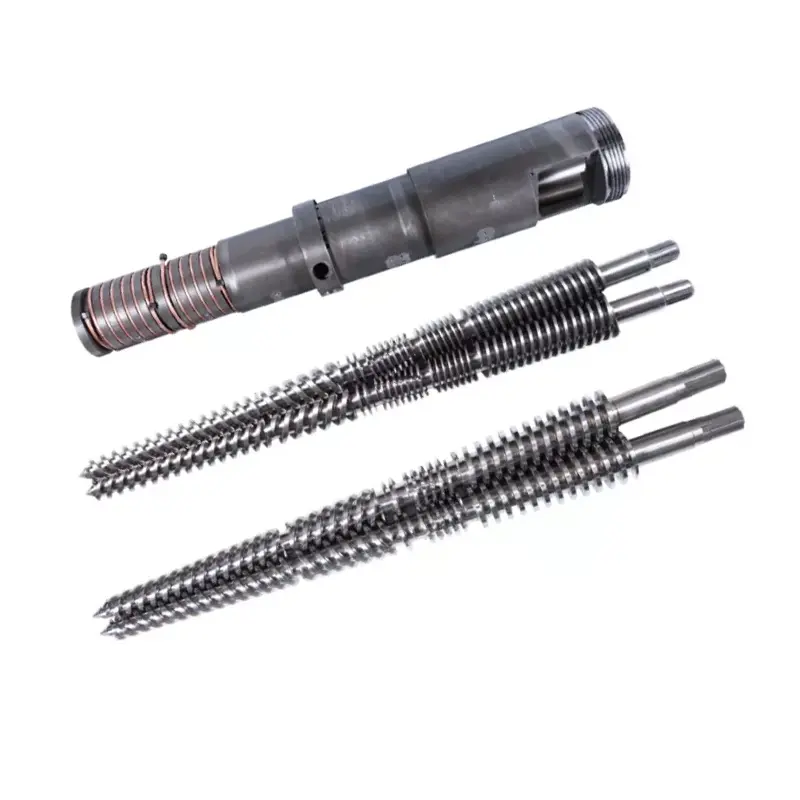
Whatever the machine size, the conical twin screw barrel is the component that wears and the one that most affects melt quality and running cost. It is also the part you will replace during the machine's life, so its material and surface treatment are worth getting right from day one.

Nanhaiya sprays a tungsten-added hard alloy around the easy-wear section of the barrel, taking the inner surface to 62 HRC — compared with a typical 58 HRC — with an alloy layer 2.5–3 mm deep. Against abrasive PVC and WPC compounds, that deeper, harder surface stretches the interval between rebuilds. For the full breakdown of barrel specs, materials and selection, see our conical twin screw barrel range, and for wear parts our spare parts section.

Buying a conical twin screw extruder from China

China is the largest source of conical twin screw extruders, so most buyers are really choosing a supplier, not just a machine. A short checklist:

  • In-house screw & barrel — a factory that machines its own screws and barrels controls the most important quality variable.
  • Real specs, not just photos — insist on model, motor power, output and barrel material in writing (like the chart above).
  • Surface-treatment options — nitriding, bimetallic and tungsten-carbide should be on the menu for abrasive formulas.
  • Clear lead time and after-sales — confirm delivery, warranty and spare-parts support before you order.

Nanhaiya is a Zhoushan-based manufacturer that designs, machines and assembles conical, parallel and single screw equipment in-house, serving 500+ clients worldwide with quotes returned within 12 hours.

Frequently asked questions

What is a conical twin screw extruder?

It is a PVC-focused extrusion machine with two tapered, intermeshing screws — wide at the feed end and narrow at the die end. The conical geometry gives high torque and compression in a short length, ideal for PVC pipe, profile, board and WPC.

How does a conical twin screw extruder work?

A forced feeder pushes PVC powder into the wide feed zone; as the material moves toward the narrow die end, the shrinking channel compresses, de-aerates and melts it, and a stable pressure pushes a uniform melt through the die to form the product.

Conical or parallel twin screw extruder — which is better?

Neither is universally better. Conical excels at direct PVC pipe, profile and board extrusion thanks to strong feeding and compression. Parallel suits compounding, pelletizing and very high-filler dispersion. Match the machine to your product, not the reverse.

What output can a conical twin screw extruder produce?

It depends on size. A small 45/90 machine runs about 100–180 kg/h, a mid-range 65/132 around 250–380 kg/h, and a large 92/188 machine 600–900 kg/h. Formulation, screw design and downstream capacity also affect real output.

What materials can it process?

Mainly rigid and soft PVC, plus WPC (wood-plastic), PE-based profiles, resin tile and filled/recycled compounds. Its large feed intake makes it especially good at handling low-bulk-density PVC dry-blend powder.

What motor power do I need for PVC pipe?

For general PVC pipe and profile, a 65/132 machine at roughly 37–45 kW is a common choice. Small profiles need less (15–22 kW), while large-diameter pipe steps up to 55–160 kW. Size to your target output with some headroom.

What are the screw and barrel made of?

Typically 38CrMoAlA nitrided steel, W6Mo5Cr4V2 or HIP powder steel. For abrasive compounds, a tungsten-added bimetallic layer takes the barrel bore to about 62 HRC with a 2.5–3 mm alloy layer for longer wear life.

How do I choose a supplier in China?

Favor a factory that machines its own screws and barrels, provides real specifications in writing, offers nitriding and bimetallic surface options, and states clear lead time, warranty and spare-parts support before you commit to an order.

Get a conical twin screw extruder sized for your product

Tell us your product, pipe/profile size and target output, and our engineers will recommend the right model — with a barrel spec matched to your formulation. In-house screw & barrel machining means we control the part that matters most.

Get a quote within 12 hours →
Nanhaiya (Zhoushan) Plastic Machinery · 500+ global clients · conical & parallel twin screw extruders, barrels & spare parts
Related News
Leave me a message
X
We use cookies to offer you a better browsing experience, analyze site traffic and personalize content. By using this site, you agree to our use of cookies. Privacy Policy
RejectAccept