
Choose a single-screw extruder for prepared feed that needs stable melting and delivery. Evaluate a co-rotating parallel twin screw when the process must incorporate ingredients or manage staged feeding, and assess a conical twin screw separately for suitable PVC pipe and profile duties. Start with the formulation, feed form and product specification, then decide whether the purchase is a replacement component or a different machine architecture.
If your resin or compound arrives ready for extrusion and the principal problem is stable melting and pressure delivery, start with a properly specified single screw. If the extruder must mix separate ingredients, accommodate difficult powder or filler feeding, or support more involved venting, evaluate the relevant parallel twin-screw architecture; for PVC pipe or profiles, include a conical twin-screw option where its process fit is appropriate.
Five decisions that matter more than the label
- Identify whether the feed is a finished compound, a dry blend, separate ingredients, or variable recycled stock.
- Define the extruder's job: melt and pump, mix and disperse, devolatilize, or combine several duties.
- Compare equipment under the same formulation, die, product-quality limit and operating window.
- Check whether the problem is in a worn screw/barrel or in the architecture of the entire line.
- Judge proposals by saleable output and repeatable product quality, not a catalogue maximum.
First, separate three extrusion systems—not just “one screw” and “two screws”
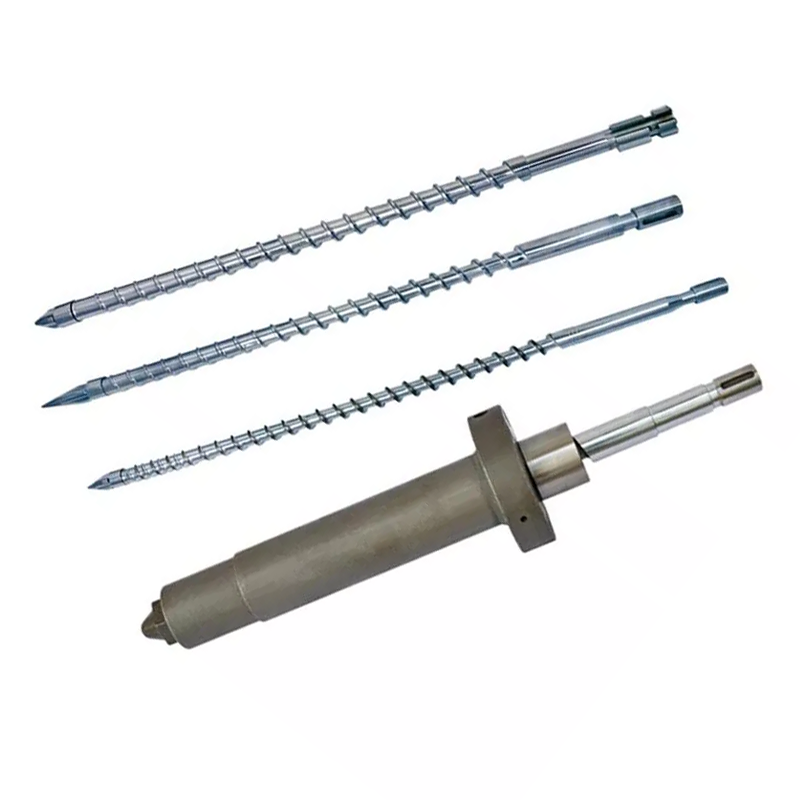
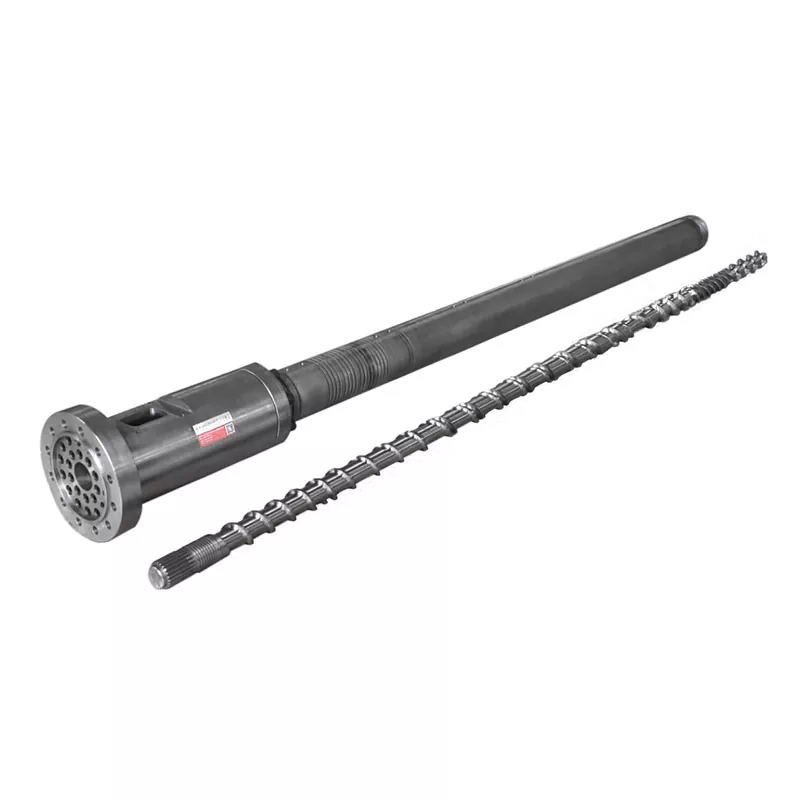
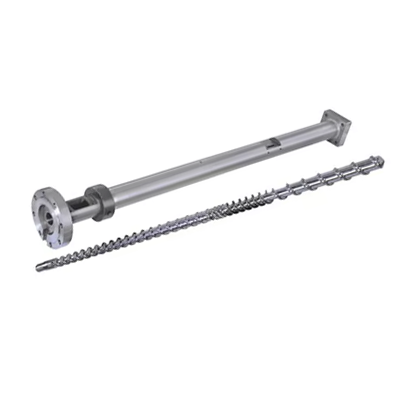
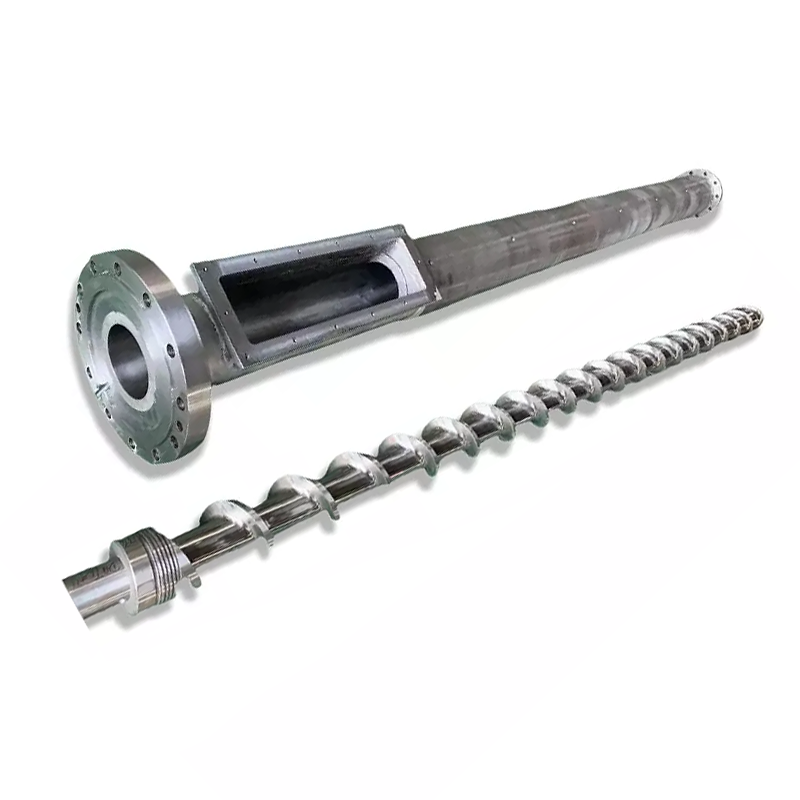
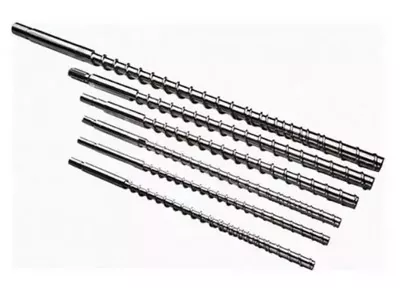
A single-screw extruder has one rotating screw working inside a matching barrel. Its design can include feed, transition and metering zones, plus barrier or mixing features when the material requires them. That means “single screw” does not mean “no mixing.” It means the machine is commonly selected to plasticize material and supply a continuous melt stream to a die, with screw geometry tailored to the resin and the product.
Nanhaiya lists applications ranging from PE and PPR pipe to PVC drainage pipe, film, sheet and recycled-polymer granules on its single-screw category page. That range is a useful reminder: neither the polymer name nor the word “PVC” alone selects the machine.
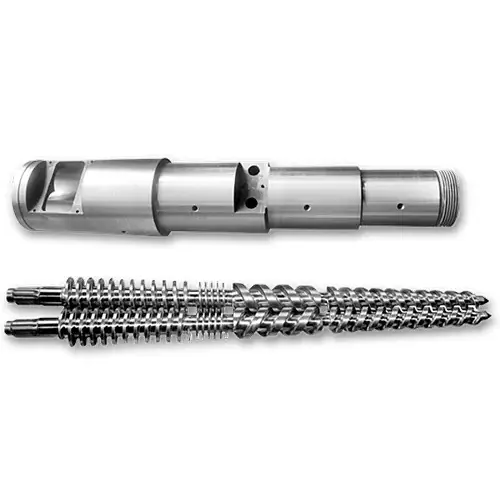
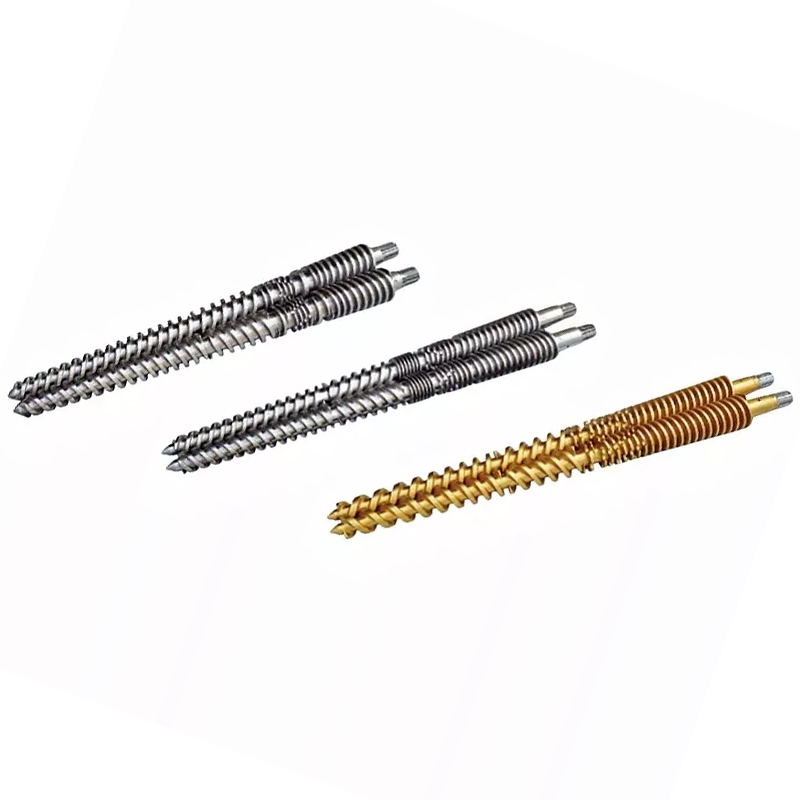
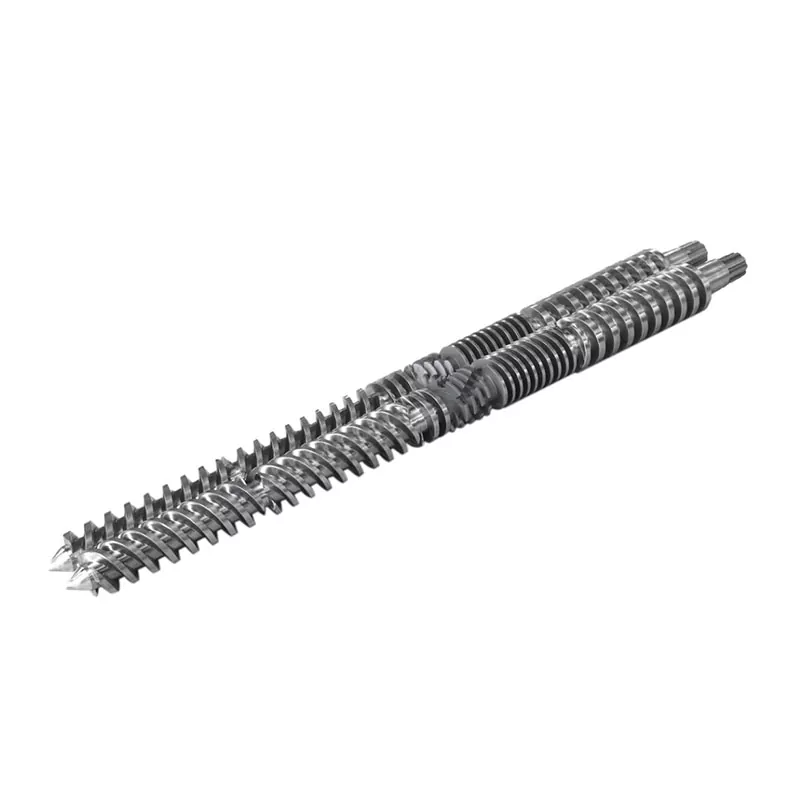
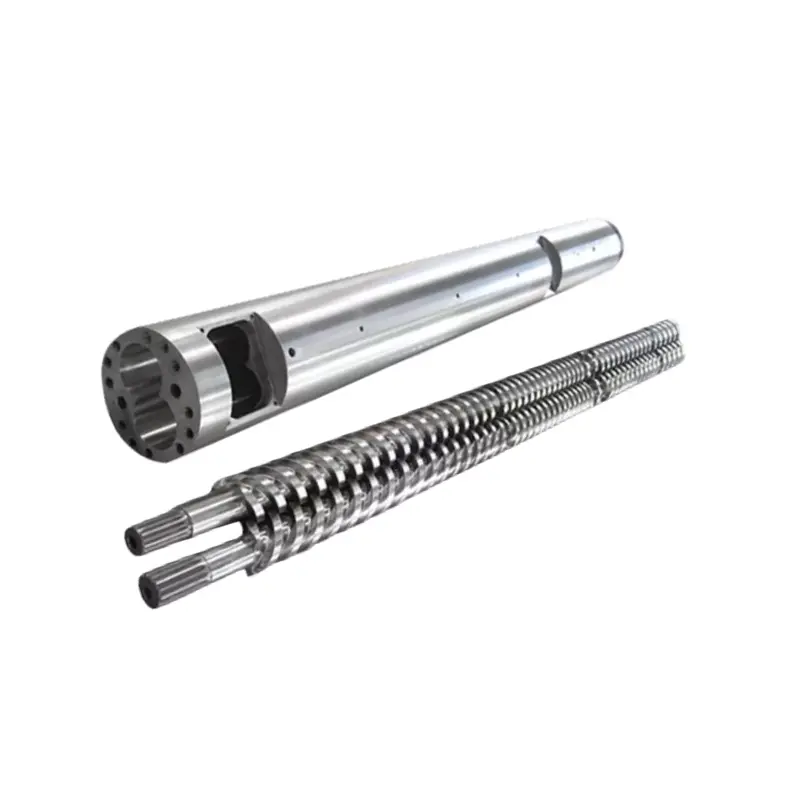
“Twin screw” covers more than one mechanical arrangement. A co-rotating parallel twin-screw system uses two shafts rotating in the same direction; the specific element layout and barrel design determine how conveying, mixing, kneading and venting are distributed along the line. A counter-rotating arrangement is a different design decision even when the screws are parallel. Nanhaiya's co-rotating parallel twin-screw barrel is one product example, but its specifications should not be projected onto every twin-screw system.
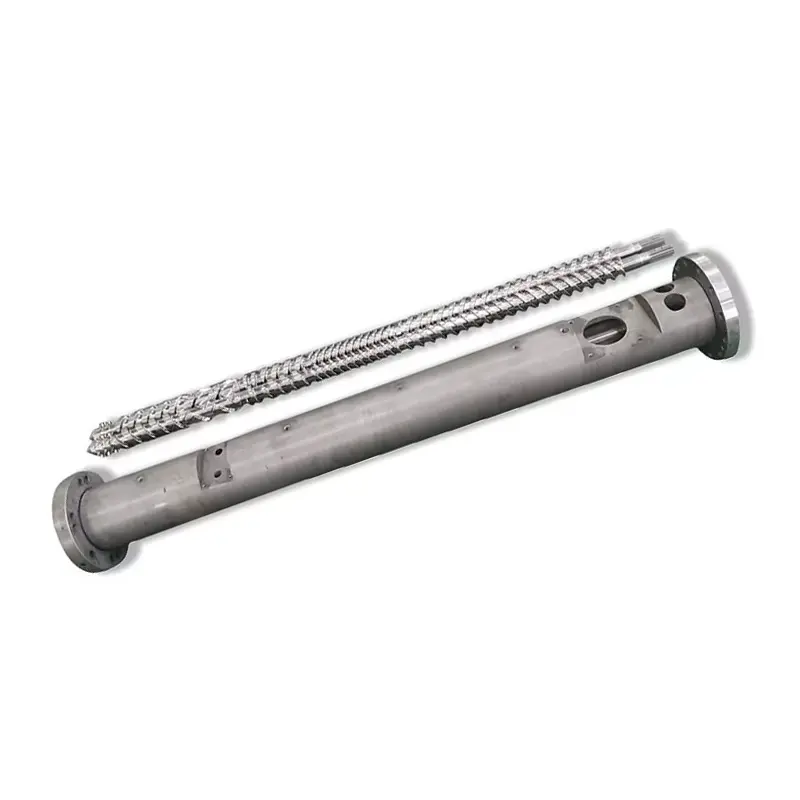
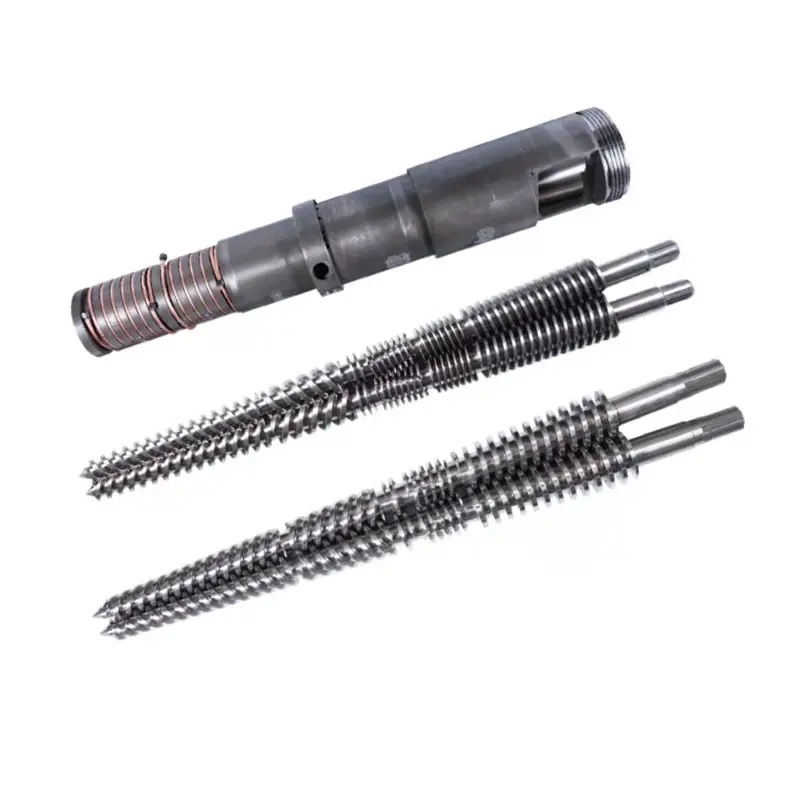
Conical twin screws form a third practical category for this buying decision. Their screw diameters change along the length, and they are often considered for PVC pipe and profile processing. Nanhaiya lists a dedicated PVC pipe conical twin-screw barrel as well as a broader conical range. The point is not that one family wins every PVC job. It is that a buyer should name the geometry and direction of rotation before comparing a quotation or asking for an extruder screw replacement.
Single screw vs parallel twin screw vs conical twin screw: a buyer's comparison
The table below describes selection questions, not guaranteed performance rankings. Within each architecture, screw profile, barrel, feeder, die and operating conditions can change the result substantially. A barrier or mixing single screw may perform well on a prepared compound; a poorly specified twin-screw line can still make an unacceptable product. Treat each row as a way to narrow the trial plan, then ask suppliers to state where their particular design sits inside the category.
| Decision factor | Single screw | Co-rotating parallel twin screw | Conical twin screw |
|---|---|---|---|
| Typical question | Can prepared feed be melted and delivered steadily? | Must the line incorporate, disperse or vent ingredients? | Does the PVC pipe/profile duty suit this screw geometry? |
| Feed to investigate | Pellets or a suitably prepared compound; other feeds need a specific assessment | Separate ingredients, fillers, side-fed additives or challenging recycled feed | Relevant PVC dry-blend and profile/pipe formulations, depending on design |
| Main specification emphasis | Melting capacity, pressure stability, screw/barrel condition and die demand | Element sequence, feeding, residence time, dispersion and venting | Feeding, fusion behavior, thermal history and PVC product quality |
| What not to assume | That one screw cannot mix or cannot process PVC | That every twin screw is co-rotating or has identical shear | That every PVC line needs a conical design |
These distinctions align with Nanhaiya's separate single-screw, parallel twin-screw and conical twin-screw product families. They also reflect published polymer-processing research, which treats melting, mixing, pressure generation and residence time as design-dependent phenomena rather than one fixed property of a screw count; see the peer-reviewed review of twin-screw extrusion modelling. For an actual purchase, ask for the screw and barrel drawing, the intended feed form, and a proposed operating window before deciding whether two differently configured quotations are comparable.
Start with feedstock: prepared pellets, dry blends, fillers and recycled material
The strongest first question is not “Which machine is more powerful?” It is “What exactly enters the hopper?” Prepared pellets or a consistent pre-compounded material have already passed through an upstream formulation and mixing step. In that situation, the downstream extruder may mainly need to melt the material, build usable pressure and keep the die supplied.
A well-matched single screw and barrel can be a strong starting point. If the product has poor color uniformity, confirm whether the pellets themselves vary before blaming the screw. A machine cannot repair a compound that arrives outside the agreed material specification.
A dry blend or several separate ingredients ask more of the extrusion line. Fillers may require dispersion; a powder may need a reliable feed mechanism; volatile components may call for a defined venting plan. These are process requirements, not merely reasons to choose a machine with two screws.
A co-rotating parallel system may be suitable when the duty includes on-line compounding and staged addition, but the screw-element arrangement, feeder location and vent design still have to be engineered for the formulation. Nanhaiya's parallel range and co-rotating product page describe such process-oriented applications.
Recycled feed is a separate decision, not one universal material. Clean, consistent recycled PE or PP pellets are different from washed flakes with moisture and contamination; both differ from a high-filled compound. Define particle size, bulk density, moisture, contamination, resin mix and target product.
Nanhaiya lists recycled PE and PP granule applications for single screws, so a categorical “recycled means twin screw” rule would contradict the company's own product range. Conversely, if the line must simultaneously melt, mix fillers and manage volatile material, a twin-screw or another staged process deserves examination. The right specification begins with a real sample and a stable material description, not an architecture slogan.
What changes inside the barrel: melting, mixing, pressure and thermal history
A screw is not simply a conveyor. The feed has to move forward, absorb heat, melt or fuse appropriately, mix to the required level and pass through the die without excessive degradation. Those duties interact. Increasing screw speed may increase throughput in one window while raising melt temperature or reducing residence time in another.
A die that imposes substantial pressure changes the useful output of the entire arrangement. Published polymer-extrusion modelling research discusses distinct melting mechanisms and pressure distributions for single-, co-rotating and counter-rotating-screw systems; it does not support one universal output or quality multiplier between them.
Melting and steady delivery
For prepared pellets, the practical test is whether the proposed screw can finish melting while delivering a stable stream over the expected production range. Compare pressure fluctuation, actual melt temperature, visible unmelt and the acceptable product rate at the same die. On an existing single-screw line, an increase in screw/barrel clearance from wear can make this assessment look worse than the original design deserves. That is why the barrel bore and screw flights belong in the diagnosis before a whole new machine is specified.
Distributive and dispersive mixing
Distributive mixing rearranges components through the melt; dispersive mixing breaks down agglomerates. The two goals require different evidence. Color streaks, filler specks and changes in mechanical properties should be tested against the intended quality standard, not summarized as “bad mixing.” Nanhaiya offers single-screw options for varied resin duties and a separate co-rotating twin-screw design. Neither product family alone proves the degree of dispersion a particular formulation will achieve.
Venting and material measurements
If the process must remove volatiles, specify where gas is generated, how material is fed, and what downstream test will confirm the target is met. Ask for actual melt data rather than assuming that a pellet's melt-flow result predicts production output. ASTM D1238 defines melt-flow measurement under prescribed test conditions and cautions that its values may not correlate directly with large-scale processing. It is useful material information, but it does not replace a trial on the intended extruder and die.
Choose the architecture through a real product application
Our product range puts a useful boundary around the comparison. We offer application-specific single screws for film and panel cores, a co-rotating parallel twin-screw barrel for mixing-intensive duties, and a separate conical twin-screw barrel for PVC pipe. Start with the processing task and then compare the matching product construction.
| Production duty | Nanhaiya product route | Details that affect the decision |
|---|---|---|
| LDPE/HDPE film | Film single screw | 30–150 mm diameter range; L/D options 25:1, 28:1, 30:1, 33:1, 35:1; forced-feeding and alloy-treatment options |
| Aluminum-plastic panel core | Panel single screw | Barrier-type mixing for colorants and flame retardants; polished channels and smooth head geometry |
| Compounding or high-fill/recycled duty | Co-rotating parallel twin-screw barrel | Same-direction intermeshing screws; channel design for mixing and conveying; nitrided or bimetallic construction |
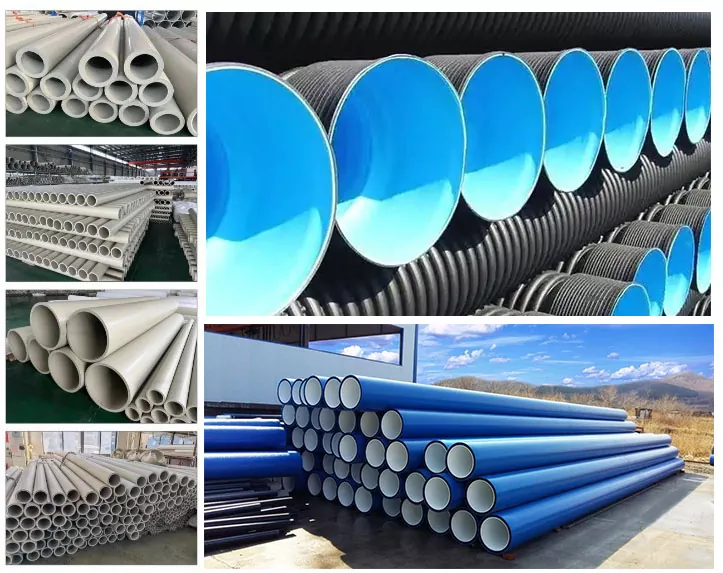
| PVC pipe | PVC pipe conical twin-screw barrel | Gradient screw and barrel-groove design; nickel-based alloy treatment and liner options |
Film production is a useful single-screw starting point. Our film page covers LDPE, LLDPE, HDPE, PP and PVC, and includes packaging and agricultural film applications. We would compare resin blend, film quality and available process length before choosing the diameter and L/D. The catalogue option identifies a possible design; the film specification defines the useful output.
The panel product shows why additive use alone does not select twin screws. Its barrier-type mixing section is intended to distribute colorants and flame retardants through the core melt. If the feed preparation and required distribution suit that single-screw process, evaluate it on that basis. If several ingredients require a more involved on-line compounding process, investigate the co-rotating architecture and its feeding arrangement.
For PVC pipe, our conical product page lists pipe-size ranges of 16–63, 50–110 and 90–160 mm. These are pipe sizes, not screw diameters. The same page describes a 2–2.5 mm alloy thickness and separate screw/barrel flow features. Send the intended pipe dimensions, formulation and feed form so those details can be matched to the line.
The conical category also lists screw-size pairs such as Φ65/Φ132 and Φ80/Φ156. Keep those paired sizes distinct from a single-screw diameter and from finished-pipe dimensions. A drawing must resolve the component interfaces before a replacement inquiry becomes a comparable quotation.
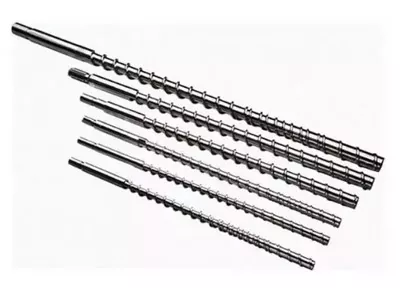
Compare our model data and component specifications separately
The model tables answer a capacity-scoping question. Component detail pages answer a construction question. Use both, while keeping their subjects clear: a machine-family output range does not define the alloy on an ordered screw, and a hardness value does not establish the output of a production line.
| Product family and model | L/D | Listed output capacity | Screw speed | Drive motor |
|---|---|---|---|---|
| Single screw NHY65 | 25–36:1 | 60–300 kg/h | 20–150 rpm | 22–75 kW |
| Single screw NHY90 | 25–36:1 | 180–600 kg/h | 20–110 rpm | 30–185 kW |
| Parallel twin screw NHY75 | 26–36 | 220–350 kg/h, PVC | 45 rpm | 45 kW |
| Parallel twin screw NHY90 | 26–36 | 280–460 kg/h, PVC | 45 rpm | 55 kW |
Model sources: our single-screw table and parallel twin-screw table. The parallel table explicitly labels its capacity column as PVC output. The single-screw table gives a broader series range. Use the figures to shortlist a configuration, then compare the same formulation, die and accepted-product requirement.
A second check concerns construction. Our co-rotating parallel product specifies 38CrMoAlA steel, nitriding hardness HV950–1000 at 0.50–0.70 mm depth, and bimetal hardness HRC60–65 at 2.0–3.0 mm depth. Its straightness entry is 0.015 mm. That is a screw straightness specification, not a running-clearance value between screw and barrel.
For a high-filled or recycled formulation, those material and surface details belong in the quotation beside the process architecture. Ask which parts receive which treatment and what the finished inspection covers. For the conical PVC product, use its own 2–2.5 mm alloy-thickness description rather than transferring the parallel-product construction to it.
Material tests supplement this comparison. ASTM D1238-26 describes melt flow as an empirical measurement whose conditions may differ substantially from industrial processing. Include the grade and test condition, then evaluate accepted kg/h, melt quality, pressure and drive load on the actual configuration.
Our factory perspective: decide what the next purchase must change
We would separate a replacement inquiry from an architecture change at the start. If an existing film line previously met its product specification with the same resin, first inspect the screw, barrel and process changes. Our film screw range offers several L/D and construction choices within the single-screw route.
If the production task has changed, describe it directly. A panel core needing consistent additive distribution may warrant a review of our barrier-type mixing design. A process that now needs several ingredients incorporated on the line requires a broader feeding and compounding discussion. We would evaluate that requirement before recommending the parallel twin-screw route.
Wear is another decision. Our wear-resistant single-screw options include local flight reinforcement and surface treatments for abrasive formulations. If the architecture still fits the process, a material or matched-part change may address the problem more directly than buying a different type of extruder.
For a component order, send the drive end, working length, head and barrel-bore drawing. For an architecture proposal, add the feeder, venting, gearbox, die and downstream scope. Our pre-sales process reviews production materials, equipment model and capacity requirements, then matches diameter, L/D, groove depth and material.
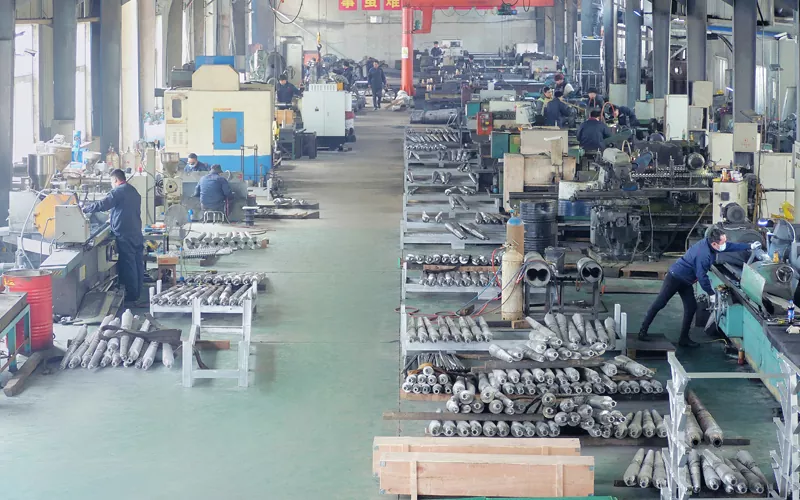
Our production equipment includes CNC turning for workpieces up to 6 m and five-axis machining for irregular flights and special flanges. Bring the critical geometry into the proposal and inspection plan. The manufacturing discussion should follow a clear process decision, rather than begin with an undefined request for “more mixing.”
A seven-step selection process for a useful supplier comparison
A comparison becomes useful when every supplier is solving the same problem. Start with the product specification and trace backward to the feed, extruder duty and downstream limits. Do not ask for “the best machine” without saying what counts as an accepted product. This is especially important when a supplier is quoting only screw/barrel components while another is quoting a complete line. Separate the architecture question from the component-replacement question, then bring them back together in one acceptance plan.
- Define the finished product: dimensions, appearance, mechanical requirements, defect limits and the required saleable rate.
- Describe the incoming feed: resin or compound grade, pellets or powder, filler/additive percentages, moisture, recycled content and variability.
- List the processing duties: melting, pressure generation, distributive or dispersive mixing, staged addition and any venting requirement.
- Measure the present line: actual output, screw speed, melt temperature, die pressure, rejects, downtime, energy and visible wear.
- Shortlist architectures: a matched single-screw design, a specified parallel twin-screw configuration, or a relevant conical twin-screw design.
- Request comparable proposals: material basis, screw/barrel drawing, feeder, die and downstream assumptions, trial duration and acceptance metrics.
- Evaluate accepted production: compare good kilograms per hour, product quality, operating stability and cost per accepted kilogram—not a brochure maximum.
If an existing single-screw machine is underperforming, add a wear assessment before step five. Check the screw flights and barrel bore against the equipment drawing, and document whether the problem began after a material, screen, die or operating change. If the duty itself has changed—for example, the line must now compound fillers that were previously incorporated upstream—treat that as a new process specification. Nanhaiya's screw and barrel wear guide and parallel twin-screw clearance guide provide related inspection topics.
What to put in the RFQ—and how to compare the true cost
Send each prospective supplier the same technical package. Include a current screw and barrel drawing if the request is for a replacement, or a line layout if the request is for a new architecture. Add a sample of the material or a documented formulation range, the target product drawing, target output, unacceptable defects and the current production record.
If confidentiality limits formula disclosure, identify at least the resin family, feed form, filler class and processing constraints needed for an engineering response. A supplier who does not know what is entering the hopper cannot responsibly guarantee a specific screw geometry or output.
Ask for the exact supply boundary. Does the quotation include a screw only, a screw and barrel, drive changes, feeder, vent hardware, instrumentation, commissioning or a full extrusion line? Clarify whether the proposed single screw, parallel twin screw or conical twin screw is compatible with the installed equipment. Product family names are not interchangeable spare-part numbers. Require drawings and a written statement of any assumed interface dimensions.
For cost, look beyond the quoted purchase price. A practical comparison is total operating cost divided by accepted kilograms produced over a defined period. The numerator should include the costs that actually change between options—energy, maintenance, wear parts, cleaning, rejects and downtime—using your plant's own prices and measured run data. The denominator must exclude off-spec product.
If one proposal offers a higher gross kg/h but a larger reject rate or frequent cleaning stops, its apparent advantage can disappear. We cannot put a credible percentage on that difference without a controlled trial, and neither should a supplier.
Send dimensions, drive-end drawing, barrel bore, material, wear pattern and last stable operating record.
Send feed form, formulation, die/product drawing, target good output, utility limits and downstream scope.
Agree on test material, run duration, defect criteria, measurement points and what happens if a target is missed.
Discuss your extrusion duty with Nanhaiya
Zhoushan Nanhaiya Plastic Machinery Co., Ltd. manufactures screw and barrel products in Zhoushan, Zhejiang, China. Our catalogue separates single screws, parallel twin screws and conical twin-screw barrels; it also includes application-specific components such as the PVC pipe conical twin-screw barrel. Review our machining resources on the production-equipment page before discussing a custom component.
For a useful first conversation, tell us what you are making, what goes into the hopper, whether your problem is new or longstanding, and whether you need a replacement component or a different process architecture. If you have an existing line, send the screw/barrel drawings and measurements rather than only a worn sample photograph.
If you are planning a new line, send the product drawing, target saleable output and the range of materials you expect to run. Those details make the engineering discussion more useful than a generic “single or twin?” request.
Contact the team through the Nanhaiya contact page or email info@nhyscrew.com. We can review the stated application and identify which product family warrants a closer specification discussion. Include the formulation, component drawings and acceptance conditions so we can match the recommendation to your equipment.
Send an extrusion inquiryEmail the Nanhaiya teamFrequently asked questions
Is a twin-screw extruder always better than a single-screw extruder?
No. A twin screw may give a process designer more ways to handle compounding, staged feeding and venting, but that does not make it the better choice for every prepared pellet or continuous product line. Compare the actual formulation, die, quality limit and accepted production rate. A properly matched single-screw line may meet the duty without the complexity of a different machine architecture. Nanhaiya's separate single and parallel twin product ranges reflect those different duties.
Can a single-screw extruder process PVC?
Yes. Nanhaiya lists PVC drainage pipe and profiles among its single-screw applications, while also offering conical and parallel twin-screw products for PVC-related duties. Feed form and formulation are essential: prepared PVC compound and dry blend are not interchangeable specifications. Ask for the required fusion behavior, thermal limits, output and product properties before choosing a screw geometry. “PVC” alone is too little information.
What is the difference between a co-rotating parallel twin screw and a conical twin screw?
They differ in screw geometry and, depending on the design, in rotation arrangement and process emphasis. A co-rotating parallel design is often considered when the line must compound ingredients or manage staged addition; a conical twin-screw design is often evaluated for PVC pipe and profiles. Compare the actual product drawings and processing task. Nanhaiya publishes a co-rotating parallel product and a PVC pipe conical product as distinct offerings.
Can I convert my single-screw machine to twin screw by replacing the screw?
No. The barrel bore, gearbox, drive, feed system and controls of a single-screw machine are not transformed into a twin-screw architecture by changing one component. A replacement single screw may restore or improve a compatible line if it addresses a documented wear or design issue. If the process itself requires a different architecture, request a complete scope of supply, not a screw-only quotation. Start by measuring the installed equipment and reviewing the replacement-screw checklist.
Which numbers should I request before comparing quotations?
Ask for saleable kg/h on the specified formulation and die, actual melt temperature, die-pressure trend, reject definition, energy use per accepted kilogram, screw/barrel dimensions and trial duration. Record the material lot and feed condition so the results can be repeated. Catalogue model ranges help shortlist equipment, but they do not create a controlled comparison. For polymer characterization, an ASTM D1238 melt-flow result can supplement the material record; it cannot substitute for the extrusion trial.