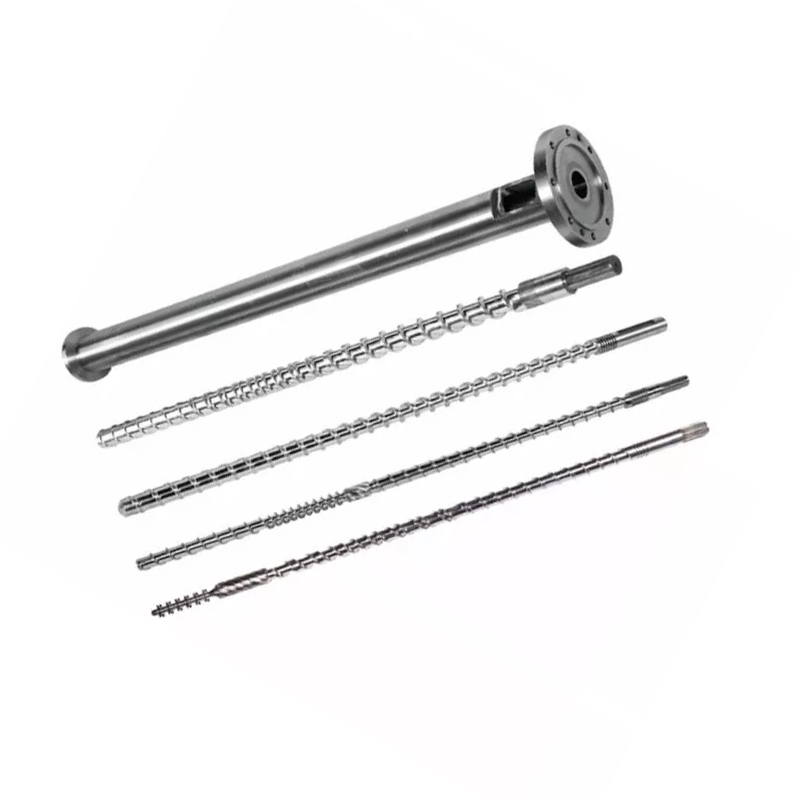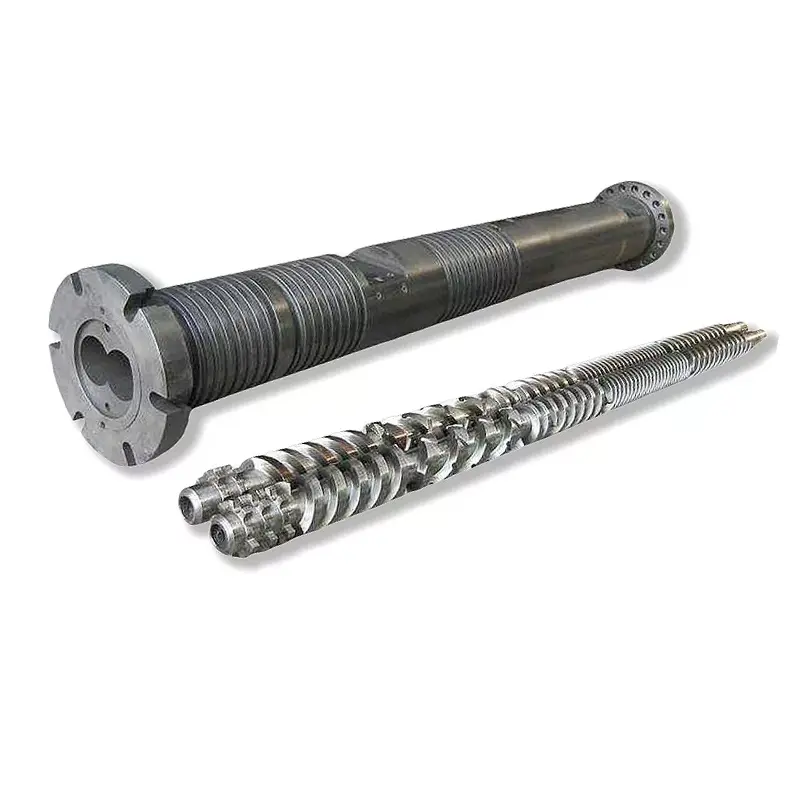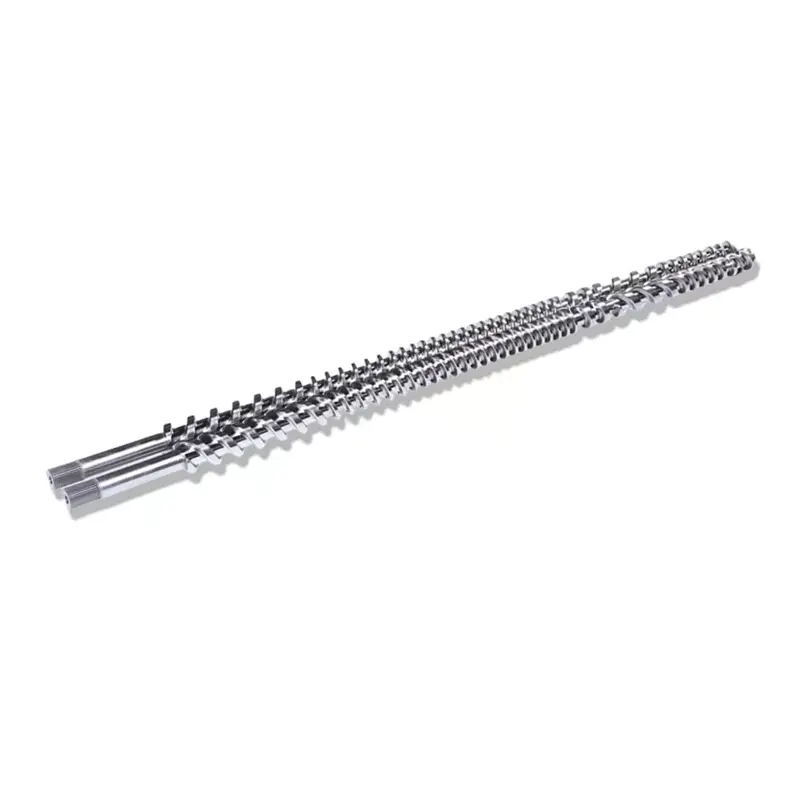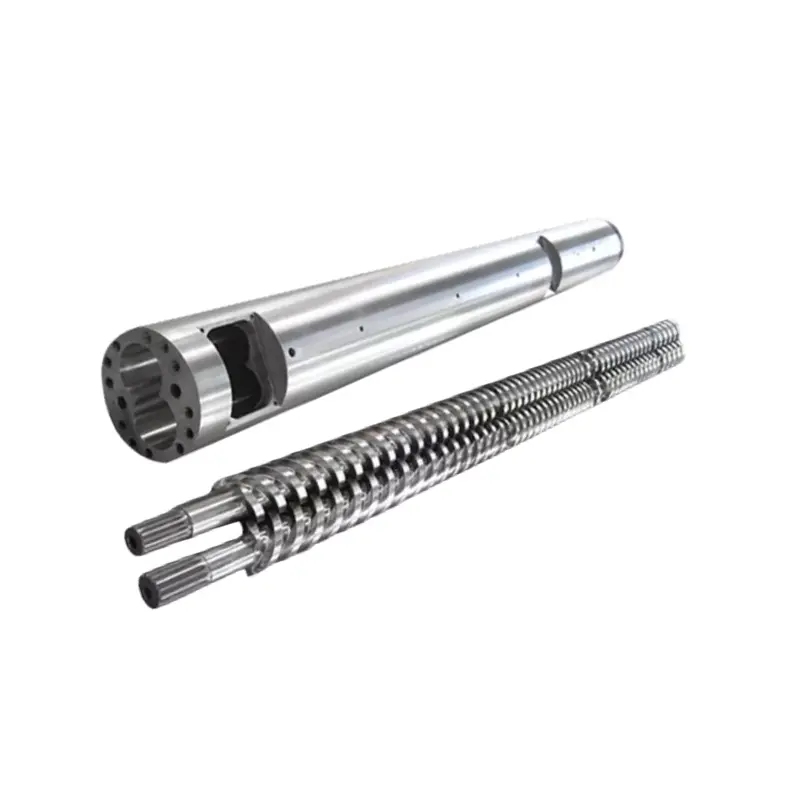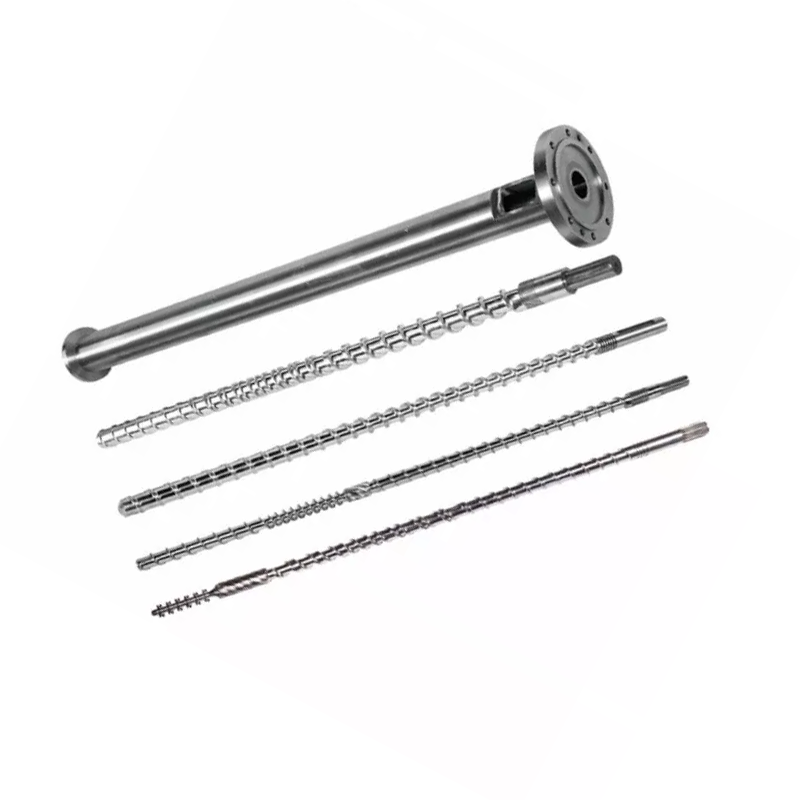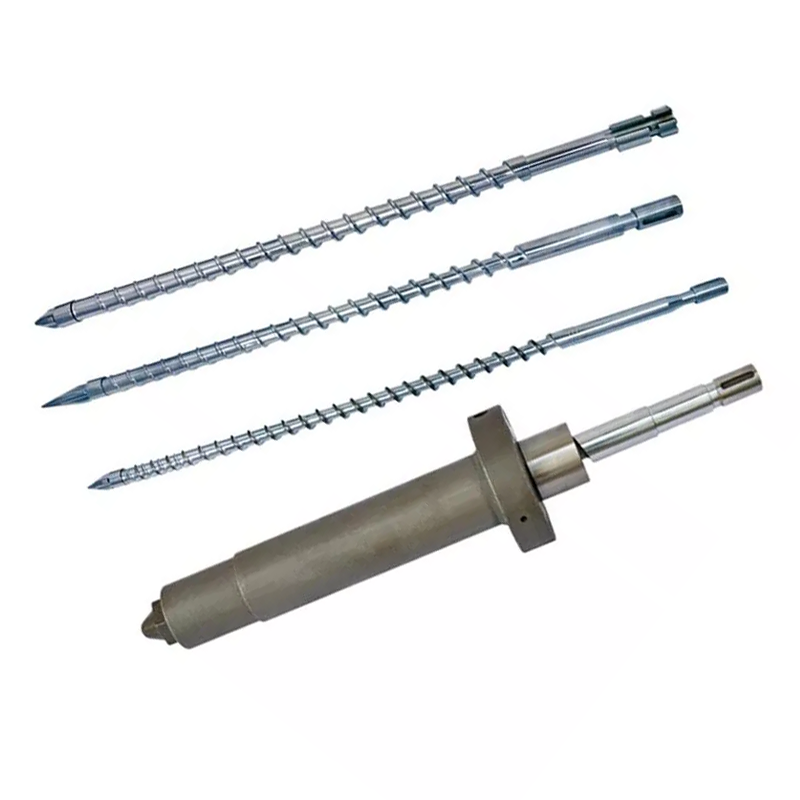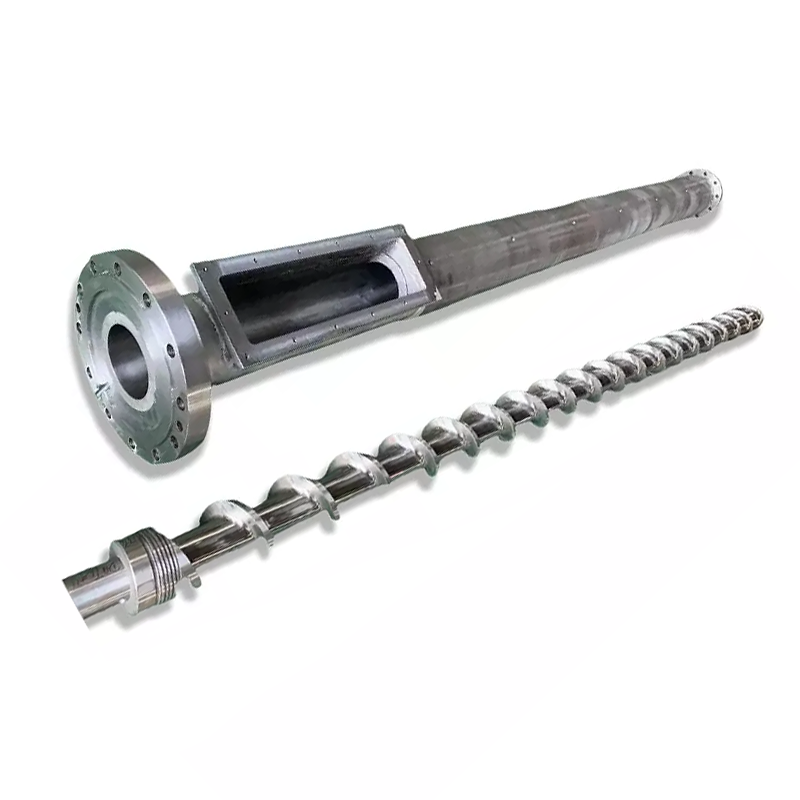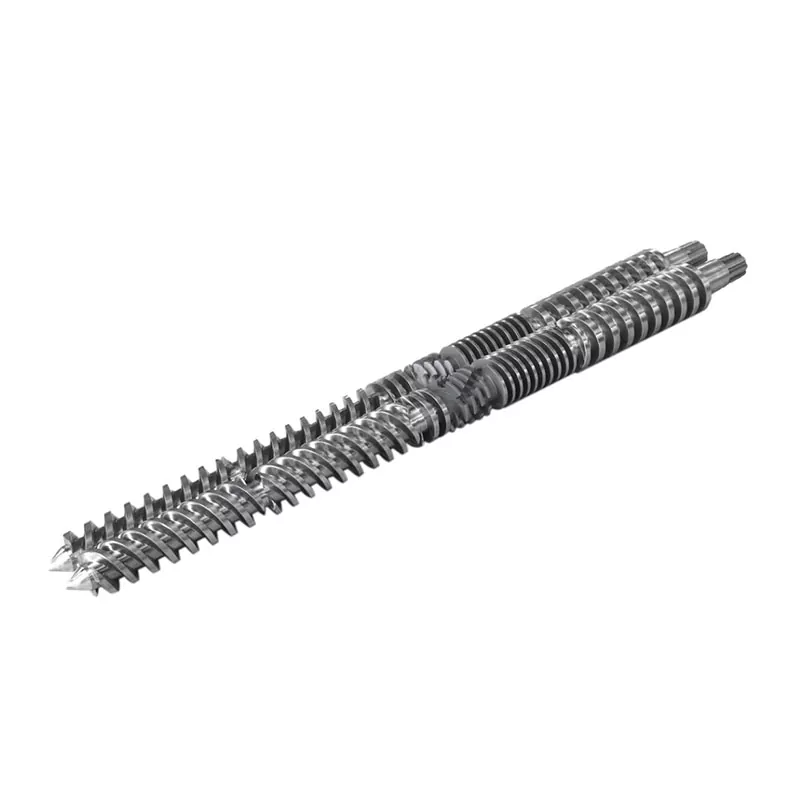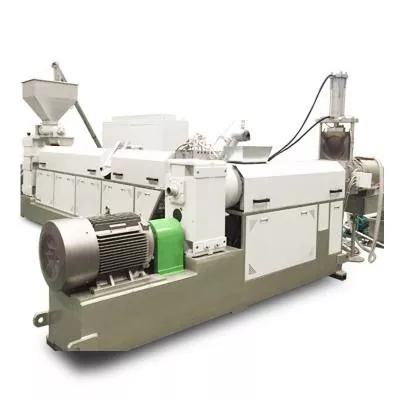

PA with glass fiber asks the screw to melt a moisture-sensitive polymer while moving abrasive reinforcement through a close-fitting steel assembly. A useful quotation therefore names the compound, screw geometry, surface construction, barrel, check ring and acceptance test together.
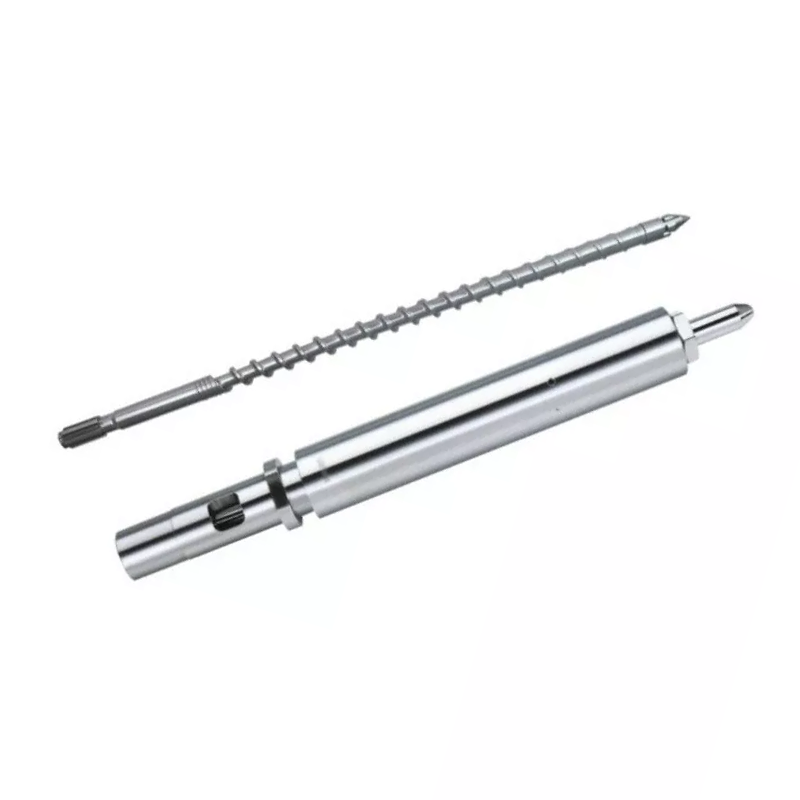
Quick answer
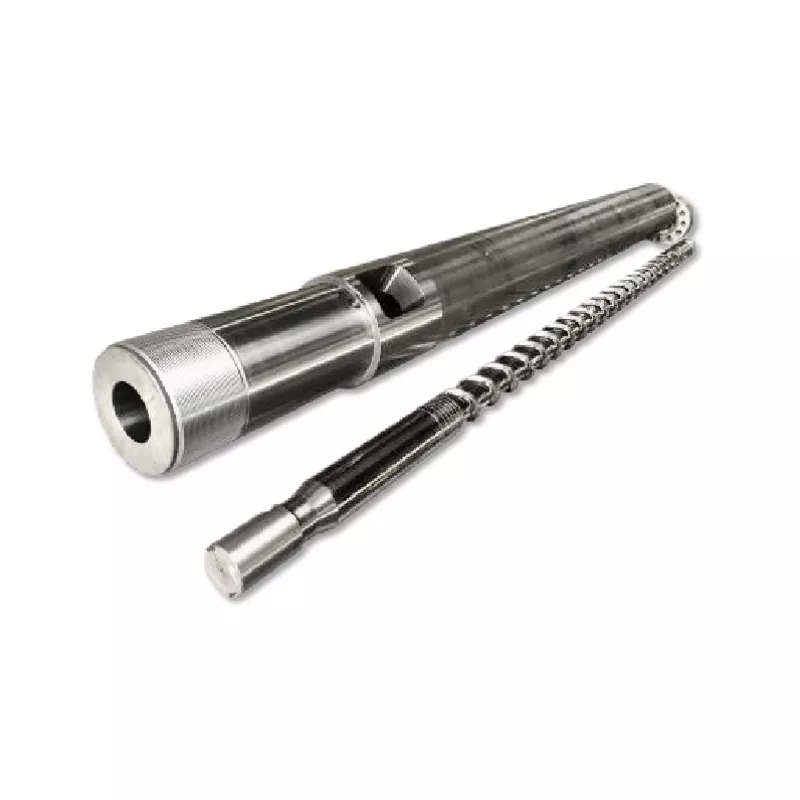
For glass-filled nylon injection molding, start with the exact PA grade and glass-fiber content. Nanhaiya lists quenched-and-tempered 38CrMoAlA injection screws for reinforced plastics containing up to 30% glass fiber, including PA-GF. Its product pages also describe nitriding and nickel-tungsten alloy reinforcement for wear-prone screw and barrel areas. Select the geometry and surface system against the real duty, then check the barrel bore and screw tip or check ring before accepting a replacement.
My rule on the factory side is simple: a hardness value does not rescue an incorrect geometry, and a new screw does not rescue a leaking front end. Put all three interfaces on the drawing and all three behaviors in the trial plan.
Define the compound before selecting the metal
“Nylon with glass” is too broad for a screw order. PA6-GF30, PA66-GF30 and a heat-stabilized PA blend can share a nominal fiber percentage while behaving differently in drying, melting, viscosity and part requirements. The resin supplier's exact grade and processing sheet belong with the RFQ.
ISO 16396-1 distinguishes polyamides by composition, properties, additives, fillers and reinforcing materials. It also makes clear that the same designation does not guarantee the same performance. In purchasing terms, the generic label is a search term; the commercial grade is the engineering input.
| Input to record | Why we ask for it | What goes wrong if omitted |
|---|---|---|
| PA family, resin maker and exact grade | Sets the grade-specific processing and property target | The drawing may be optimized for a different melt behavior |
| Glass-fiber percentage and any mineral filler | Sets abrasive duty and helps choose the wear construction | “GF30” may hide additional filler or a changing blend |
| Regrind share, source and lot variation | Changes feed consistency and the material's processing history | A trial with virgin resin may not represent production |
| Flame retardant, pigment and stabilizer package | May change corrosion, dispersion and thermal limits | Hardness is selected while chemical duty is ignored |
| Drying method and measured pellet water content | Separates moisture-related defects from screw performance | Splay or viscosity loss may be misdiagnosed as bad mixing |
| Required part properties | Defines whether fiber retention and surface quality matter most | A fast-recovering screw may still fail the molded-part target |
For a moisture result, identify the test method and the resin supplier's target. ISO 15512 covers water-content determination for plastics, including methods applicable to PA. A dryer setting is useful process context, but it is not a measurement of the pellets entering the feed throat.
From our quotation desk: I would rather receive a one-page resin sheet and a photo of the current wear pattern than a request for “the hardest nylon screw.” The former lets us choose a construction; the latter invites a material label without a process answer.
Where glass-filled PA can wear the injection assembly
Glass fiber does not contact one isolated part. Pellets enter the feed zone, compact and melt through the transition, move along the metering channel, then pass through the tip and check-ring assembly into the nozzle. Each location has a different clearance, pressure and sliding condition. Inspect them separately before deciding which component to replace.
Screw flights and channel
Measure flight outside diameter at defined axial positions, examine root surfaces and compare the worn profile with the approved drawing. Local wear near a transition tells a different story from uniform wear along the metering section.
Barrel bore
Record bore size and condition along the working length, not only at the feed opening. A new flight profile paired with an oversized or scored bore can leave the clearance problem untouched.
Tip and check ring
Inspect valve travel, sealing surfaces, ring diameter and the mating seat. Backflow during injection can produce unstable cushion or shot size even when screw recovery appears normal.
Diagnosis before spending: slow or inconsistent recovery points toward feed, melting, screw or barrel issues, but it is not proof of a worn screw. Falling cushion or unstable shot weight during injection also calls for a check-ring and tip inspection. Log the symptom and stage of the cycle before ordering parts.
Our screw recovery troubleshooting guide gives the process-side checks. For this article, the purchasing lesson is to attach the wear map and baseline cycle data to the RFQ, not just a sample of the old screw.
What Nanhaiya publishes for the screw and wear surface
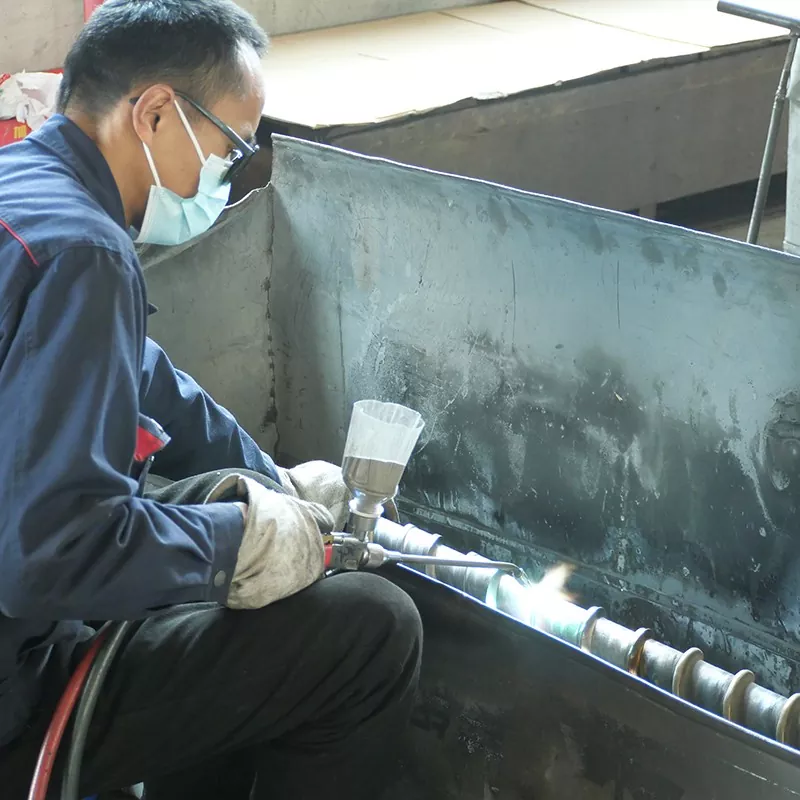
Our injection molding screw category lists 38CrMoAlA alloy steel, heat treatment and use with glass-fiber-reinforced PA. It describes a quenched-and-tempered construction for reinforcement at up to 30% glass fiber. The same page gives gas nitriding at 500 to 560°C, a 0.5 to 0.8 mm layer and stated surface hardness of 950 to 1050 HV.
Our mutant injection screw product page adds a nickel-tungsten alloy reinforcement option on vulnerable screw and barrel areas. Its detailed product table lists an alloy depth of 0.8 to 2.0 mm and alloy hardness of HRC55 to 62. It also lists HB260 to 290 quenching hardness, HV900 to 1100 nitriding hardness, a 0.5 to 0.8 mm nitriding depth, Ra0.4 surface roughness and 0.015 mm straightness for that product construction.
| Published Nanhaiya data | Value and location | How to use it in the order |
|---|---|---|
| Base screw material | 38CrMoAlA on injection screw category and mutant product page | State the grade and required material certificate on the approved drawing |
| Reinforced-plastic application | Up to 30% glass fiber on the injection screw category page | Use as an initial construction match for the exact PA-GF duty |
| Gas nitriding process | 500 to 560°C, 0.5 to 0.8 mm, 950 to 1050 HV on the category page | State where depth and hardness are to be measured |
| Mutant product nitriding table | HV900 to 1100 and 0.5 to 0.8 mm depth | Use the values specified for the selected product and inspection plan |
| Nickel-tungsten reinforcement | 0.8 to 2.0 mm depth, HRC55 to 62 on the mutant page | Mark the reinforced zones rather than writing “alloy screw” alone |
HV and HRC belong to different hardness scales. Keep each value with its stated layer, component and test location; do not treat them as interchangeable numbers. Likewise, a 0.8 to 2.0 mm reinforced zone and a 0.5 to 0.8 mm nitrided layer describe different constructions, not one combined coating thickness.
The published 10,000 to 20,000 hour service-life statement on the category page is for non-corrosive PE and PP. It is not a PA-GF lifetime figure and is intentionally not used as one here.
Choose geometry for melt quality, not only recovery speed
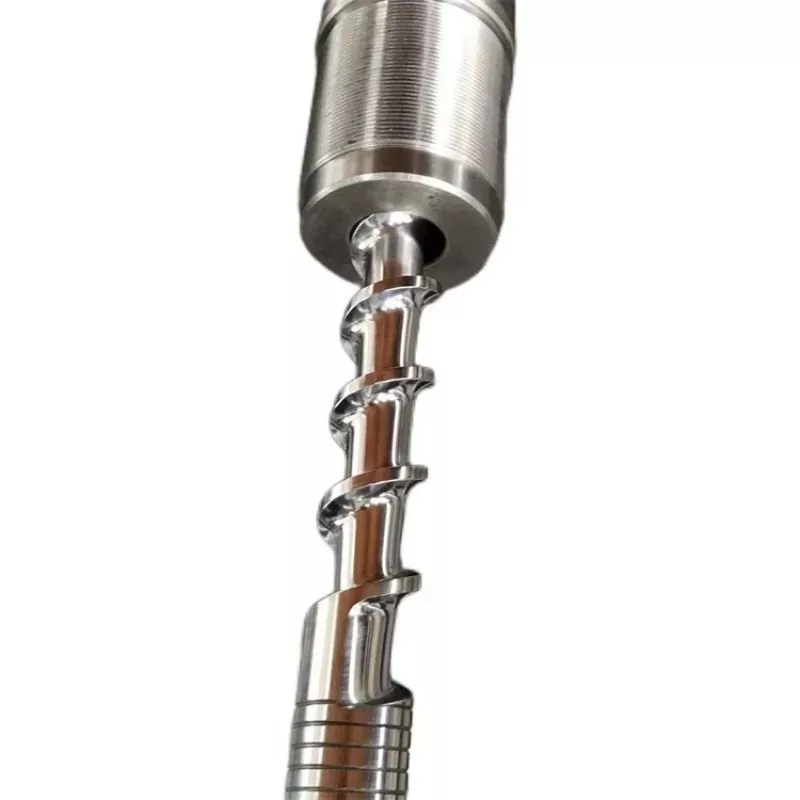
Nanhaiya's mutant, or abrupt-compression, injection screw has a compression section of about 5% to 15% of total screw length. The feed channel changes to a shallower metering channel across this short zone. The product page includes PA among the materials for this geometry. That makes it a sensible starting design to evaluate for PA-GF, not an unconditional rule for every nylon grade.
In a glass-filled job, concentrated compression and high back pressure can make recovery look impressive while increasing heat and mechanical work. The buyer should ask for the actual melt and part result: temperature consistency, visible defects, molded strength or stiffness where specified, and stable shot delivery. If a more aggressive profile improves only the timer, the result has not earned approval.
Our factory view: when a customer asks us to duplicate a worn screw, I want to know whether the original part met quality before it wore. If the old screw always needed excessive back pressure to mix the compound, copying its geometry exactly just rebuilds the same compromise.
Compare the candidate against your current baseline at the same resin grade and measured moisture. Record screw speed, back pressure, barrel settings, shot size, recovery time and cushion. A gradual-compression screw is also in our injection range, but the selection should follow the measured process window, not the name on the product card.
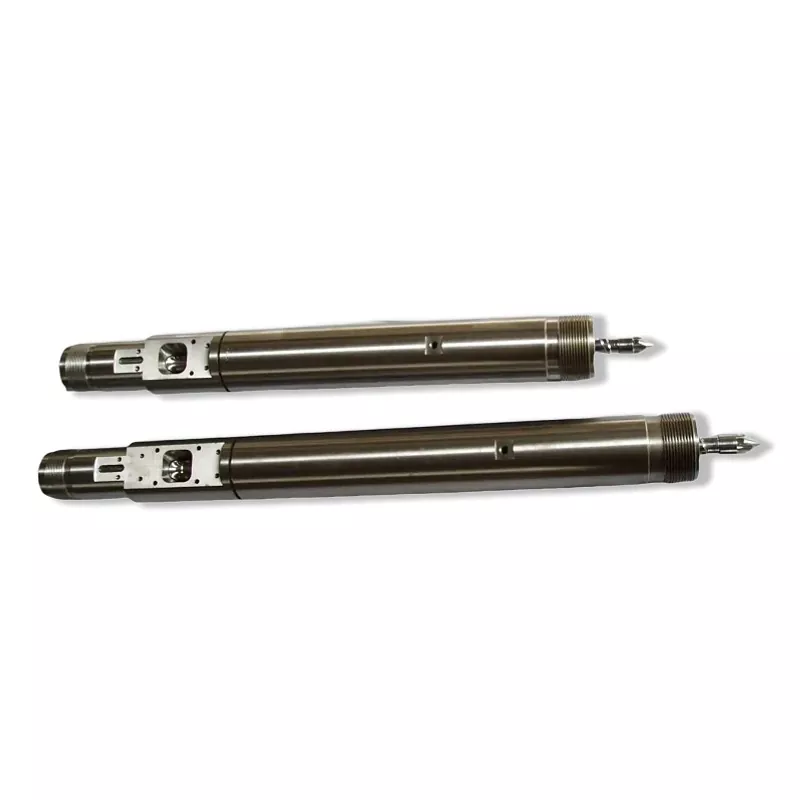
Specify the screw, barrel and check ring as one working system
It is tempting to replace the visibly worn screw and leave everything else. Sometimes that is correct. For PA-GF, we first check whether the mating barrel bore still holds the agreed clearance and whether the check ring still seals. Otherwise the new screw inherits the old assembly's leakage or wear path.
| Component | Include in the drawing or inspection | Production symptom to watch |
|---|---|---|
| Screw | Overall and working length, outside diameter by zone, channel depths, drive and tip thread, protected zones | Recovery drift, excessive shear, unmelt, discoloration |
| Barrel | Bore by axial position, straightness, wear or scoring, nozzle end, feed throat and heating layout | Loss of plasticizing consistency or growing screw-to-bore clearance |
| Tip and check ring | Seat, ring diameter and travel, valve surfaces, thread, nozzle interface | Cushion and shot-weight variation or leakage during injection |
| Machine and process | Machine version, drive connection, temperature zones, shot utilization, screw speed, back pressure | A well-made part still misses the production target |
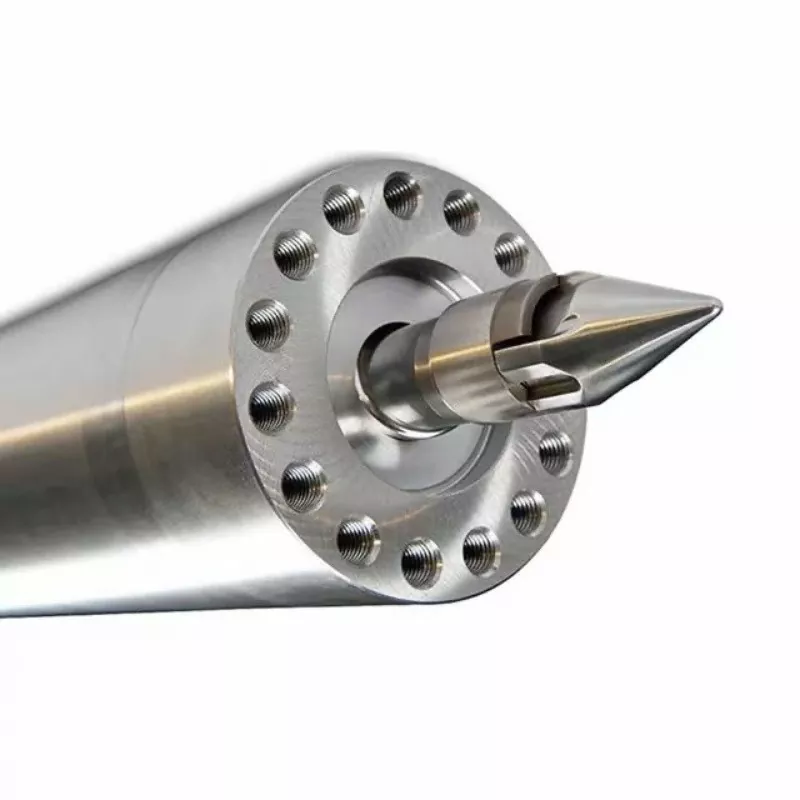
Our injection molding screw tip product and spare-parts range are relevant when the front end is worn. The tip should be specified against the existing screw, barrel and material; a tip's available wear option does not automatically change the rating of the main screw.
Choose the construction by duty, not a single threshold
The up-to-30% glass-fiber application on our injection-screw page is useful product guidance. It is not a physical line at which every factory must switch from nitriding to alloy. Production hours, screw speed, back pressure, additives, regrind and the current wear rate can shift the economic choice. Conversely, a low fiber percentage does not make an unsuitable geometry safe.
| Observed duty | Starting construction to discuss | Question before approval |
|---|---|---|
| PA-GF within Nanhaiya's published up-to-30% range, moderate duty, controlled compound | 38CrMoAlA with the specified heat treatment and nitrided layer | Are the bore, tip and current wear pattern compatible with this build? |
| High throughput, sustained abrasive wear or a short replacement interval | Quote the reinforced vulnerable zones on screw and barrel as an alternative | Where exactly should the 0.8 to 2.0 mm nickel-tungsten alloy be placed? |
| Compound above the category page's stated range or with additional abrasive/corrosive ingredients | Custom review of compound, surface, barrel and front end | Which resin data and acceptance measures define the custom duty? |
| Unstable cushion or shot weight but acceptable recovery | Inspect the check ring and seat before purchasing a full assembly | Is leakage, rather than screw plasticizing, the main defect? |
For a high-volume line, compare the cost of the protected assembly with the cost of unplanned changeovers and rejected parts. For an occasional PA-GF job, an expensive wear package may not be the best use of the budget. Neither answer is universal; both should be tied to a measured replacement history.
PA-GF screw RFQ checklist
A complete request lets the factory return a drawing and an inspection scope, not merely a diameter-based price. Attach:
- Machine maker, model, year or version and current screw/barrel assembly drawing
- Actual screw outside diameters and barrel bore measurements by zone
- Drive connection, screw tip thread, check-ring design and nozzle interface
- Exact PA grade, supplier data sheet and approved alternate grades
- Glass-fiber percentage, mineral filler, regrind and additive details
- Drying conditions plus measured pellet water content and method
- Shot weight, shot capacity, cycle time and screw recovery time
- Screw speed, back pressure and barrel temperature profile
- Part quality target, defect photos and required mechanical tests
- Requested surface construction, protected zones and inspection records
If the material label or filled fraction is in doubt, a method such as ISO 3451-4 for ash determination in polyamides can support compound verification. Ash content by itself does not identify fiber length, additive chemistry or final molded-part performance. Set those requirements separately if they affect the order.
Agree on acceptance before the replacement arrives
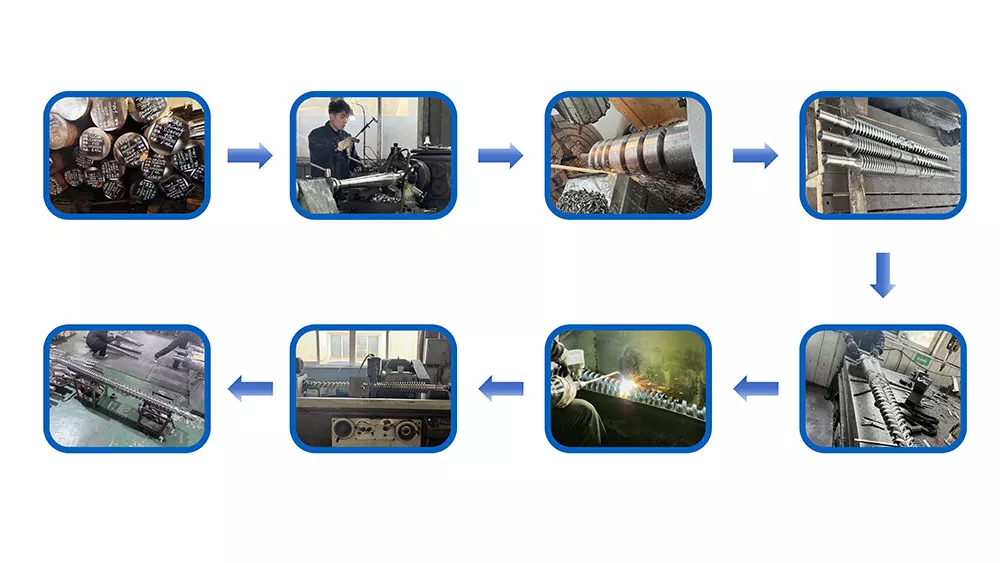
There are two separate decisions: did we build the specified parts, and do they meet the production target? A purchase order should cover both. The first can be documented at the factory. The second needs a defined trial on the customer's machine and compound.
| Stage | Record | Pass criterion to agree in advance |
|---|---|---|
| Drawing review | Approved dimensions, profile, fits, protected zones and tip details | Revision-controlled drawing signed off before manufacture |
| Manufacturing release | Material identification, dimensional report and applicable layer/hardness results | Values and test locations stated for the ordered construction |
| Installation | Barrel bore, screw clearance, tip motion and machine fit | No interference, damaged mating surface or unresolved fit discrepancy |
| Production trial | Exact PA-GF grade, water content, settings, recovery, cushion and shot data | Comparison against the agreed baseline at recorded conditions |
| Part approval | Appearance, dimensions and specified mechanical properties | Customer's approved part specification, not recovery speed alone |
Run the old and new configurations with comparable material lots and document the process settings. If the new assembly needs a different back pressure or speed, record the change and test the molded part again. Do not quietly “tune away” a failed acceptance condition and call it the same trial.
What I would put on the first trial sheet: resin grade and lot, measured moisture, shot weight, cycle, screw speed, back pressure, recovery time, cushion and the part defect count. That sheet turns a debate about whether a new screw “feels better” into a decision that production and purchasing can both sign.
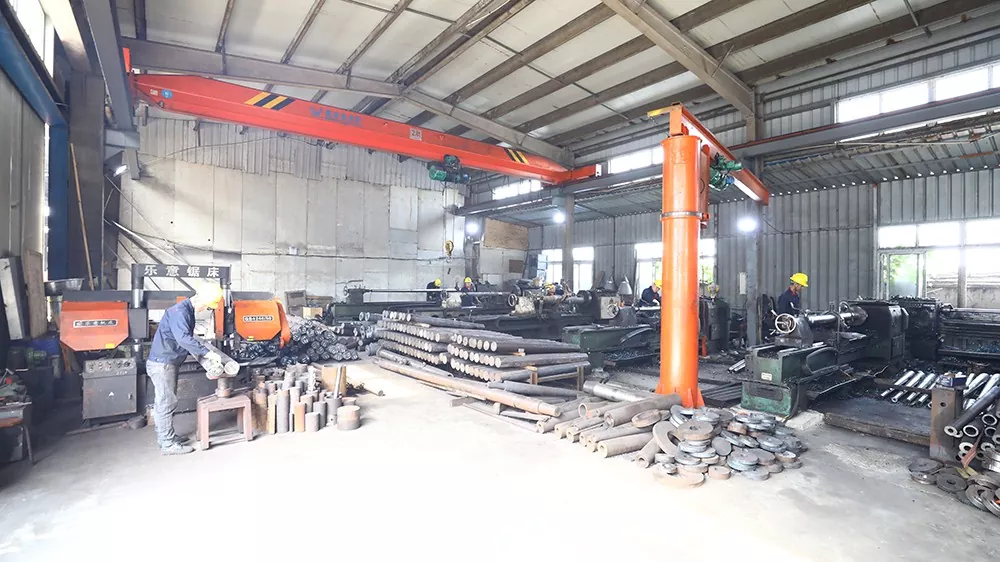
Nanhaiya's production-equipment page describes machining capacity, including long-part turning and CNC operations. Those capabilities are useful only when the inspection plan specifies the features that matter to this PA-GF assembly.
Frequently asked questions
What screw material does Nanhaiya offer for glass-filled nylon injection molding?
Nanhaiya lists 38CrMoAlA alloy steel for its injection molding screws and describes a quenched-and-tempered version for glass-fiber-reinforced plastics at up to 30% glass fiber, including PA with glass fiber. The page also describes gas nitriding at 500 to 560°C, producing a 0.5 to 0.8 mm layer with a stated hardness of 950 to 1050 HV. For more demanding duty, the mutant screw page lists nickel-tungsten alloy reinforcement on vulnerable screw and barrel areas.
Is a nitrided screw enough for PA-GF30?
PA-GF30 falls within the up-to-30% glass-fiber application described on Nanhaiya's injection screw category page. That makes a nitrided 38CrMoAlA construction a starting point, not an automatic approval. Confirm the exact compound, screw speed, back pressure, shot use, expected production volume, current wear pattern and matched barrel and tip before ordering.
Does a 30% glass-fiber limit apply to every Nanhaiya component?
No. The up-to-30% statement describes the injection screw construction on the category page. It should not be transferred to every screw tip, barrel lining or custom alloy construction. Specify and approve each component for the actual compound and production duty.
Should PA-GF use a mutant or gradual injection molding screw?
Nanhaiya lists PA among the materials for its mutant, or abrupt-compression, screw. Its compression section occupies about 5% to 15% of total screw length. This is a useful geometry to evaluate, but the final choice must satisfy recovery, melt uniformity, molded-part quality and fiber-related performance on the exact PA-GF grade.
Why specify the barrel and check ring with the screw?
Glass-filled material contacts the screw flights, barrel bore and front-end valve surfaces. A new screw running in a worn barrel, or a worn check ring leaking during injection, can prevent stable shot size even when the screw itself is correct. Record the current dimensions and wear map and approve the mating components as one system.
What should a PA-GF screw RFQ include?
Send the machine model and version, current screw and barrel drawings, screw tip and drive interfaces, exact resin supplier and grade, glass-fiber percentage, regrind and additive content, drying and measured moisture, shot weight, cycle and recovery time, screw speed, back pressure, temperature settings, current wear measurements, defects and required inspection records.
How should the replacement be accepted?
First compare the delivered screw, barrel and tip with the approved drawing and agreed material, hardness, layer and dimensional records. Then run the specified PA-GF grade under recorded moisture and process conditions. Compare recovery, cushion, shot-weight variation, melt condition, visible defects and the required molded-part tests with the agreed baseline.
Product data and technical references
Nanhaiya product and factory pages: Injection molding screw range; mutant injection molding screw; gradual injection molding screw; injection molding screw tip; production equipment; contact information.
Official technical references: ISO 16396-1:2022, PA designation; ISO 15512:2019, plastics water content; ISO 3451-4:2024, ash determination in PA. These references define terminology or methods; the resin maker's data sheet and the approved order set the actual process and acceptance limits.
Prepared from Nanhaiya's published product and factory information and the linked official methods. Application recommendations are engineering judgments for discussion, not a substitute for the machine drawing, resin supplier's processing sheet or an agreed production trial.