News

Single Screw Barrel: L/D, Screw Types & How to Choose by Polymer

2026-08-13 0 Leave me a message


Quick answer

A single screw barrel is one screw rotating inside a heated cylindrical barrel, conveying, melting and pumping plastic through a die. Performance is set mainly by three things: L/D ratio, compression ratio and screw type (standard, barrier or mixing). It is the most economical choice for high-output extrusion of uniform material — film blowing, pipe from pellets, sheet and granulation.

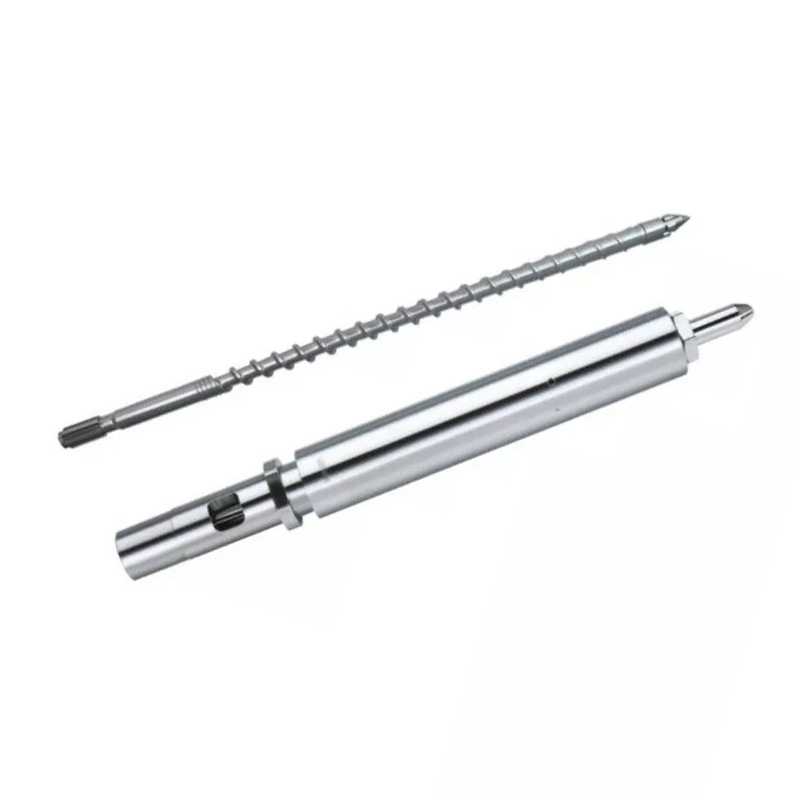
The single screw barrel is the most widely used plasticizing unit in plastics extrusion — simpler, cheaper and capable of very high output when the material is already uniform. But "simple" does not mean one size fits all: a single screw and barrel for LDPE film blowing looks nothing like one for rigid PVC pipe or for high-speed PP. This guide covers the specifications that actually decide performance, the screw types you can choose from, and how to match a single screw extruder barrel to your polymer.

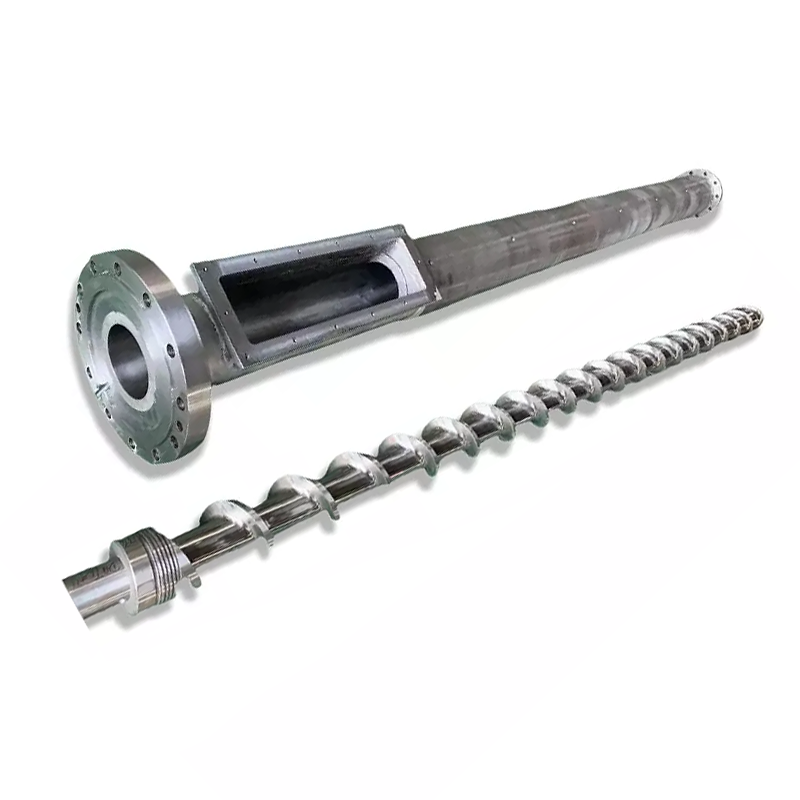
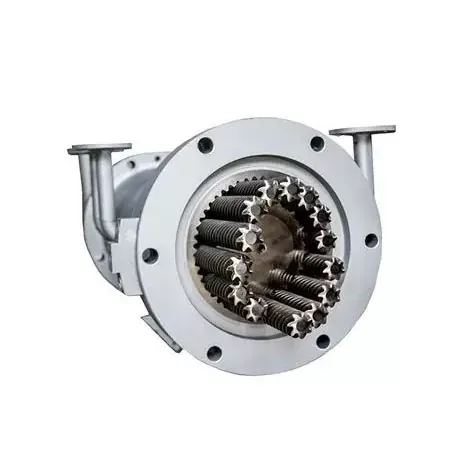
Single screw extruder and barrel manufactured by Nanhaiya

How a single screw barrel works

Material enters the feed throat, is dragged forward by the rotating screw, and melts through a combination of barrel heat and the shear generated between screw flight and barrel wall. The screw is divided into three functional zones, and the transition between them is what a good screw design gets right:

  1. Feed zone — deep flights convey solid pellets forward and start pre-heating them. Feed performance depends on friction, so grooved feed sections are used where intake needs to be forced (high-output PE and PP lines).
  2. Compression (transition) zone — flight depth shallows progressively, compacting the material, squeezing out trapped air and melting it through heat plus shear.
  3. Metering zone — shallow, constant flight depth homogenises the melt and builds a stable pressure so output through the die stays uniform.

Because a single screw relies on drag flow rather than positive displacement, its output is sensitive to friction, head pressure and material bulk density — which is why screw design and clearance matter so much to real throughput.

L/D ratio and compression ratio

These two numbers describe most of what a single screw and barrel will do:

Spec What it means Why it matters
L/D ratio Effective screw length divided by diameter (e.g. 25:1, 30:1, 33:1) Longer L/D = more residence time = better melting, mixing and venting; short L/D suits heat-sensitive material
Compression ratio Feed-zone channel volume ÷ metering-zone channel volume (e.g. 2.5:1–4:1) Too low and material is under-melted; too high and you overheat or degrade shear-sensitive polymers
Screw diameter The nominal screw size in mm Sets the output band and must match your extruder exactly
Screw/barrel clearance Gap between flight tip and bore wall Opens up as the screw wears — output and pressure drop as it does
Zone layout Length split between feed / compression / metering Tuned to the polymer's melting behaviour
Tolerance Machining precision of the finished part Nanhaiya holds single screw barrels to ±0.001 mm with straightness of 0.015 mm/m
General industry note: as a rough guide, rigid PVC usually runs a lower compression ratio and shorter L/D to limit shear on a heat-sensitive polymer, while PE and PP film lines run longer L/D with a barrier or mixing section for melt uniformity. Always confirm against your machine and formulation.

Standard, barrier and mixing screws

The flight geometry is where a single screw barrel is really specified:

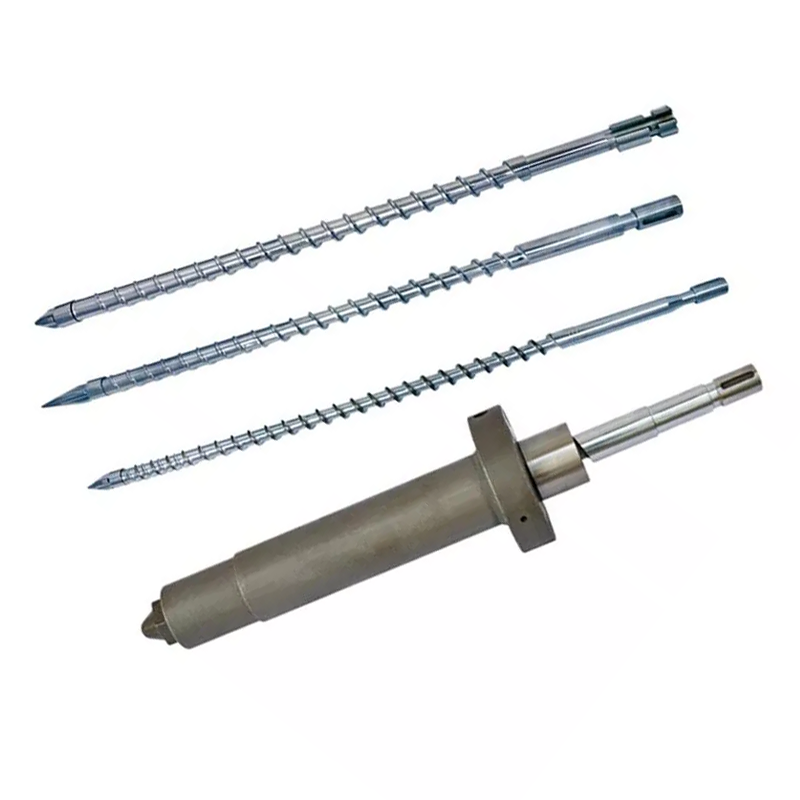
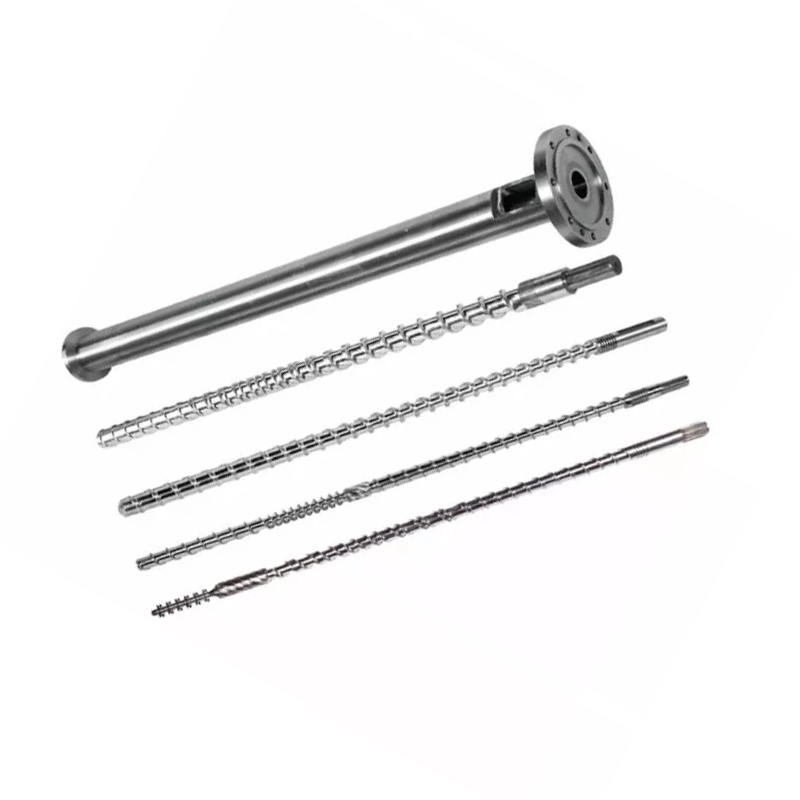
  • Standard (conventional) screw — single flight, three zones. Economical and reliable for straightforward materials and moderate output.
  • Barrier screw — a secondary flight separates unmelted solids from melt through the transition, giving faster, more complete melting and higher stable output. Common on high-speed PE and PP lines.
  • Mixing screw — adds a mixing section (Maddock, pineapple or pin type) near the end to improve melt uniformity and colour dispersion.
  • Vented (two-stage) screw — a decompression zone under a vent port lets moisture and volatiles escape mid-barrel, useful for hygroscopic or recycled material.
  • Grooved feed barrel — axial grooves in the feed section force intake and lift output on high-speed PE/PP applications.
Single screw pelletizing line for plastic granulation
A single screw pelletizing line — granulation is one of the most common single screw jobs.

How to choose by polymer

The polymer, not the machine brand, should drive the specification. A practical starting matrix:

Material / job Screw approach Surface treatment
LDPE / HDPE film blowing Longer L/D, barrier or mixing section for melt uniformity Nitrided is usually sufficient for clean resin
PE / PP high-speed extrusion Barrier screw, often with grooved feed for forced intake Nitrided; bimetallic if filled or recycled
Rigid PVC pipe Lower compression, gentle shear to protect heat-sensitive PVC Bimetallic — PVC is abrasive with filler and corrosive
PS foaming Controlled melt temperature and stable pressure for cell structure Nitrided or bimetallic by filler level
Granulation / pelletizing Good homogenisation; vented screw if the feed carries moisture Bimetallic for filled or recycled feedstock
Filled or recycled compounds Robust design with venting Bimetallic / tungsten-carbide — abrasion is the limiting factor

What single screw barrels are used for

  • Film blowing — LDPE, HDPE and LLDPE packaging film.
  • Pipe & profile from pellets — including PE pipe and PVC pipe lines.
  • Sheet & panel extrusion — flat sheet and board products.
  • Granulation & pelletizing — see our single screw pelletizing line.
  • Wire & cable — insulation and jacketing extrusion.
  • Lab & small-batch work — see the mini single screw extruder.

Single screw vs twin screw

Choosing between a single screw barrel and a twin screw system comes down to what the material needs on its way to the die.

Factor Single screw barrel Twin screw barrel
Conveying Drag flow — depends on friction Positive, intermeshing transfer
Mixing Limited (improve with barrier/mixing sections) Strong dispersive and distributive mixing
Powder feeding Struggles with low bulk density Handles powder well, especially with forced feeder
Cost & simplicity Lower cost, simpler maintenance Higher cost, more configurable
Best for Film blowing, pipe from pellets, sheet, granulation PVC direct extrusion, compounding, high filler

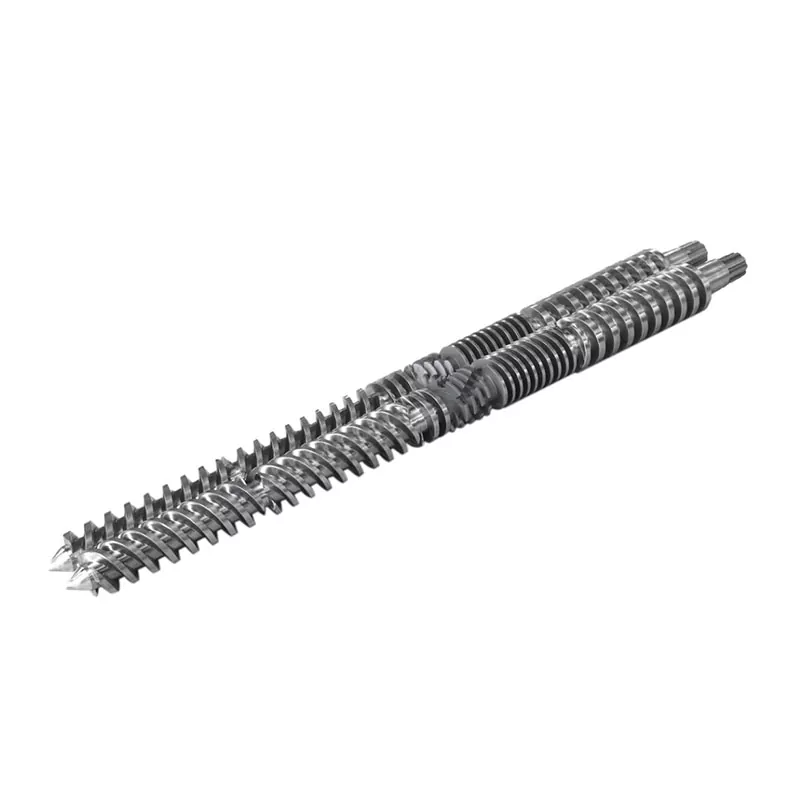
If your feedstock is a uniform pellet and you want output per dollar, single screw wins. If you need mixing, venting or powder handling, look at our conical or parallel twin screw ranges instead.

Material and surface treatment

A single screw barrel is a wear part, and how long it holds spec comes down to steel and surface. Nanhaiya machines single screws and barrels from 38CrMoAlA nitrided steel, W6Mo5Cr4V2 or HIP powder steel, and finishes them to a surface roughness of Ra0.4.

Parameter Value
Base material 38CrMoAlA (also W6Mo5Cr4V2, HIP powder steel)
Tempering hardness HB 260–290
Nitriding hardness HV 900–1100
Nitriding depth 0.5–0.8 mm
Bimetallic hardness HRC 56–65 (our tungsten-added layer reaches 62 HRC vs a common 58 HRC)
Bimetallic depth 2.0–3.0 mm
Surface roughness Ra 0.4
Straightness 0.015 mm/m

For clean resin such as virgin LDPE, nitriding is usually enough. For filled, recycled or PVC work, a bimetallic surface is the sensible upgrade — see our comparison of a bimetallic vs nitrided screw barrel.

How to order the right single screw barrel

  1. Machine details — extruder brand and model, or a drawing with screw diameter, effective length, feed-throat and flange dimensions.
  2. Polymer & formulation — resin type plus any filler, glass fibre or recycled content.
  3. Target output — kg/h and line speed, so the L/D and screw type suit the job.
  4. Known problems — if the current screw surges, under-melts or wears fast, tell us; that usually points to the design change you need.

With those four inputs we can specify an exact-fit single screw and barrel — or supply it as a wear part through our spare parts range — and quote within 12 hours. Standard-type screws ship from stock in 24–48 hours; customised parts run a 30–40 day cycle.

Frequently asked questions

What is a single screw barrel?

It is one screw rotating inside a heated cylindrical barrel that conveys, melts and pumps plastic through a die. The screw has feed, compression and metering zones, and its L/D ratio, compression ratio and flight design determine melting quality and output.

What L/D ratio do I need?

Longer L/D gives more residence time for melting, mixing and venting, so PE and PP film lines often run longer screws. Heat-sensitive materials such as rigid PVC use shorter L/D to limit shear. Match it to your polymer and target output.

What is compression ratio on a single screw?

It is the feed-zone channel volume divided by the metering-zone volume, commonly around 2.5:1 to 4:1. Too low leaves material under-melted; too high generates excess shear heat and can degrade shear-sensitive polymers.

What is a barrier screw and when do I need one?

A barrier screw adds a secondary flight through the transition zone that separates unmelted solids from melt, giving faster and more complete melting. It is commonly used on high-speed PE and PP lines where output and melt uniformity both matter.

Single screw or twin screw — which do I need?

Choose single screw for high-output extrusion of uniform pellet feedstock: film blowing, pipe from pellets, sheet and granulation. Choose twin screw when you need strong mixing, effective venting, powder feeding or high filler content.

Which single screw barrel is best for film blowing?

For LDPE and HDPE film, a longer L/D with a barrier or mixing section gives the melt uniformity that film thickness control depends on. Clean virgin resin normally runs well on a nitrided surface.

Should a single screw barrel be nitrided or bimetallic?

Clean virgin resin can run nitrided, with a nitriding hardness of HV 900–1100 and 0.5–0.8 mm depth. Filled, recycled or PVC compounds should be bimetallic, where a 2.0–3.0 mm alloy layer at HRC 56–65 resists abrasion and corrosion far longer.

How do I know my single screw is worn out?

The usual signs are falling output, unstable pressure, longer heat-up, poorer melt quality and rising motor load. Measuring screw-to-barrel clearance against spec is the clearest way to confirm wear before it costs you product.

Related products from our factory

Get a single screw barrel matched to your line

Send us your extruder model or drawing, your resin and your target output — our engineers will specify the L/D, screw type and surface treatment that suit the job. Standard screws ship in 24–48 hours; custom parts run 30–40 days.

Get a quote within 12 hours →
Nanhaiya (Zhoushan) Plastic Machinery · 500+ global clients · single, conical & parallel screw barrels & spare parts
Related News
Leave me a message
X
We use cookies to offer you a better browsing experience, analyze site traffic and personalize content. By using this site, you agree to our use of cookies. Privacy Policy
RejectAccept