News

Parallel Twin Screw Extruder: How Co-Rotating Compounding Works

2026-08-14 0 Leave me a message


Quick answer

A parallel twin screw extruder has two constant-diameter intermeshing screws built from modular elements. Most are co-rotating, running at high speed for intensive mixing — which makes them the standard machine for compounding, masterbatch, WPC and pelletizing. Unlike a conical machine, the screw profile can be rebuilt for each new formulation.

If your job is turning ingredients into pellets — masterbatch, filled compounds, WPC, engineering plastics — the parallel twin screw extruder is almost certainly the machine you need. Its defining feature is not power but configurability: because both the screw and the barrel are built from modules, one machine can be rebuilt to suit recipe after recipe. This guide covers how it works, why co-rotating dominates compounding, how screw configuration is actually designed, and how to size a machine to your output.

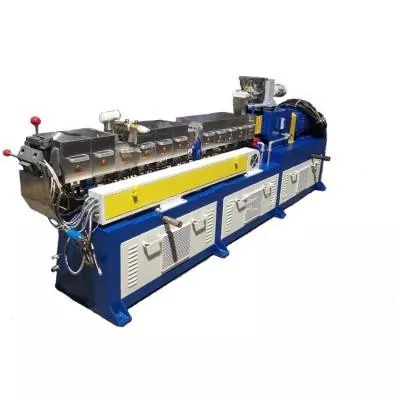
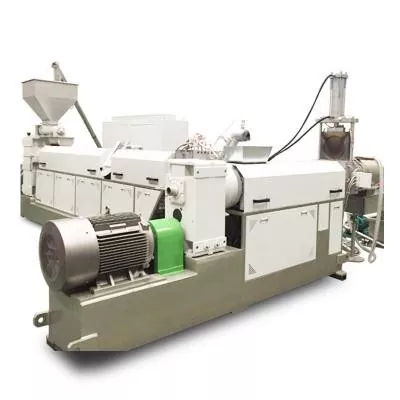
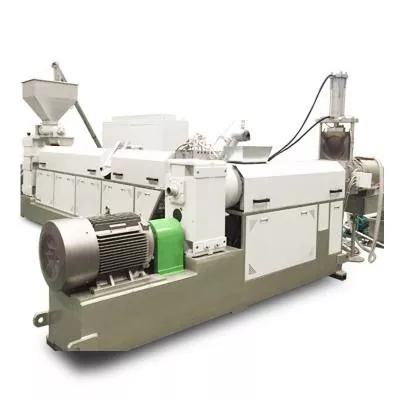
Parallel twin screw extruder pelletizing line by Nanhaiya

How a parallel twin screw extruder works

Two screws of identical diameter run side by side in a figure-eight bore, intermeshing along their whole length. Material is metered in — usually by a gravimetric or volumetric feeder rather than a flood hopper — then conveyed, melted, mixed, vented and pumped to the die. Because the screws intermesh, material transfers positively from one to the other instead of being dragged along the wall, which gives the machine its steady output and self-wiping behaviour.

The sequence along the barrel:

  1. Metered feeding — feeders dose resin, filler and additives at exact ratios into the feed section. Side feeders introduce glass fibre or high filler loads further downstream so they are not over-sheared.
  2. Melting — kneading blocks convert mechanical energy into heat, melting the polymer quickly over a short length.
  3. Mixing — distributive elements spread additives evenly; dispersive elements break down agglomerates. This is where compound quality is won or lost.
  4. Devolatilisation — atmospheric and vacuum vents pull out moisture, monomer and volatiles.
  5. Metering & pelletizing — the final conveying section builds pressure through the die, then a strand or die-face pelletizer cuts the melt into granules.

Why compounding uses co-rotating machines

A parallel twin screw extruder can be co-rotating or counter-rotating, and the choice defines the machine's character.

Factor Co-rotating parallel Counter-rotating parallel
Screw rotation Both screws turn the same direction Screws turn in opposite directions
Behaviour Self-wiping, high-shear mixing Calender-like, positive conveying
Screw speed High — energy input drives melting Lower — gentler on the melt
Strength Dispersive & distributive mixing, devolatilisation Steady pressure, low shear
Typical use Compounding, masterbatch, WPC, glass-fibre, recycling PVC pipe/profile, heat-sensitive and highly filled PVC

In practice, a co-rotating twin screw extruder is what most people mean by "compounding extruder": the self-wiping action prevents dead spots and material hang-up, and the high specific energy input melts and disperses quickly. Counter-rotating parallel machines survive where shear must stay low — mainly PVC. For direct PVC extrusion specifically, a conical twin screw extruder is often the better answer.

Screw configuration: the real specification

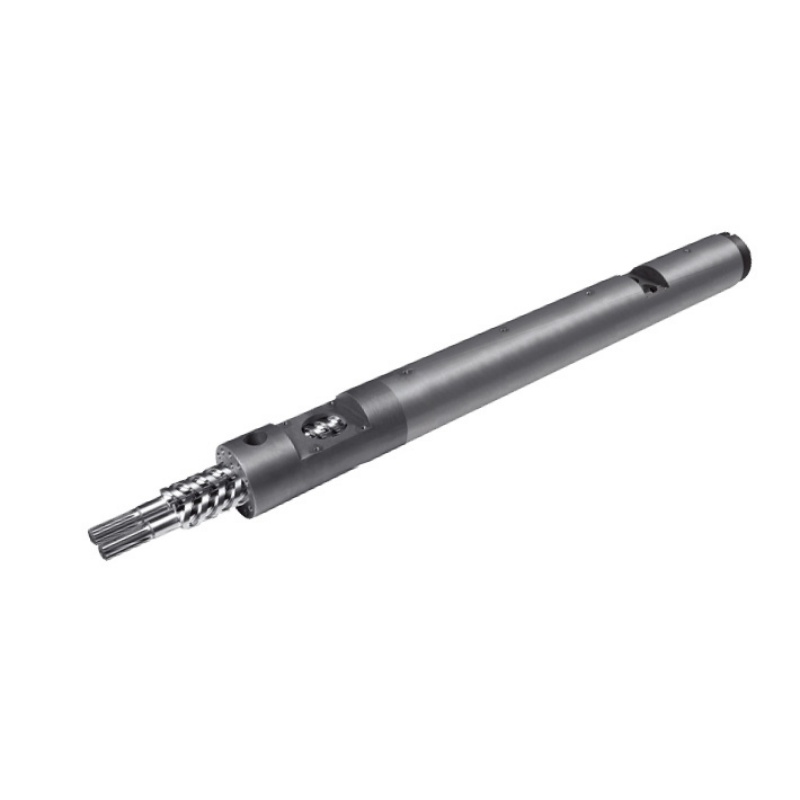
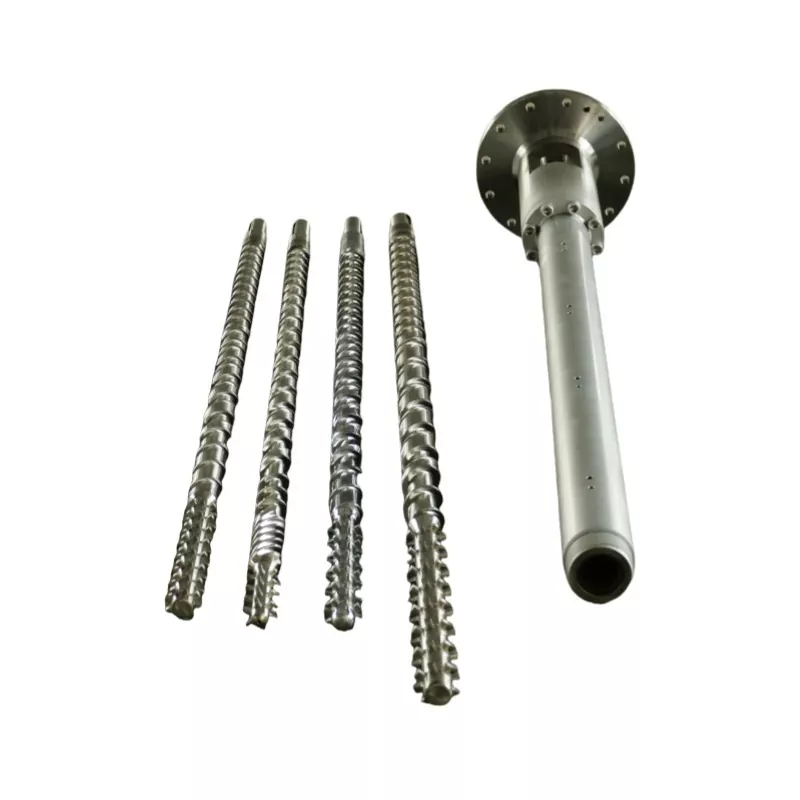
On a parallel machine, the screw is not a single part — it is a stack of elements keyed onto a splined shaft. The parallel twin screw and barrel is therefore specified by its element sequence, not just a diameter. The building blocks:

  • Conveying elements — forward-pitch flights that transport material; long pitch for feeding, short pitch for pressure build.
  • Kneading blocks — staggered discs that melt and mix. The stagger angle sets the character: 30° and 45° forward for distributive mixing, 90° neutral for intensive dispersion, reverse for maximum shear and full melt seal.
  • Reverse (left-hand) elements — create a melt seal so a vacuum vent can work, and raise residence time locally.
  • Mixing elements — toothed or slotted designs for gentle distributive mixing without excess shear.
  • Barrel sections — feed, closed, side-feed, atmospheric-vent and vacuum-vent sections bolted in the order the recipe needs.
General industry note: co-rotating compounding machines are commonly built at L/D ratios around 32:1 to 48:1, with longer lengths used when a recipe needs side feeding plus multiple mixing and venting stages. Confirm the L/D and element sequence against your specific formulation.
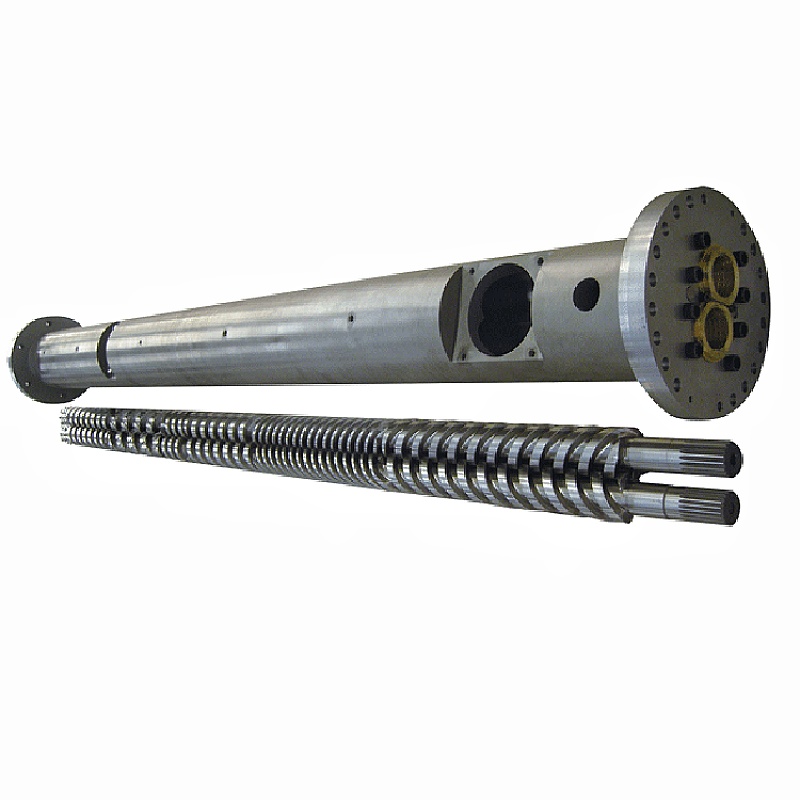
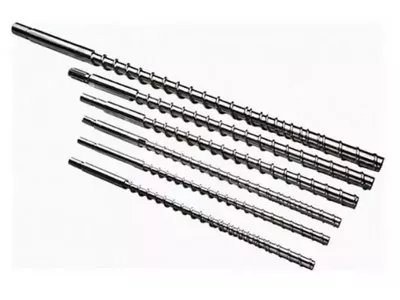
Segmented parallel twin screw elements for a compounding extruder

The extruder is only part of the line

A parallel twin screw extruder rarely works alone. A complete compounding line typically includes:

  • Feeders — gravimetric loss-in-weight units for accurate recipe dosing.
  • Side feeder — introduces glass fibre or heavy filler downstream to protect fibre length.
  • Vacuum system — removes moisture and volatiles from the melt.
  • Melt filter — screen changer to catch contamination, important on recycled feed.
  • Pelletizer — strand, water-ring or die-face (underwater) cutting, chosen by material.
  • Cooling & drying — water bath or air cooling plus a dryer before packing.

Nanhaiya supplies the extruder alone or the complete parallel twin screw pelletizing line, as well as other extruder machines for single screw and conical layouts.

Sizing and output

Parallel machines are named by screw diameter — a 65 mm machine has two 65 mm screws. Output rises with diameter, screw speed and torque, but the recipe sets the real ceiling: a highly filled compound that needs intensive dispersion will run slower than a simple colour masterbatch on the same machine.

What sets output Why it matters
Screw diameter The base capacity of the machine — must match your target throughput band
Screw speed (rpm) Higher speed lifts output but also shear and melt temperature
Torque density Available torque per unit volume — the limit on highly filled recipes
L/D ratio Longer length allows side feeding, more mixing stages and better venting
Formulation Filler level and dispersion difficulty often bind before the machine does
Downstream capacity The pelletizer and cooling must keep up or they become the bottleneck

The practical approach: tell us the compound, the filler level and the kg/h you need, and we will size the machine and design the element sequence around it — rather than selling you a diameter and hoping the recipe fits.

What parallel twin screw extruders make

  • Masterbatch — colour, filler and additive concentrates.
  • Filled compounds — CaCO₃, talc and mineral-filled PP and PE.
  • Glass-fibre reinforced engineering plastics — PA, PBT and PP with side-fed fibre.
  • WPC pellets — wood-fibre compounds for decking and panels.
  • PS foaming — see our PS foaming parallel twin screw.
  • Aluminum-plastic composite panel — see the aluminum-plastic plate parallel twin screw.
  • Recycling — reprocessing and upgrading post-industrial material.

Parallel or conical machine?

Question Parallel twin screw extruder Conical twin screw extruder
What is the output? Pellets or compound A finished profile, pipe or board
Screw Constant diameter, modular elements Tapered, fixed geometry per size
Recipe changes Rebuild the screw profile Change downstream tooling
Feeding Metered feeders, often side feed Forced (crammer) feeder for PVC powder
Shear High — that is the point Low and gentle for heat-sensitive PVC

Not sure which layout fits? Start from our broader twin screw extruder guide, which compares both families side by side.

Screw and barrel: the part that wears

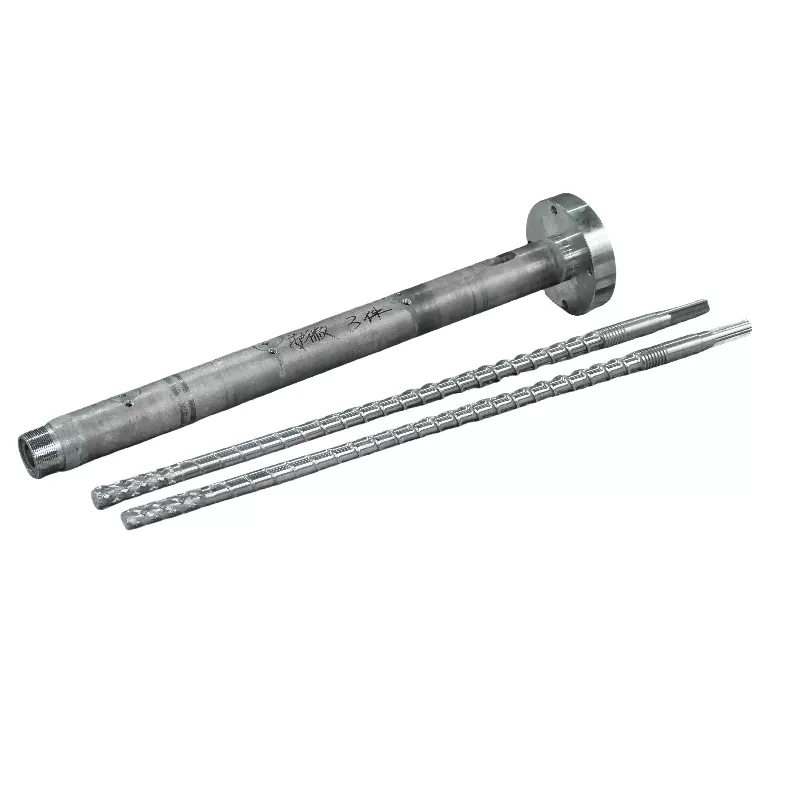
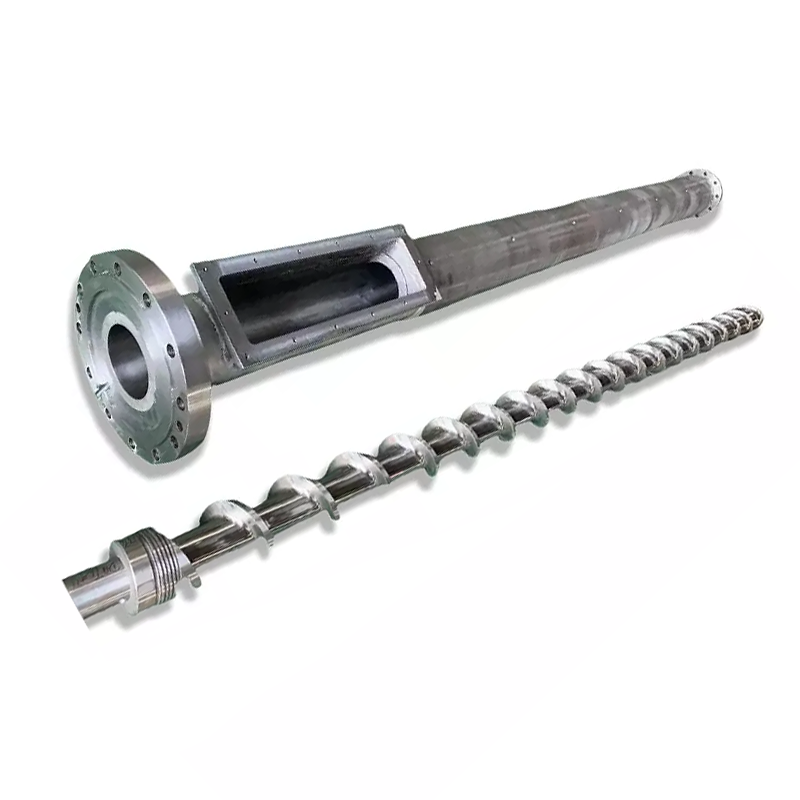
Compounding is hard on steel. Glass fibre, mineral filler and high carbonate loadings abrade both the flight tips and the bore, and a worn element sequence loses mixing quality long before the machine stops running. That is why the parallel twin screw barrel and its elements should be specified for the abrasion your recipe actually creates.

Nanhaiya builds parallel screws and barrels from 38CrMoAlA nitrided steel, W6Mo5Cr4V2 or HIP powder steel, held to a tolerance of ±0.01 mm with straightness of 0.015 mm/m. For abrasive compounds we spray a tungsten-added hard alloy that reaches 62 HRC inside the bore — against a common 58 HRC — with a 2.0–3.0 mm alloy layer. The modular design also helps commercially: you replace only the worn elements, not the entire screw. See our comparison of a bimetallic vs nitrided screw barrel, and our spare parts range.

Frequently asked questions

What is a parallel twin screw extruder?

It is an extruder with two constant-diameter intermeshing screws built from modular elements on splined shafts. Most are co-rotating and are used for compounding, masterbatch, WPC and pelletizing, because the screw profile can be rebuilt for each formulation.

What is a co-rotating twin screw extruder used for?

Compounding and pelletizing above all — masterbatch, filled and glass-fibre reinforced compounds, WPC and recycling. The self-wiping, high-shear action gives strong dispersive and distributive mixing plus effective devolatilisation.

Co-rotating or counter-rotating — which is better?

Neither universally. Co-rotating suits compounding and mixing at high screw speed. Counter-rotating gives gentler, positive conveying and suits PVC and heat-sensitive, highly filled work. Match the machine to the job, not the reverse.

Parallel or conical twin screw extruder?

Choose parallel when the output is pellets or a compound and you need reconfigurable mixing. Choose conical when the extrudate itself is your product — PVC pipe, profile, board or sheet — where strong feeding and gentle compression matter more.

What are kneading blocks and why do they matter?

Kneading blocks are staggered disc elements that melt and mix the compound. The stagger angle sets the effect: forward angles give distributive mixing, neutral 90° gives intensive dispersion, and reverse elements build a melt seal for vacuum venting.

How is a parallel twin screw extruder sized?

By screw diameter, screw speed, available torque and L/D ratio — but the formulation usually sets the real limit. Highly filled or hard-to-disperse recipes run slower than simple masterbatch on the same machine, and the pelletizer must keep up.

What is a side feeder for?

A side feeder introduces glass fibre or high filler loads downstream of the melting section. Adding fibre after the polymer has melted protects fibre length and avoids the excessive shear that main-feed addition would cause.

How long do parallel screws and barrels last?

It depends on abrasion. Glass fibre and mineral filler wear elements fastest. A bimetallic surface with a 2.0–3.0 mm alloy layer at up to 62 HRC extends life considerably, and the modular design lets you replace only the worn elements rather than the whole screw.

Related products from our factory

Get a parallel twin screw extruder built around your recipe

Tell us your compound, filler level and target kg/h — our engineers will size the machine and design the screw element sequence to match, then quote the extruder alone or the complete pelletizing line.

Get a quote within 12 hours →
Nanhaiya (Zhoushan) Plastic Machinery · 500+ global clients · parallel & conical twin screw systems, extruder machines & spare parts
Related News
Leave me a message
X
We use cookies to offer you a better browsing experience, analyze site traffic and personalize content. By using this site, you agree to our use of cookies. Privacy Policy
RejectAccept