News

Parallel Twin Screw Barrel: Co-rotating vs Counter-rotating, Types & Applications

2026-08-13 0 Leave me a message


Quick answer

A parallel twin screw barrel has two intermeshing screws of constant diameter running side by side in a matching twin-bore barrel. Unlike a conical barrel, the screws stay the same size end to end, and the barrel is usually built from segments. Co-rotating parallel screws suit compounding, granulation and masterbatch; counter-rotating parallel screws suit PVC and high-filler work.

The parallel twin screw barrel is the workhorse of compounding and pelletizing — anywhere you need intensive mixing, precise temperature control and the flexibility to reconfigure the screw for a new formulation. Where a conical barrel is built for direct PVC extrusion, a parallel screw barrel is built for versatility. This guide explains how it works, the crucial difference between co-rotating and counter-rotating designs, the segment (building-block) structure that makes it so flexible, and how to choose the right one for your material.

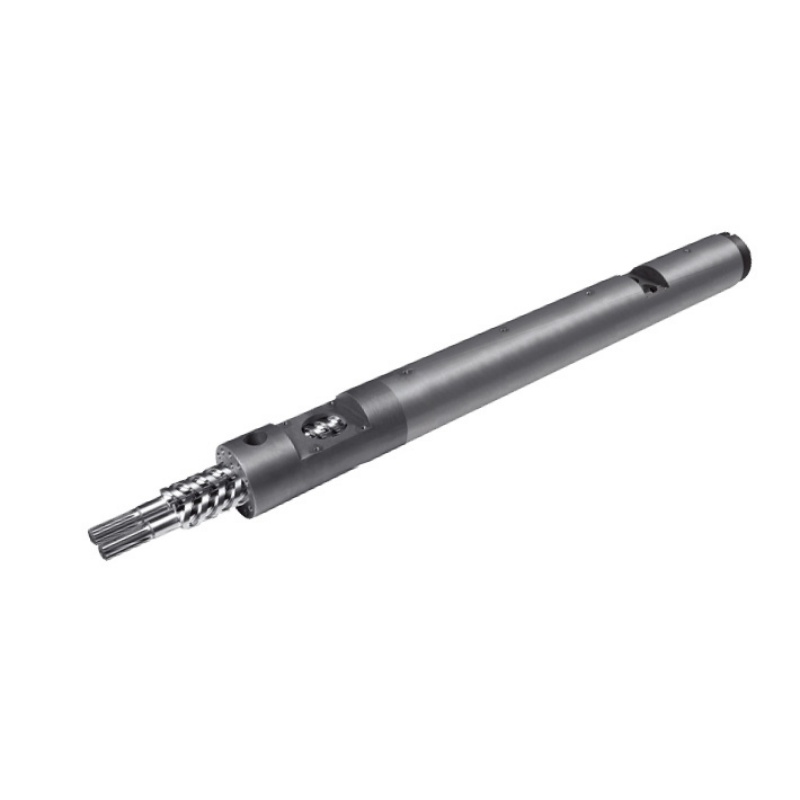
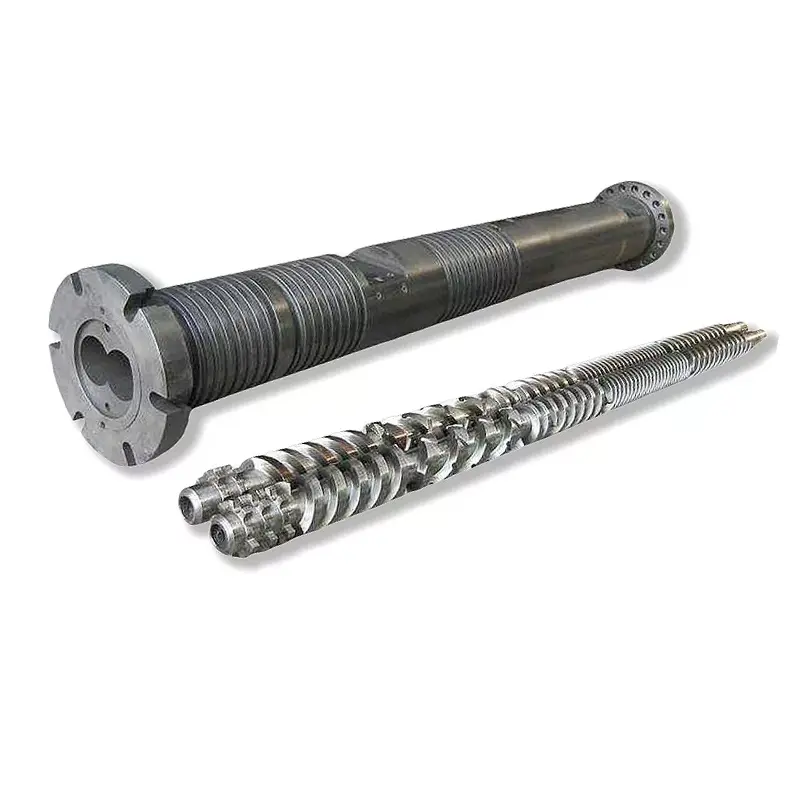
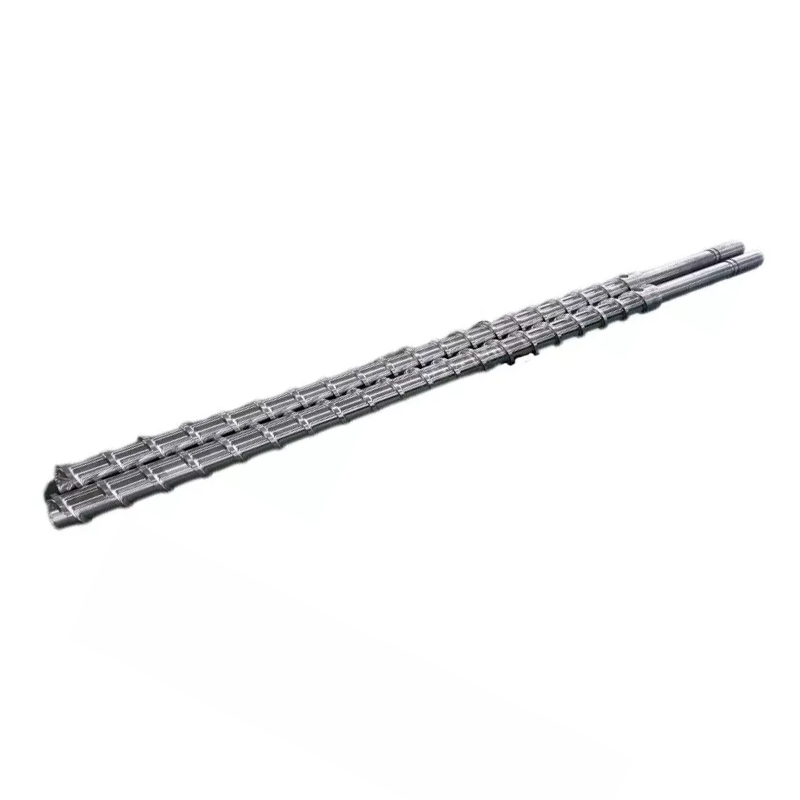
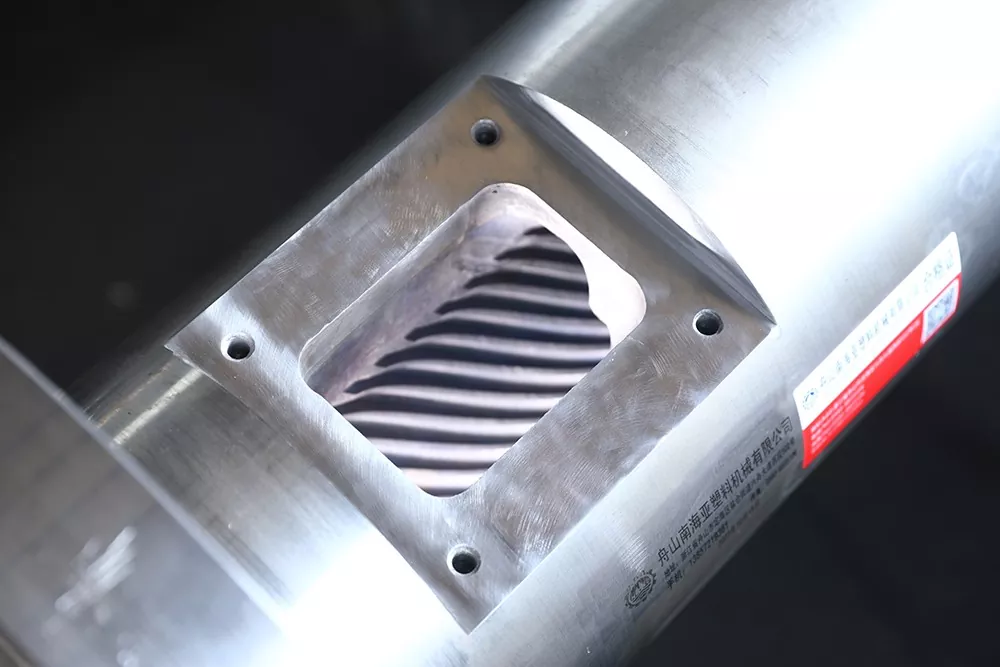
Parallel twin screw barrel (counter-rotating) manufactured by Nanhaiya
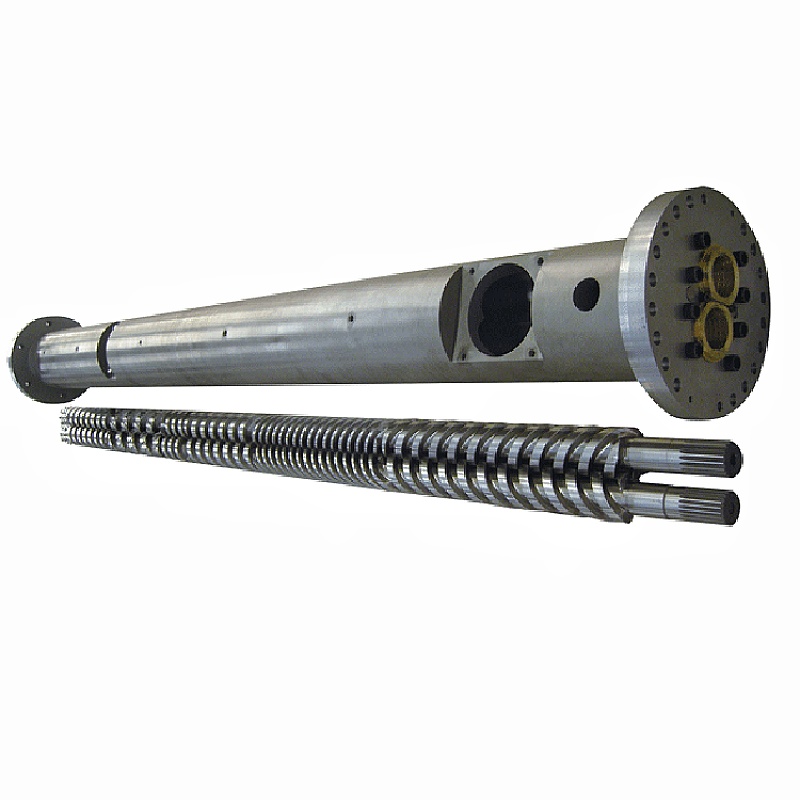
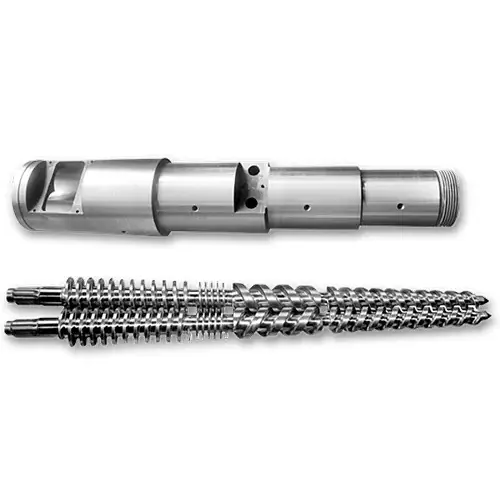
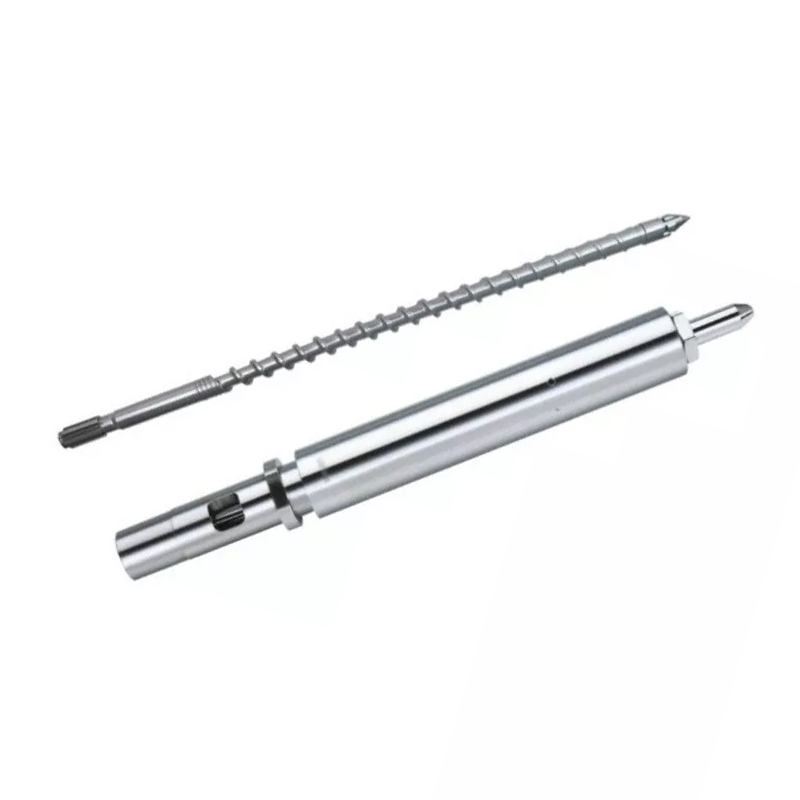
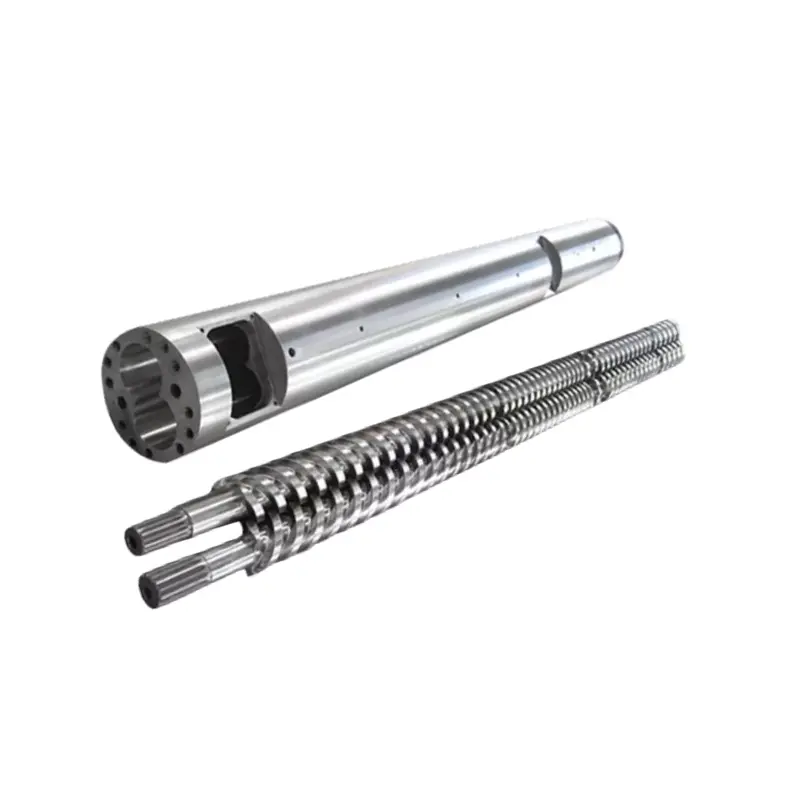
A parallel twin screw and barrel — constant-diameter screws in a matching twin-bore barrel.

What is a parallel twin screw barrel?

A parallel screw barrel holds two screws of the same diameter from feed to discharge, running in a figure-eight twin bore. Because the diameter is constant, the processing behaviour is set by the screw configuration rather than by a taper — you change performance by changing the screw elements, not the barrel shape. That is why parallel twin screw and barrel systems dominate compounding: the same machine can run wildly different recipes by rebuilding the screw.

Two things define a parallel twin screw barrel: the direction the screws turn (co-rotating or counter-rotating), and how the barrel and screw are built up (usually from segments). Both are covered below. For the underlying mechanics, see our explainer on how a parallel twin screw works.

Co-rotating vs counter-rotating

This is the most important distinction in the parallel family. Both are intermeshing twin-screw designs, but they convey and mix very differently.

Factor Co-rotating parallel Counter-rotating parallel
Screw rotation Both screws turn the same way Screws turn in opposite directions
Mixing High-shear, excellent distributive & dispersive mixing Gentler, calender-like, positive conveying
Typical speed Higher screw speed, high output Lower speed, steady pressure build
Best for Compounding, masterbatch, granulation, filled/glass-fibre PVC pipe/profile, heat-sensitive, high-filler PVC
Feel Reconfigurable "mixing machine" Pump-like, gentle "extrusion machine"

In short: a co-rotating twin screw is the tool for mixing and dispersion; a counter-rotating twin screw is the tool for gentle, steady PVC conveying. Many plants own both. If your job is turning ingredients into pellets, you want co-rotating; if it is turning PVC dry-blend into pipe or profile, counter-rotating (or a conical barrel) is the better fit.

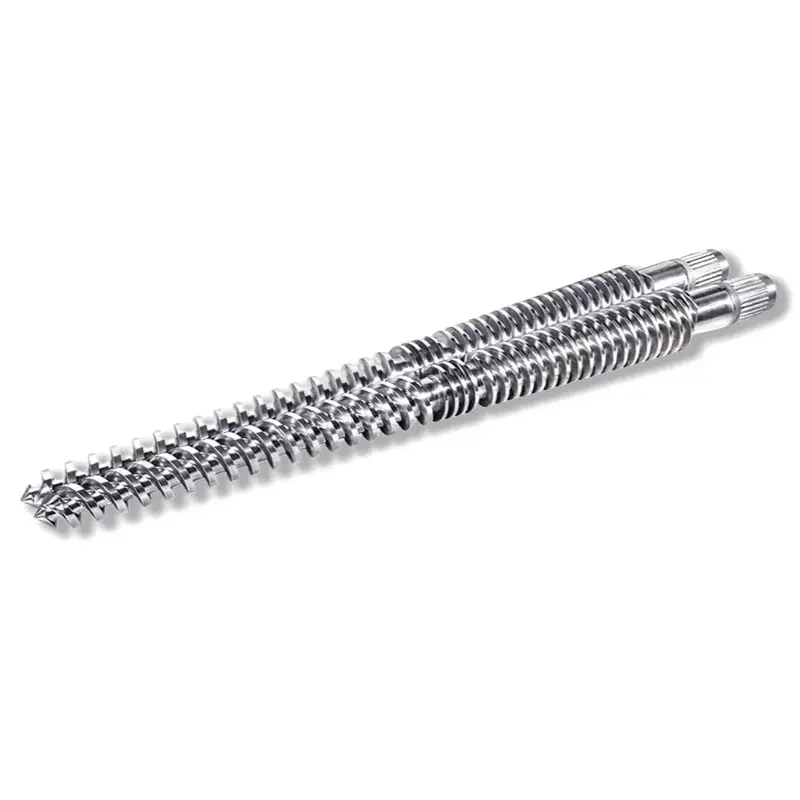
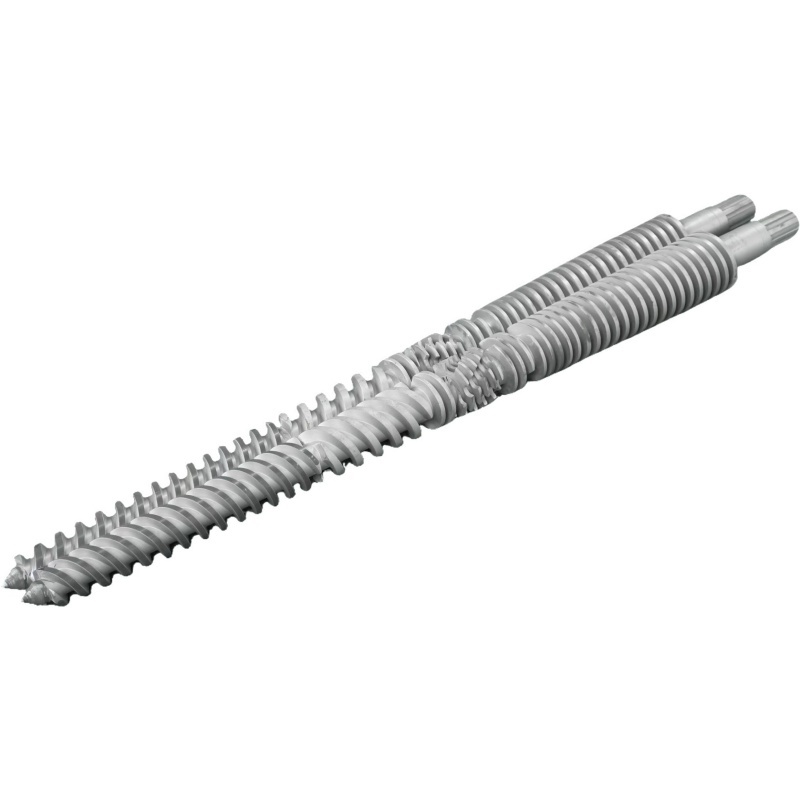
Segmented parallel twin screw elements on a shaft

Segment (building-block) barrel design

Most parallel systems are modular: the barrel is made of bolt-together sections and the screw of keyed elements threaded onto a shaft. This "building-block" approach is what gives the parallel twin screw barrel its flexibility — you can place a feed section, several mixing sections, a vent and a metering section exactly where the recipe needs them, and swap worn or unsuitable elements individually instead of replacing a whole screw.

The practical benefits:

  • Reconfigurable — rebuild the screw profile for a new formulation without a new machine.
  • Targeted wear parts — replace only the worn segment, not the whole screw and barrel.
  • Venting where you need it — position vent sections for moisture and volatile removal.
  • Mix intensity on demand — add or remove kneading blocks to tune shear.

Parallel vs conical twin screw barrel

Buyers often weigh a parallel against a conical twin screw barrel. The short rule: conical for direct PVC extrusion, parallel for compounding and demanding mixing.

Factor Parallel twin screw barrel Conical twin screw barrel
Screw shape Constant diameter, segmented Tapered, wide feed to narrow die
Strength Mixing, dispersion, flexibility High feed & compression in short length
Best for Granulation, masterbatch, compounding, WPC pellets PVC pipe, profile, board, sheet
Filler handling Excellent at very high filler / glass-fibre Good; tune with surface treatment
Flexibility Reconfigurable screw profile Fixed geometry per size

Applications

Because the screw profile can be tuned to the job, a parallel twin screw barrel covers a wide range of work. Common configurations at Nanhaiya include:

Parallel twin screw pelletizing line for compounding and granulation
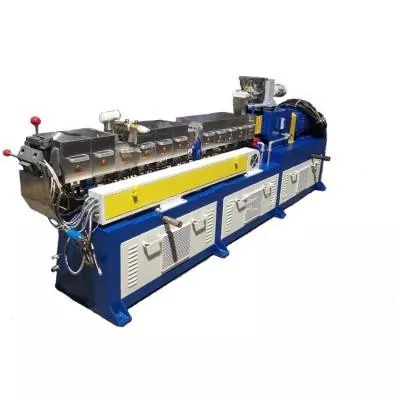
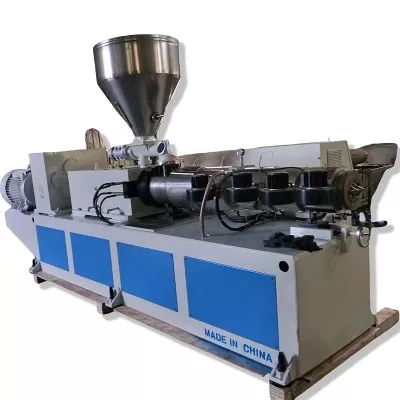
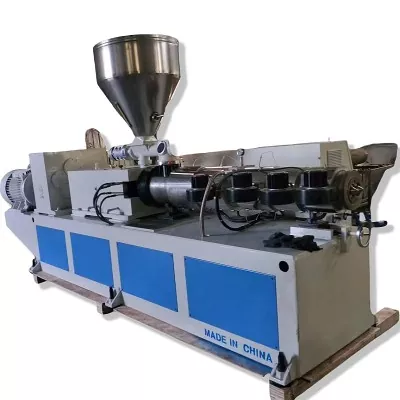
A parallel twin screw pelletizing line — the most common home for a co-rotating parallel barrel.
PS foaming parallel twin screw and barrel
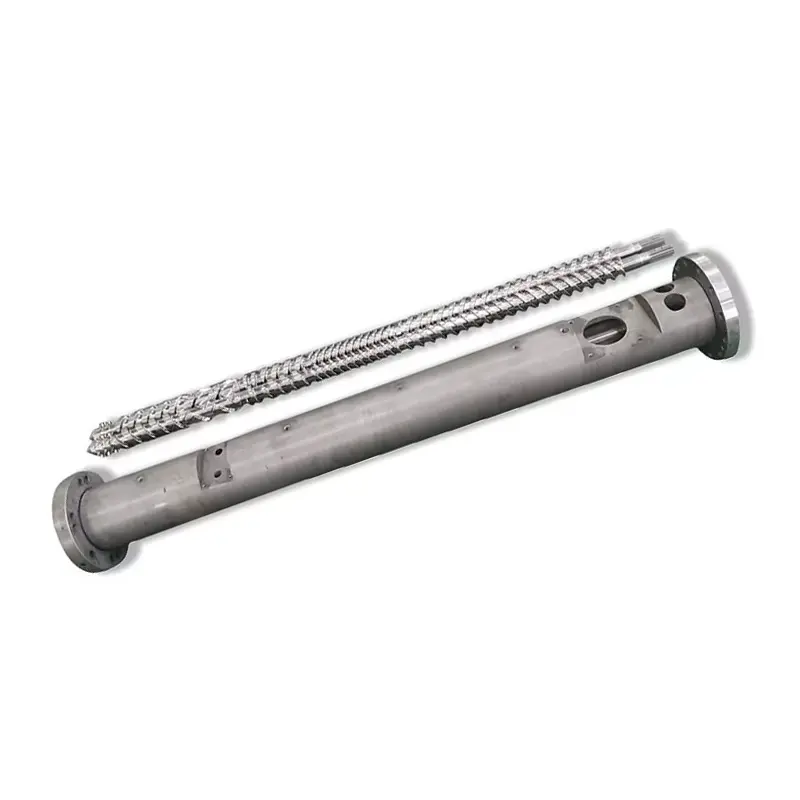
A parallel twin screw and barrel built for PS foaming.

Material and surface treatment

Compounding is abrasive work — glass fibre, mineral fillers and high carbonate loadings wear screws and barrels fast — so material and surface treatment matter as much on a parallel system as on a conical one. Nanhaiya builds parallel screws and barrels from 38CrMoAlA nitrided steel, W6Mo5Cr4V2 or HIP powder steel, with nitrided, bimetallic or tungsten-carbide surfaces to match the abrasion of your recipe.

For heavily filled or glass-reinforced compounds, a bimetallic surface is the sensible choice: our tungsten-added alloy reaches 62 HRC inside the bore — versus a common 58 HRC — for longer service life. Parallel barrels are held to a tolerance of ±0.01 mm. If you are weighing surface options, see our guide to bimetallic screw barrels, which applies equally to parallel systems.

How to choose the right parallel twin screw barrel

Four questions get you to the right specification:

  1. Co- or counter-rotating? Compounding and pelletizing → co-rotating; PVC and gentle conveying → counter-rotating.
  2. What are you processing? The recipe sets the screw profile — mixing blocks for dispersion, vents for volatiles.
  3. How abrasive is it? High filler or glass fibre → bimetallic / tungsten-carbide surface.
  4. What machine? Send your extruder brand/model or a drawing so the segments and shaft match exactly.

Parallel screws and barrels are effectively custom to the machine and the recipe, so a drawing or sample plus your material and output lets us quote an exact-fit single, parallel or conical screw barrel — or the complete extruder machine — within 12 hours.

Frequently asked questions

What is a parallel twin screw barrel?

It is a twin-bore barrel holding two constant-diameter intermeshing screws that run side by side. Unlike a conical barrel, the screws stay the same size end to end and the system is usually segmented, so the screw profile can be reconfigured for different formulations.

What is the difference between co-rotating and counter-rotating?

Co-rotating screws turn the same way and give high-shear mixing at high speed — ideal for compounding and masterbatch. Counter-rotating screws turn oppositely with gentler, pump-like conveying — better for PVC and heat-sensitive, high-filler work.

What is a segment (building-block) parallel twin screw barrel?

It is a modular design where the barrel is bolt-together sections and the screw is keyed elements on a shaft. You can position feed, mixing, vent and metering sections as the recipe needs, and replace only the worn segment instead of the whole screw.

Parallel or conical twin screw barrel — which do I need?

Choose conical for direct PVC pipe, profile, board and sheet extrusion. Choose parallel for granulation, compounding, masterbatch and very high-filler or glass-fibre dispersion, where reconfigurable mixing matters most.

What is a parallel twin screw barrel used for?

Mainly granulation and pelletizing, compounding and masterbatch, PS foaming, aluminum-plastic composite panel, rubber and plastic, and parallel-layout PVC lines. The tunable screw profile lets one machine handle many recipes.

Should a parallel barrel be nitrided or bimetallic?

Clean compounds can run nitrided. Abrasive recipes — high mineral filler, glass fibre, high carbonate — should be bimetallic; a tungsten-added alloy reaching 62 HRC resists that abrasion far longer than a thin nitrided case.

What is a parallel twin screw extruder?

It is the machine that houses a parallel twin screw and barrel, typically co-rotating for compounding and pelletizing. The barrel and screw are the wear heart of the machine and are matched to the extruder and the recipe.

How do I order the right parallel twin screw barrel?

Tell us co- or counter-rotating, your material and output, how abrasive the recipe is, and your extruder brand/model or a drawing. With those, we specify the segments, screw profile and surface treatment and quote within 12 hours.

Related products from our factory

Get a parallel twin screw barrel matched to your recipe

Tell us co- or counter-rotating, your material and output, and your extruder model — our engineers will specify the segments, screw profile and surface treatment. For abrasive compounds, our tungsten-added bimetallic barrels reach 62 HRC inside the bore for long service life.

Get a quote within 12 hours →
Nanhaiya (Zhoushan) Plastic Machinery · 500+ global clients · parallel, conical & single screw barrels & extruder machines
Related News
Leave me a message
X
We use cookies to offer you a better browsing experience, analyze site traffic and personalize content. By using this site, you agree to our use of cookies.Privacy Policy
RejectAccept