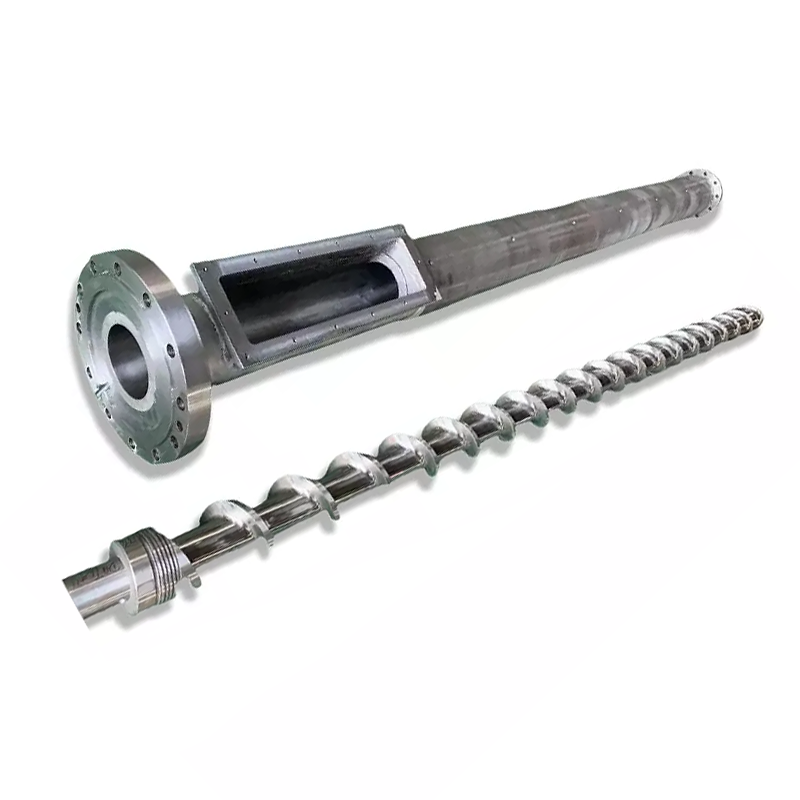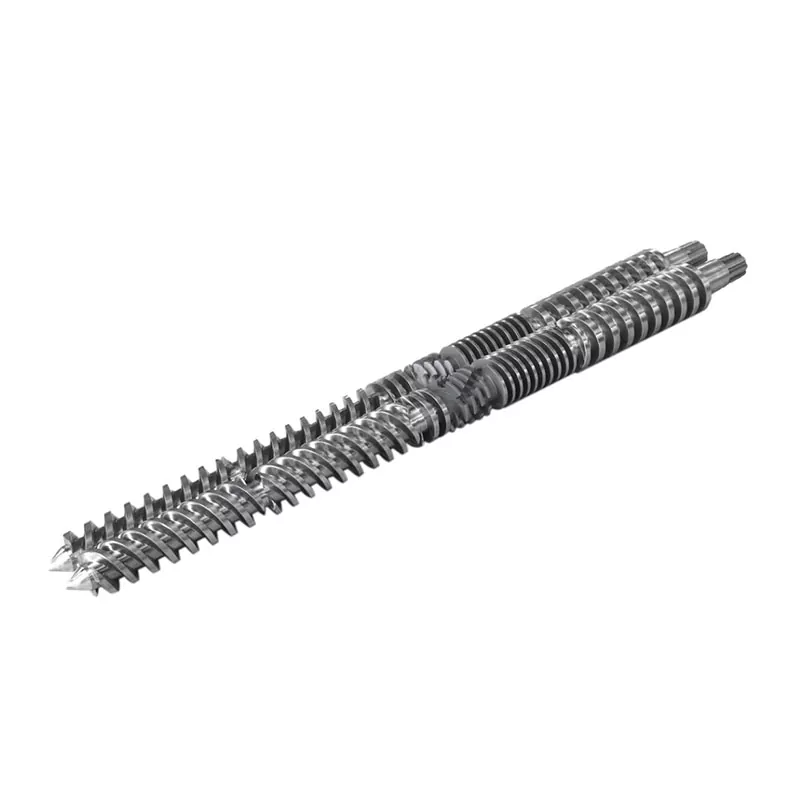

A useful quotation starts with the PVC formulation and the installed machine, not a diameter and a photograph. This guide turns the process duty, worn parts and acceptance target into a purchase specification a factory can actually manufacture.
For high-filled PVC, specify the complete recipe in phr, feeding method, end product, required output, screw rotation, center distance, connection dimensions and the wear map of both screws and barrel bores. Select nitriding, chrome plating or a bimetallic layer against the actual wear duty. Approve the drawing and inspection method before price becomes the deciding factor.
Define the extrusion job before discussing the screw
“Parallel twin screw for high-filled PVC” is a product family, not a complete specification. It does not tell us whether the line is making pressure pipe, drainage pipe, profile, sheet or foam board. It also omits whether the extruder is preparing compound or feeding a shaping die directly.
Those distinctions change the duty along the barrel. Feeding, fusion, distributive mixing, devolatilization and pressure generation do not occur in the same way on every line. The drive, gearbox, downstream die and cooling equipment impose limits that a screw drawing cannot remove.
Our factory view: we would not approve a geometry change from filler percentage alone. First we ask what the current line does well, where it becomes unstable and what result must improve. If the existing product is acceptable and the task is replacement, preserving proven geometry can be safer than adding an aggressive mixing feature without evidence.
Start the inquiry by choosing one objective: reproduce the original duty, correct a measured wear problem, or design for a new formulation and output. Combining all three in one vague request makes supplier proposals impossible to compare.
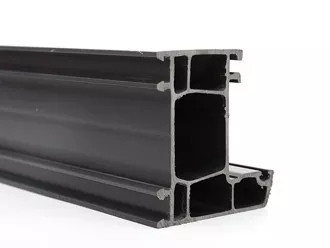
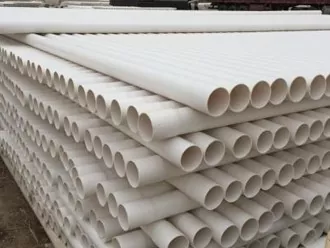
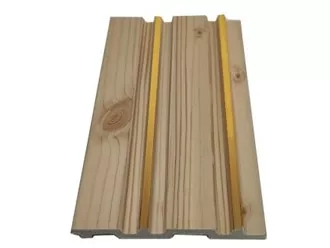
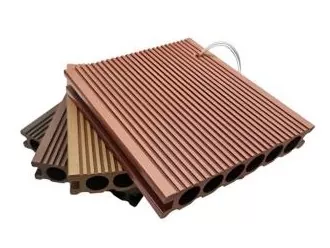
A factory can only design around the formulation it receives
For PVC, “30% filler” is not precise enough. State ingredients in parts per hundred resin, normally written as phr, and also provide the finished blend composition if your internal control system uses weight percentage. The two expressions do not share the same denominator.
Record the PVC resin grade, calcium carbonate or other filler grade, particle information supplied by the filler producer, stabilizer system, lubricants, processing aids, impact modifiers, pigments and recycled content. Add the bulk density and feed form of the actual dry blend. If the plant changes recipes, list the operating range rather than sending only the easiest grade.
The rest of the line matters because filled powder has to reach the screws consistently. In a published battenfeld-cincinnati system, the chalk dosing path used agitators to prevent bridging, gravimetric monitoring and a screw geometry adapted for 30 to 100 parts of chalk. That example is specific to its twinEX 93-34 line, but the procurement lesson is broad: feeder design and screw design must be reviewed together.
Additives also change the processing job. Arkema's published work on a highly filled PVC flooring formulation links a dedicated processing aid with fusion and consistent melt processing at elevated calcium carbonate levels. It is a useful reminder that the same filler phr can behave differently when the resin and additive package changes.
Preparing a new high-filled PVC project? Send the recipe under a confidentiality agreement if required, plus the line drawing and target product. We can then discuss the screw and barrel as part of a defined processing duty.
Send formulation and drawingView the PVC parallel productLock the rotation, handedness and machine interface
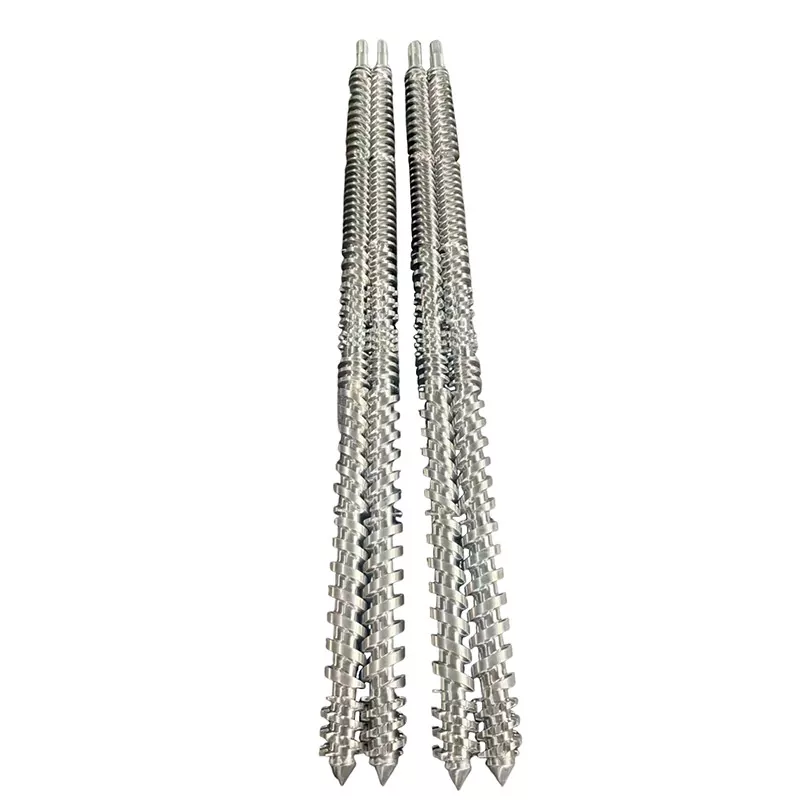
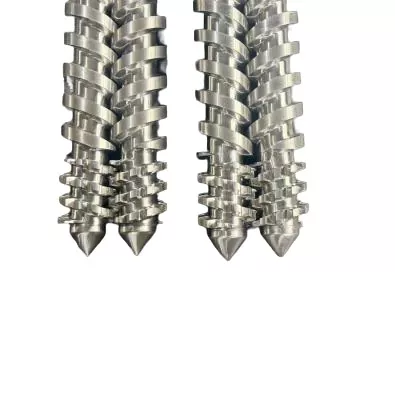
Nanhaiya supplies both co-rotating parallel twin screw barrels and counter-rotating parallel twin screw barrels. They are different mechanical configurations. A supplier should not infer the correct one from a photo of the finished PVC product.
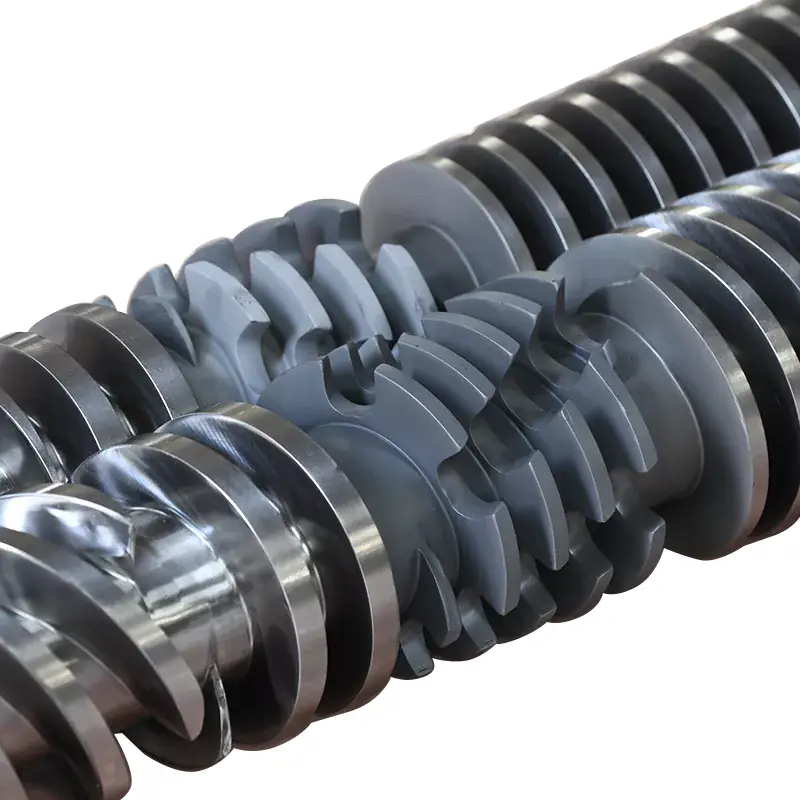
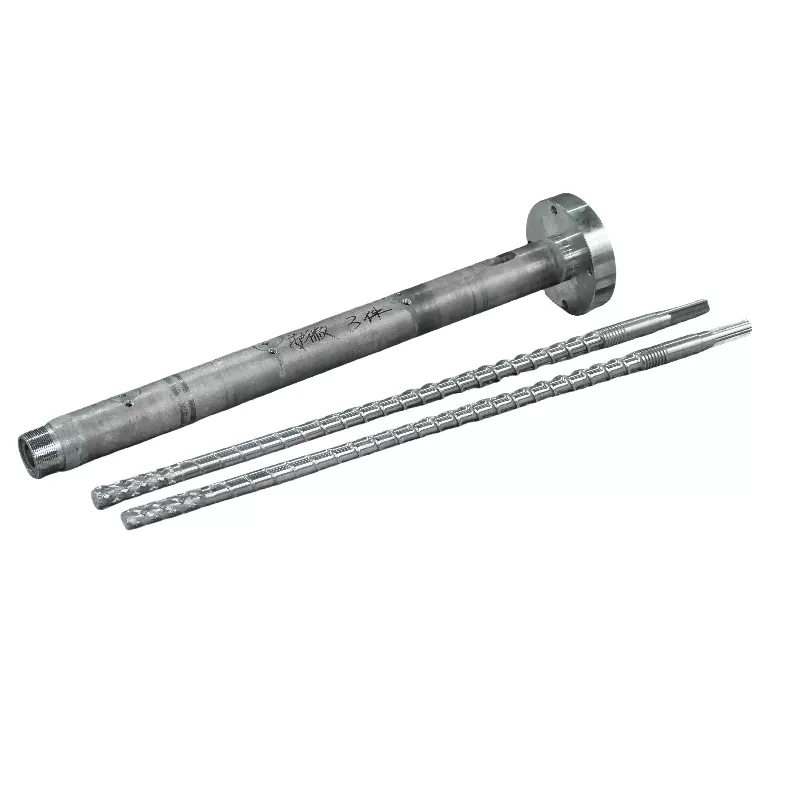
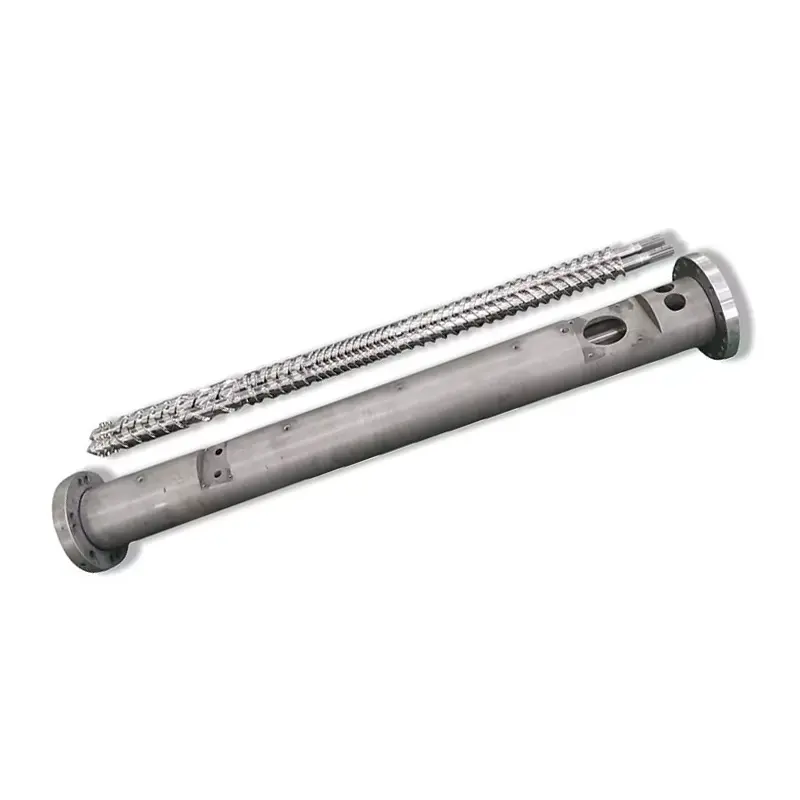
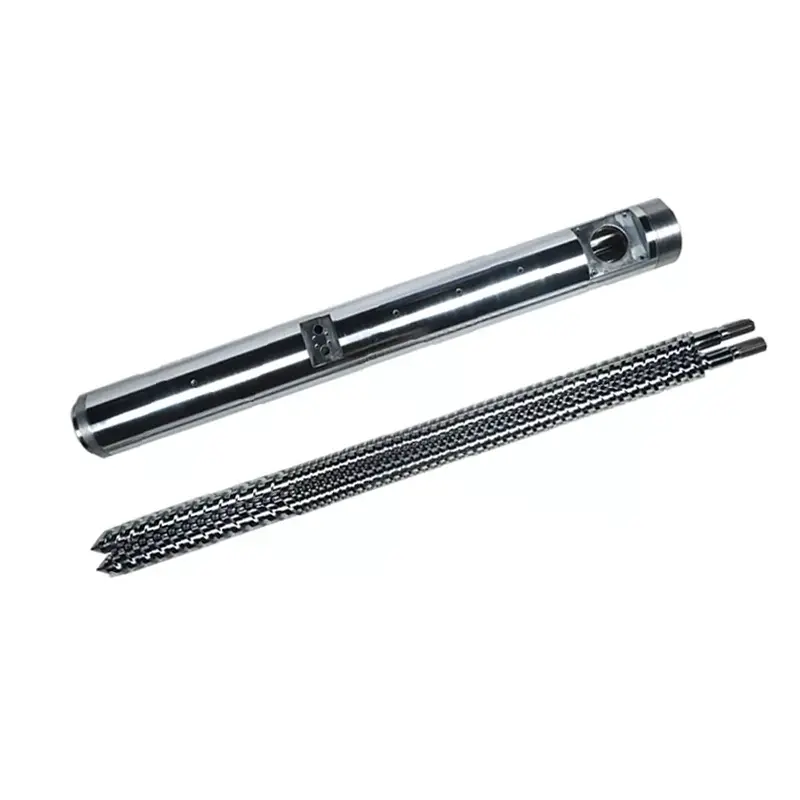
For a replacement, identify screw rotation with the viewing direction stated on the drawing. Include screw handedness, phasing marks, center distance, outside and root diameters, working length, shaft connection, spline or key details, thrust faces and the barrel's figure-eight bore geometry.
Then define every interface: feed opening, vent, heating and cooling zones, thermocouple holes, flange bolt pattern, gearbox face, breaker plate or die connection, supports and overall installation envelope. A small omission can stop an otherwise well-machined set from fitting the line.
| Area | Minimum evidence | Common ambiguity to remove |
|---|---|---|
| Screw pair | Approved drawing, left and right identification, rotation, handedness, phasing and connection | Rotation stated without saying which end the viewer faces |
| Barrel bores | Center distance, bore profile, axial dimensions, ports and flange datums | One nominal bore diameter used to describe the complete figure-eight profile |
| Clearance | Specified screw-to-barrel and screw-to-screw clearances with test condition | Supplier expected to reconstruct original clearance from worn parts |
| Interfaces | Gearbox, feed, vent, heating, cooling and die connection drawings | Photographs without dimensions, datums or thread specifications |
| Assembly control | Pair numbers, timing marks, installation procedure and machine maker requirements | Two screws treated as independent spare parts |
When a buyer sends only worn screws, we can measure what is present, but the wear has already altered the land, flight profile and clearance. We prefer the approved drawing, machine data and measurements of both components. We will not call worn geometry the original design simply because it is the only sample in the crate.
Use the model table as a screening tool, not a promise
Our parallel twin screw range lists five common models from 75 to 130 mm. The published PVC output ranges help a buyer identify a starting platform. They do not replace the formulation, feeder, die and drive review.
| Model | Screw diameter | L/D | PVC output capacity | Screw speed | Drive motor |
|---|---|---|---|---|---|
| NHY75 | 75 mm | 26 to 36 | 220 to 350 kg/h | 45 rpm | 45 kW |
| NHY90 | 90 mm | 26 to 36 | 280 to 460 kg/h | 45 rpm | 55 kW |
| NHY110 | 110 mm | 26 to 36 | 350 to 650 kg/h | 45 rpm | 75 kW |
| NHY120 | 120 mm | 26 to 36 | 500 to 800 kg/h | 45 rpm | 110 kW |
| NHY130 | 130 mm | 26 to 36 | 680 to 1,000 kg/h | 45 rpm | 132 kW |
A high-filled recipe can change bulk feeding, fusion behavior, torque demand, wear and die pressure. That is why we ask for a stable current production record when one exists. It provides a much better sizing reference than desired output alone.
For an existing extruder, the gearbox and barrel interface normally decide the size before the catalog does. For a new line, the output target must be linked to a named recipe and product acceptance standard. If the quote lists kg/h without the accepted formulation and product, the number is difficult to enforce.
Choose wear protection from the wear map
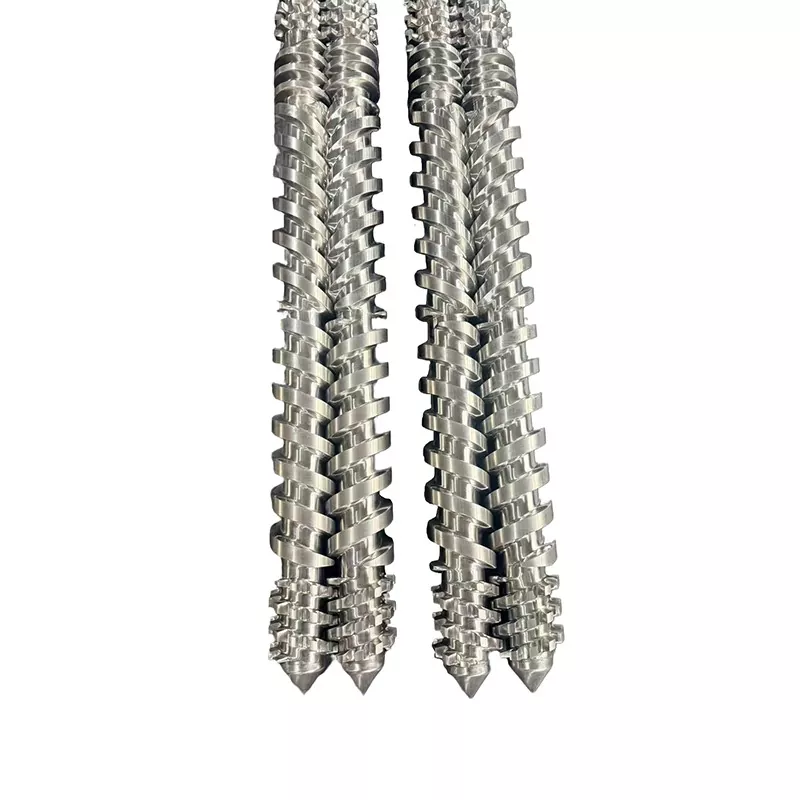
The Nanhaiya PVC parallel twin screw barrel uses 38CrMoAlA as its listed base material and offers nitrided, chrome-plated and bimetallic specifications. These are different constructions. Comparing them by the largest hardness number alone is poor purchasing practice.
| Property | Published value | Put this in the order |
|---|---|---|
| Base material | 38CrMoAlA | Component, steel grade and required material document |
| Heat treatment hardness | HB260 to 320 | Test location, method and acceptance record |
| Nitriding hardness | HV950 to 1000 | Treated surface, measurement method and acceptance points |
| Nitriding depth | 0.50 to 0.70 mm | Case-depth definition and verification method |
| Nitriding brittleness | Grade 1 or lower | Applicable test method and record |
| Roughness | Ra0.4 | Surface, direction, cutoff and instrument |
| Screw straightness | 0.015 mm | Datum, measured length, support condition and method |
| Chrome plating hardness | HV 950 or higher | Plated area and inspection location |
| Chrome thickness | 0.05 to 0.10 mm | Drawing zones and finished thickness requirement |
| Bimetal hardness | HRC60 to 65 | Alloy area, layer identity and test location |
| Bimetal depth | 2.0 to 3.0 mm | Protected zones and depth verification |
HV and HRC are different hardness scales, while the listed layer depths also differ greatly. A thin hard surface and a deeper alloy layer cannot be ranked by reading one cell. The quotation should identify the component, exact protected zones, finished dimensions after treatment and the document used for acceptance.
Filler name is also insufficient. Loading, particle properties, agglomeration, recycled contamination and local pressure all influence the wear pattern. Coperion's wear guidance for its compounding equipment highlights melting, abrasive mixing and pressure build-up as heavily stressed zones. The useful principle for a replacement order is to protect the zones that the process and measurements identify.
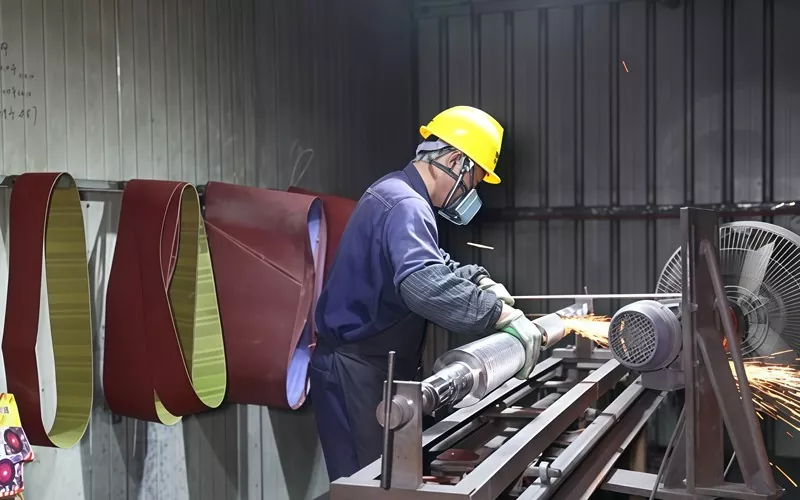
Unsure whether nitriding or bimetallic protection belongs in the RFQ? Send photographs and a measurement map of both screws and the barrel. Include filler grade, phr and production history so the surface proposal has a defined reason.
Ask about material and treatmentSee Nanhaiya production equipmentMeasure both screws and both bores at named positions
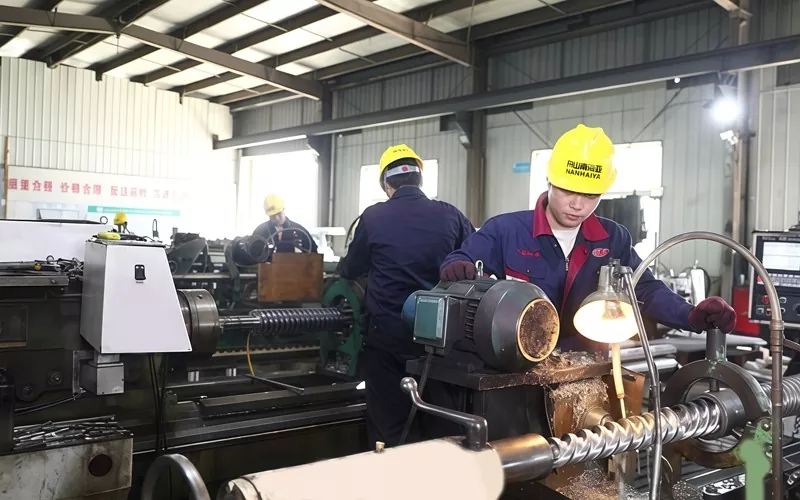
A wear report should show where every value was taken. Clean the parts, allow them to reach a stable inspection temperature, mark the feed end and number axial stations. Measure both screws, both barrel lobes and the critical screw-to-screw relationship using an agreed method.
Coperion's published diagnostic approach for its ZSK and STS barrels calls for clean, cool barrels and combines bore measurement with video inspection on certain sizes. Your equipment and method may differ, but the discipline is sound: dimension and surface condition should be recorded together.
| Record | Why it belongs in the report | Decision it supports |
|---|---|---|
| Axial station map | Prevents a minimum or maximum value from losing its location | Local repair, zone protection or full replacement |
| Both screw profiles | Shows asymmetric wear and preserves left/right identity | Replace one part, the pair or investigate alignment |
| Both barrel lobes | Reveals whether a new screw would still run with excessive bore clearance | Screws only versus matched screw and barrel set |
| Surface images | Documents scoring, pitting, coating loss and material deposits | Separate dimensional wear from a surface or cleaning issue |
| Operating trend | Connects the physical condition with output, load, pressure and product quality | Confirm that wear is causing the reported production problem |
Output loss, unstable pressure, overheating and poor product appearance can justify an inspection, but they do not prove a screw is worn. Compare the current line with a stable reference recipe. Check feeding, heaters, sensors, venting, die restriction and drive condition before blaming one component.
If the barrel is worn, installing only new screws may leave the working clearance outside the intended condition from the first day. We would rather lose a screws-only order than tell a buyer that new parts can restore a clearance we have not measured.
Compare quotations by scope, not by alloy label
Put every supplier on the same inquiry sheet. If one quotation includes a barrel, screw pair, treatment, inspection reports and shipping protection while another lists only “bimetal twin screw,” the prices are not comparable.
| Quotation line | Acceptable definition | Reason to return the quote |
|---|---|---|
| Component scope | Left screw, right screw, barrel, accessories and excluded items named | “One set” without a bill of supply |
| Geometry | Drawing revision and critical dimensions listed | Diameter and L/D only |
| Material | Base steel and treatment or alloy zones identified | “Premium alloy” without grade or location |
| Inspection | Dimensions, methods, records and acceptance points agreed | “High precision” without measurable criteria |
| Performance trial | Recipe, feed, die, output window, machine limits and product checks defined | Output promise with no test condition |
| Commercial scope | Price basis, packaging, delivery basis, documentation and service boundaries listed | Low unit price with unresolved technical exclusions |
Ask the supplier to mark every deviation from your drawing instead of silently replacing a requirement. A proposed improvement can be valuable, but it should appear as a revision with a reason. That protects purchasing, maintenance and the manufacturer when the part reaches the machine months later.
Agree on inspection and commissioning before manufacture
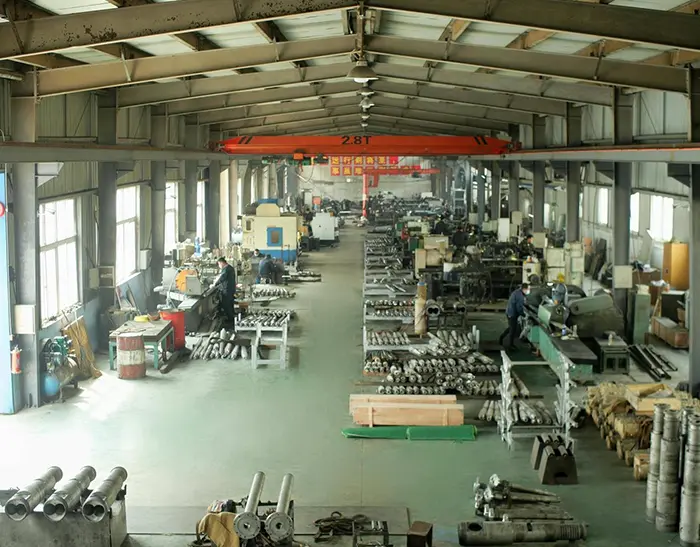
The approved drawing is the center of the purchase. Attach the material requirement, surface-treatment zones, dimensional report, hardness or layer verification method, pair identification and packaging requirements. Define which documents travel with the shipment.
For installation, follow the extruder maker's alignment, clearance, heating and start-up procedures. Do not force a screw pair that cannot rotate as required by the machine procedure. Investigate the fit, timing and assembly before applying drive torque.
A production acceptance trial needs a named formulation and feed condition. Record actual throughput, screw speed, motor load or torque indication, head pressure, temperature behavior, vent condition and finished-product checks. If the product is pipe or profile, include the dimensional and appearance criteria that decide whether the output is saleable.
Send us a high-filled PVC RFQ we can engineer from
Include the machine model, drawing, rotation and phasing details, complete recipe in phr, filler grade, recycled content, current operating record, product target and wear measurements. Tell us whether you need a faithful replacement or a documented geometry review.
Email the RFQ packageDiscuss on WhatsAppOpen the inquiry page
Zhoushan Nanhaiya Plastic Machinery Co., Ltd.
Products: Parallel twin screws | PVC parallel twin screw barrels | PVC pipe parallel screw barrels
Email: info@nhyscrew.com
Phone: +86-13505809643 | Mobile: +86-13587082002
Block C, No. 2 West Section, Xingzhou Avenue, Dinghai District, Zhoushan City, Zhejiang Province, China.
Service information | Production equipment | Company profile
Frequently asked questions
What information is needed to quote a high-filled PVC parallel twin screw barrel?
Send the machine maker and model, existing drawings, screw rotation, center distance, connection details, complete PVC formulation, filler loading in phr, recycled content, product and die information, output target, operating records and old-part measurements. State the failure or improvement you are trying to address.
What filler level counts as high-filled PVC?
There is no universal purchasing threshold. State each ingredient in parts per hundred resin and provide the finished blend composition. Do not replace phr with a vague description such as high calcium carbonate, because two recipes carrying that label can create different feeding, fusion and wear duties.
Is a bimetallic screw always better than a nitrided screw for filled PVC?
No. Treatment selection depends on filler characteristics, loading, contaminants, wear location, geometry and the required maintenance plan. Nitriding, chrome plating and bimetallic layers differ in hardness scale and layer depth, so compare the complete specification rather than one hardness number.
Can I choose the screw size from Nanhaiya's model table alone?
Use the model table as an initial range. Final sizing must account for the actual formulation, feeding method, product, die resistance, drive limits and acceptance output. A nominal diameter or catalog capacity does not define the complete process duty.
Can I send worn screws as the only manufacturing reference?
We do not recommend it. A worn sample records both the original geometry and the damage accumulated in service. Provide the approved drawing when available, then support it with clean measurements, photographs and operating history so the replacement does not reproduce wear as design.
Can I replace only the screws and keep the old barrel?
Only after measuring both screws and both barrel bores at defined axial positions. New screws running inside a worn barrel may preserve excessive clearance and unstable output. The decision should follow a matched wear report and the machine maker's assembly requirements.
Does Nanhaiya supply both co-rotating and counter-rotating parallel twin screw barrels?
Yes. Nanhaiya lists co-rotating and counter-rotating parallel twin screw barrel products. A replacement inquiry must identify the installed configuration, rotation viewpoint, handedness, phasing and drive connection rather than asking the supplier to infer them from the material name.
How should output be accepted after installation?
Agree on the recipe, feeding method, die, output window, product-quality checks and machine limits before manufacture. During commissioning, record actual throughput, load, pressure, temperature behavior and finished-product quality under that agreed condition. Catalog data should not replace a defined acceptance trial.
For operating principles, continue with our parallel twin screw extruder guide. For a broader comparison of extruder types, see the twin screw extruder selection guide.