
A planetary screw is not a premium answer to every difficult formulation. It earns its place when the real problem is combining mixing, heat transfer and degassing without giving the material more thermal history than it can tolerate.


Quick answer
Choose a planetary screw when the formulation needs excellent distributive mixing, broad heat-transfer area, self-wiping action or staged degassing, especially with heat-sensitive PVC, high-filled compounds, elastomers, adhesives and composite materials.
Stay with a single screw when the process is stable and mainly needs economical melting, conveying and pressure. Choose a co-rotating twin screw when high-speed compounding, flexible side feeding or stronger dispersive work is the priority. If the die needs more pressure than the planetary section can provide, plan the downstream pressure stage before ordering.
First, make sure everyone means the same planetary screw
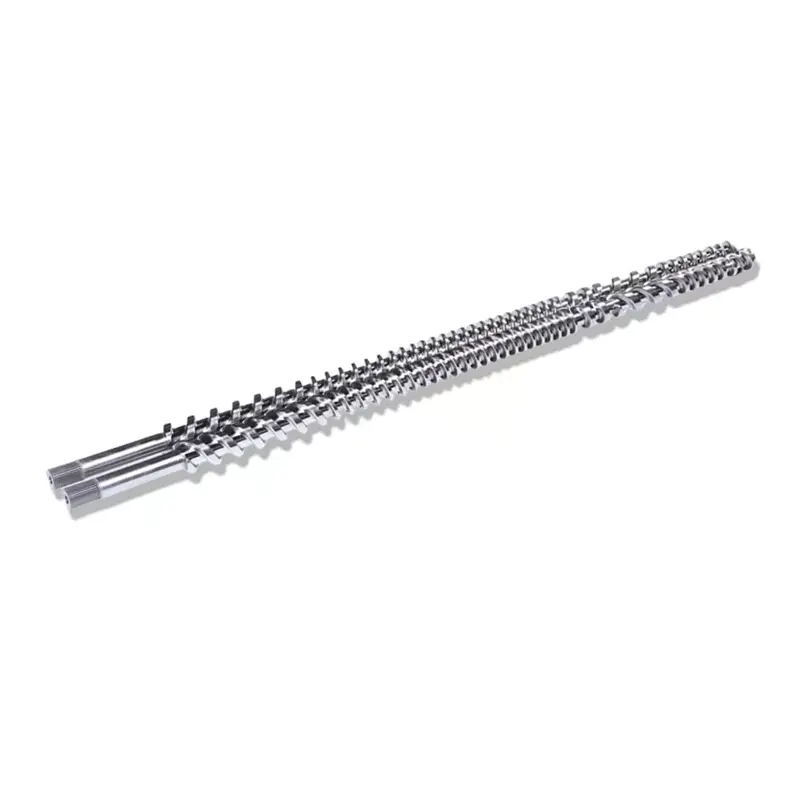
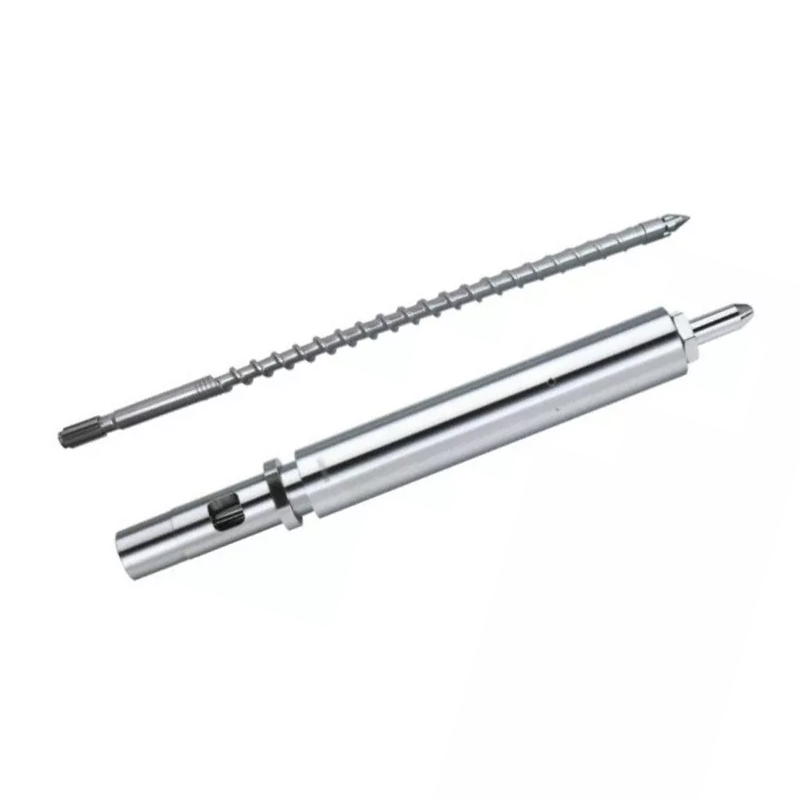
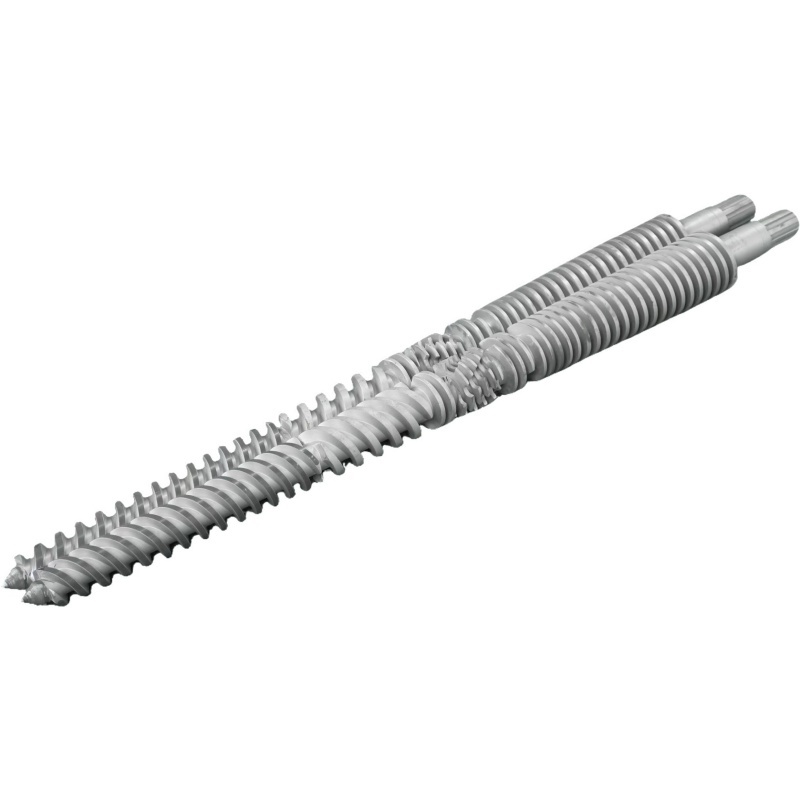
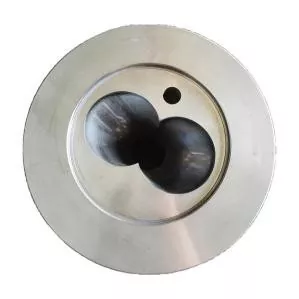
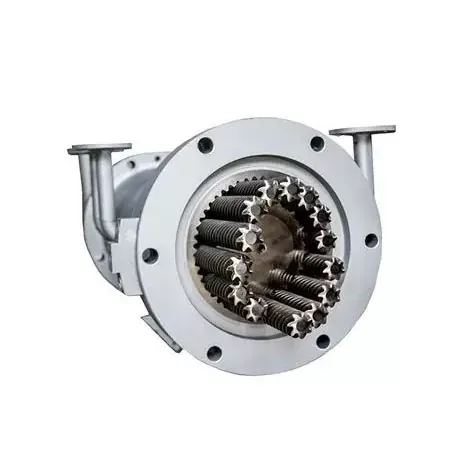
In this guide, planetary screw means the plasticizing system also called a planetary roller extruder. It is not a planetary roller screw actuator used for linear motion. The polymer-processing unit contains a central screw, several smaller planetary screws and a barrel with internal teeth.
Nanhaiya builds its standard planetary section with 6 to 18 planetary screws, depending on the segment diameter. The typical tooth clearance is 0.2 to 0.4 mm. Material repeatedly passes through the clearances between the central screw, planetary screws and toothed barrel.
Our factory view: a buyer should never send an inquiry that only says "planetary screw." State whether you need the complete plasticizing section, central screw, planetary screws, toothed barrel, disperser ring or a replacement module. These parts work as a geometry set.
Why the geometry changes the mixing job
The planetary screws roll around the central screw inside the internally toothed barrel. Material is repeatedly divided, stretched into thin layers and recombined while moving forward. This creates many surface contacts for mixing and heat exchange.
A 2024 review in Express Polymer Letters describes the rolling and calendering-like action and links the large contact area with distributive mixing, temperature control and devolatilization. A 2021 flow simulation found that spindle geometry changes distributive and dispersive mixing, with extensional flow and frequent changes in flow type helping explain the result.
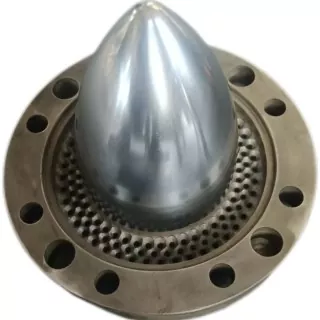
Nanhaiya can divide a planetary section into two stages with a disperser ring between them. The ring raises local back pressure, adds shear, encourages earlier melting and supports mixing and degassing. This is a process element, not decoration, so its position belongs in the project design.


Compare the process duty, not the number of screws
Single, twin and planetary systems can all melt and convey polymers, but they do not distribute the work in the same way. The useful comparison starts with the formulation, required mixing mechanism, temperature window, venting load and pressure after the mixing section.
| Decision factor | Single screw | Co-rotating twin screw | Planetary screw |
|---|---|---|---|
| Best starting point | Stable, known material with mainly melting and conveying duty | Compounding with flexible feeding and modular mixing elements | Heat-sensitive, highly filled or difficult blends needing broad contact area |
| Distributive mixing | Limited unless mixers are added | Good and configurable | Excellent through repeated division and rolling action |
| Dispersive mixing | Geometry-dependent and often limited | Strong with the right kneading and mixing elements | Moderate to strong depending on spindle design and disperser rings |
| Thermal control | Simple system, smaller exchange area | Good but can add substantial mechanical heat | Large surface area supports close heat exchange |
| Degassing | Available but less flexible | Good with vent and vacuum sections | Excellent when thin layers and venting stages are designed together |
| High-speed operation | Good for suitable extrusion duties | Often the strongest choice | Usually not selected for maximum screw speed |
| Pressure generation | Good | Acceptable and design-dependent | Often needs a separate downstream pressure solution |
| Cleaning and wiping | Can retain material in low-flow areas | Self-wiping with the correct intermeshing design | Strong self-wiping through planetary engagement |
| Mechanical complexity | Lowest | Higher | Highest, with multiple precision mating components |
Our factory view: do not pay for a planetary section when a well-designed single screw already holds output and quality. Do not choose planetary when the real need is high-speed compounding and flexible side feeding that a parallel twin screw handles better. Upgrade only when the formulation exposes a specific process limit.
Where a planetary screw earns its cost
Nanhaiya targets three demanding application groups: high-filler compounds, elastomers and flexible plastics, and special powder-filled mixing or granulation. Its planetary 3D shearing system handles PP with at least 60% calcium carbonate, PA with at least 40% glass fiber, and high-viscosity TPU and TPE.
The same product range reduces plasticizing time by 30% to 50% compared with traditional single-screw systems. For high-filled applications, the target tensile-strength deviation is at or below 5%. For special powder-filled materials, the target dispersion is at or above 90%.
High-filler compounds
Typical work includes PP flooring substrate with 50% to 70% calcium carbonate and PA automotive structures with 30% to 50% glass fiber.
Buy for: repeated division of filler-rich melt, temperature control and consistent properties.
Heat-sensitive flexible materials
Typical work includes TPR toys, TPE sealing strips and flexible PVC pipe with at least 30% plasticizer.
Buy for: mixing and heat exchange while controlling residence time and volatilization.
Special powder systems
Typical work includes copper-filled PE conductive compounds and alumina-filled PC wear-resistant compounds.
Buy for: powder distribution, agglomerate control and planned degassing.

These figures define Nanhaiya's application range. A purchase specification still needs the exact resin grade, filler particle form, additive package, moisture, feed method, temperature ceiling and acceptance test for the buyer's product.
Where planetary is the wrong choice
The planetary system has more mating components and requires precise tooth geometry, clearance and heat treatment. Purchase price and maintenance cost can exceed single- and twin-screw alternatives. The 2024 review also identifies high screw speed and pressure generation as relative weaknesses.
Pressure matters because a mixing section and a die do different jobs. A planetary section may prepare the melt well but still need a downstream single screw or gear pump to stabilize pressure at a restrictive die. That decision affects motor load, controls, residence time and line layout.
Choose another system when: the formulation is easy to melt and the line already meets quality; the business case depends mainly on the lowest initial cost; the process needs aggressive high-speed compounding; side feeding dominates the recipe; or the die pressure must come from the same simple plasticizing stage.
Scale also changes the answer. A 2023 experimental scale-up study found that geometry, material viscosity, throughput and conveying speed changed melt temperature, pressure and residence time. A successful small trial cannot be transferred by diameter ratio alone.
Standard or mutated planetary screw?
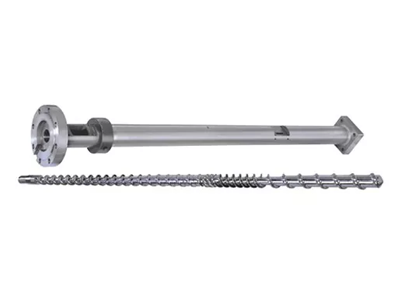
The standard planetary screw separates stable feeding from planetary mixing with a thermal insulation layer. Its streamlined flow path reduces stagnant areas and supports cleaning during batch or material changes. It is used for rigid, semi-rigid and soft PVC, plus ABS, TPO, TPU and filled polyethylene.
The mutated planetary screw can change the screw arrangement or tooth profile around a specialized duty. Forced-feed cooling helps keep heat-sensitive material from burning at the feed device. Dedicated venting and an internal spiral sealing cap can be opened or closed around the process requirement.
| Project condition | Standard design | Mutated design |
|---|---|---|
| Broad range of known PVC, ABS, TPO, TPU or filled PE products | Strong starting point | Use only if the standard arrangement cannot meet a defined limit |
| Heat-sensitive feed begins sticking or degrading before the mixing section | Review feed isolation and cooling | Forced-feed cooling can be integrated around the duty |
| Moisture or volatile removal is a main quality requirement | Staged section and disperser ring can support degassing | Dedicated exhaust and sealing arrangements allow more customization |
| Adhesive, silicone, cable compound, WPC or unusual composite | Possible after formulation review | Better route when tooth profile, residence time or venting must change |
| Frequent product change | Streamlined channel and self-cleaning action are useful | Extra features should not create unnecessary cleaning complexity |
Nanhaiya construction and operating range
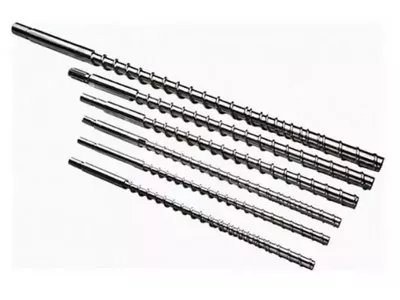
Nanhaiya manufactures the central screw, planetary screws and toothed barrel from 38CrMoAlA steel to GB/T 3077. The main screw receives double nitriding, the driven screws use quenching plus nitriding, and the discharge port is electroplated for corrosion protection.
| Item | Nanhaiya product data |
|---|---|
| Planetary screws per section | 6 to 18, proportional to planetary segment diameter |
| Typical tooth clearance | 0.2 to 0.4 mm |
| Main screw speed | 3 to 60 r/min across the published NHY-SW family |
| Drive power | 119 to 250 kW across the published model table |
| Heat-transfer oil requirement | 400 to 600 dm3 across the published model table |
| Maximum PVC transparent sheet output | 500 to 1,800 kg/h across the published model table |
| Maximum PVC colored hard sheet output | 700 to 2,000 kg/h across the published model table |
| Maximum PVC soft film output | 900 to 2,400 kg/h across the published model table |
| Quenching hardness | HB260-290 |
| Nitriding hardness and depth | HV900-1100; 0.5 to 0.8 mm |
| Nitriding brittleness | Grade 1 or lower |
| Surface roughness and straightness | Ra0.4; 0.015 mm |
| Alloy hardness and depth | HRC55-62; 0.8 to 2.0 mm |
These ranges help define the product family. Final output depends on the selected model, formulation, feeding, venting, temperature-control system, downstream pressure duty and product specification.

Nanhaiya's production equipment includes CNC lathes for workpieces up to 6 m, drilling and milling equipment with 0.02 mm positioning accuracy, and five-axis capability for complex screw structures. The service team supports pre-sales drawing and process review.
Run a trial that answers the purchase question
A trial should compare the present process with the proposed planetary configuration under a written acceptance plan. Do not judge the system from one attractive sample made with a different formulation or lower output.
- Freeze the formulation. Record every polymer, filler, plasticizer, stabilizer, pigment, moisture value and recycled fraction.
- Define the present limit. State whether the problem is agglomeration, color streaking, thermal degradation, poor degassing, variable properties, output or cleaning time.
- Set the required product result. Use measurable dispersion, tensile, color, volatile, thickness, surface or defect criteria.
- Record the process window. Capture feed rate, speed, zone temperatures, melt temperature, pressure, torque or motor load, vacuum and residence-time indicator.
- Check downstream pressure separately. Confirm whether the planetary section, a single-screw discharge stage or a gear pump carries the die duty.
- Inspect after the run. Review residue, cleanout, tooth surfaces, deposits and material remaining around the disperser or vent.
Our factory view: the most convincing planetary trial is not the one with the highest output. It is the one that shows the buyer exactly which old limit disappeared, which new limit appeared, and whether the quality window stayed open long enough for real production.
RFQ checklist for a planetary screw project
- Complete formulation with weight percentages
- Resin grades, viscosities and temperature limits
- Filler type, particle form, size and moisture
- Bulk density and present feed method
- Target and present output in kg/h
- Required dispersion or product-property limits
- Present screw system and known bottleneck
- Requested standard or mutated configuration
- Venting, vacuum and volatile-removal load
- Die pressure and downstream equipment
- Cleaning frequency and material-change sequence
- Available drawings and connection dimensions
- Motor, gearbox and temperature-control data
- Photos, samples and failed-quality evidence
If this is a replacement, include the central screw, planetary screws, internally toothed barrel and disperser-ring dimensions as a set. Mixing new and worn mating components without measurement can change clearance and load distribution.
Frequently asked questions
What is a planetary screw in polymer processing?
It is a plasticizing and mixing system with a central screw, multiple planetary screws and an internally toothed barrel. The planetary screws rotate around the central screw while material is rolled into thin layers, mixed and conveyed through the unit.
When is a planetary screw better than a single screw?
A planetary system becomes attractive when a single screw cannot provide enough distributive mixing, heat-transfer area or degassing for a high-fill, heat-sensitive, elastomeric or multi-component formulation. A single screw remains simpler when the job is mainly melting, conveying and pressure generation.
When is a twin screw better than a planetary screw?
A co-rotating twin screw is often the better choice for high-speed compounding, flexible side feeding and strong dispersive mixing. A planetary system is stronger where gentle thermal control, excellent distributive mixing, self-wiping and degassing are the dominant needs.
Can a planetary screw process high-filled compounds?
Yes. Nanhaiya configures planetary screws for high-filled PP, glass-fiber-reinforced PA, filled polyethylene, WPC and other compound systems. The feeder, spindle arrangement, temperature control, wear package and downstream pressure stage must match the exact formulation.
What is the difference between standard and mutated planetary screws?
Nanhaiya's standard design uses defined feeding and planetary mixing sections for a broad range of PVC, ABS, TPO, TPU and filled polyethylene applications. Mutated versions can use a changed spindle arrangement or tooth profile, forced-feed cooling, dedicated venting and an internal sealing cap for more specialized process duties.
Does a planetary screw generate enough die pressure by itself?
Not for every line. Planetary roller systems are selected mainly for mixing, heat transfer and degassing, and their pressure-generation capability can be lower than that of a single screw. Some lines use a downstream single screw or gear pump when the die requires more stable pressure.
What data should I send Nanhaiya for a planetary screw project?
Send the complete formulation, component percentages, bulk density, moisture and volatiles, temperature limits, target output, required dispersion, present equipment, pressure duty, venting needs, product specification, cleaning schedule and available drawings.
Commercial disclosure: Nanhaiya manufactures the planetary screws and related components linked in this guide. Final selection and acceptance depend on the formulation, equipment configuration, approved drawing and project test plan.