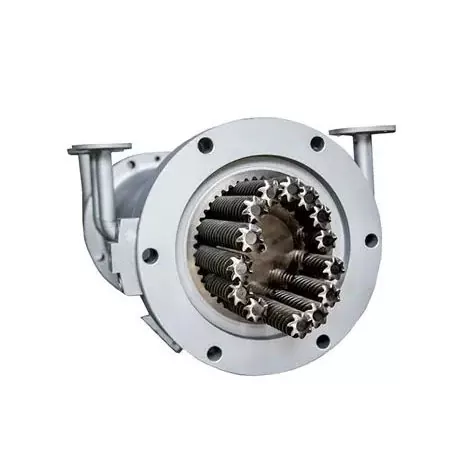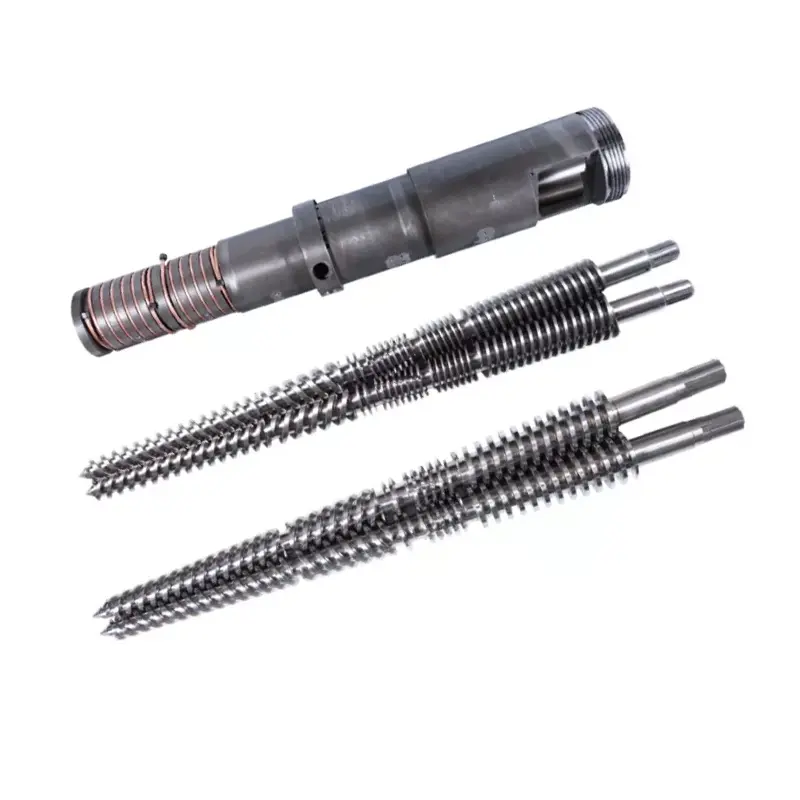

Before ordering a replacement, put the board recipe, the existing machine drawing and the reason for replacement on the same page. That gives the factory something useful to manufacture against.
Choose a PVC foam board conical twin screw barrel around the formulation, the existing machine interfaces and the measured wear. Confirm the complete drawing before selecting a diameter pair. Specify nitriding or bimetal protection by production duty, then agree on an acceptance test using your actual board recipe and quality requirements.
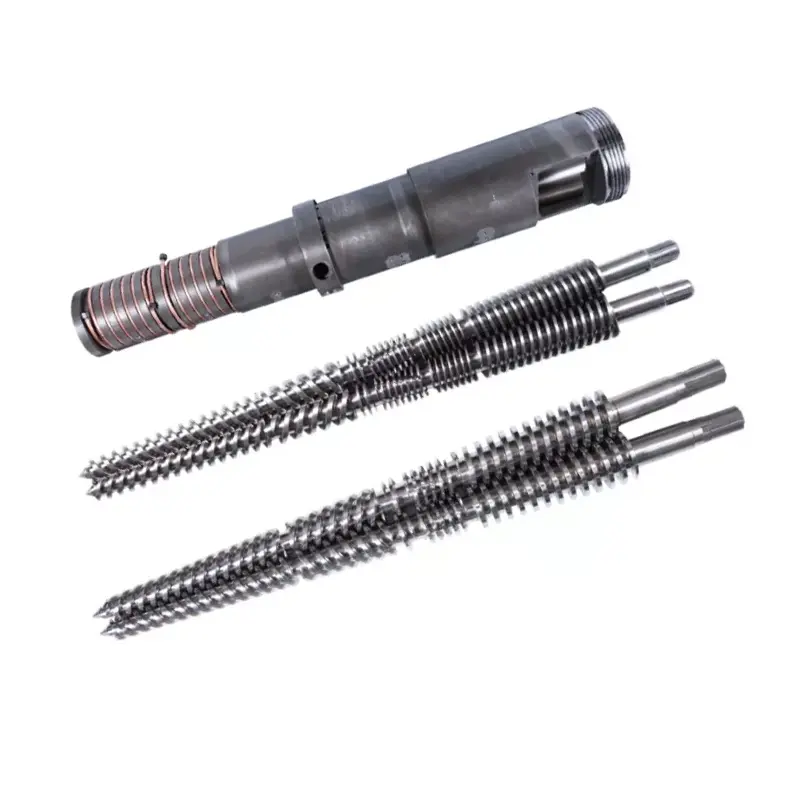
Decide whether you are restoring a process or changing it
If your line previously made acceptable foam board with a stable recipe, a replacement project starts with recovering that operating condition. Record what the line could do before the deterioration, and inspect the worn components. The old drawing is useful evidence; the worn screw itself is not an accurate record of its original dimensions.
A project with more filler, a different regrind source or a new board density target needs a different conversation. Manufacturing an exact copy may preserve the old process limitations. We would want the purchasing brief to identify which duty has changed before recommending geometry or a surface upgrade.
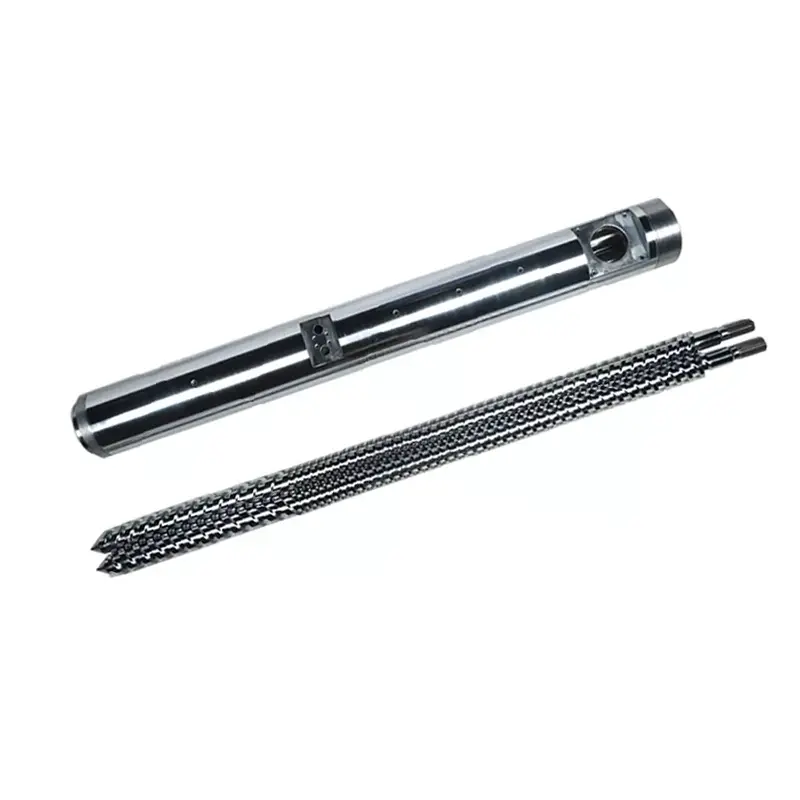
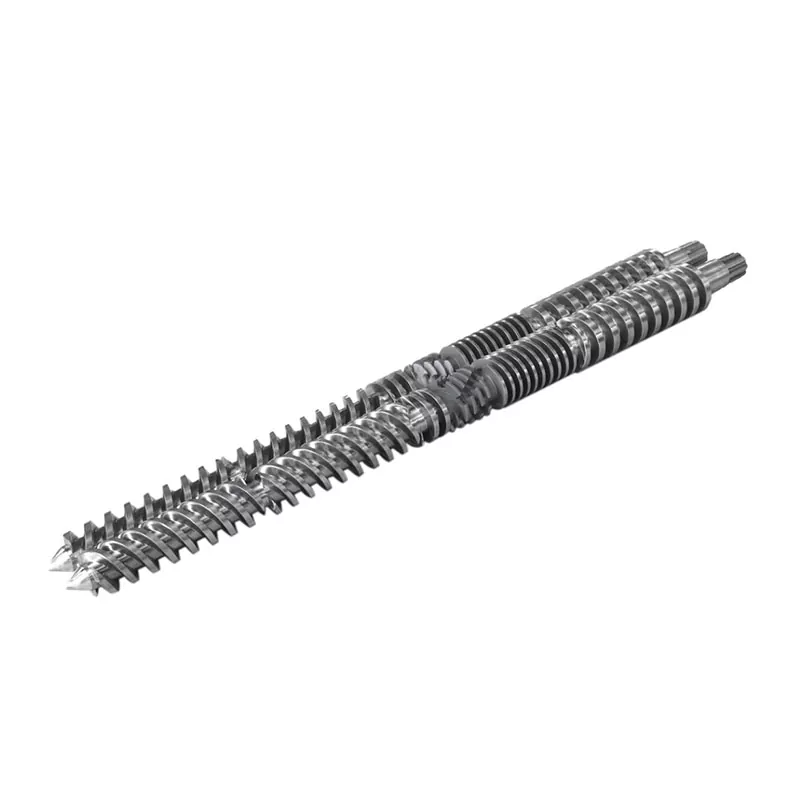
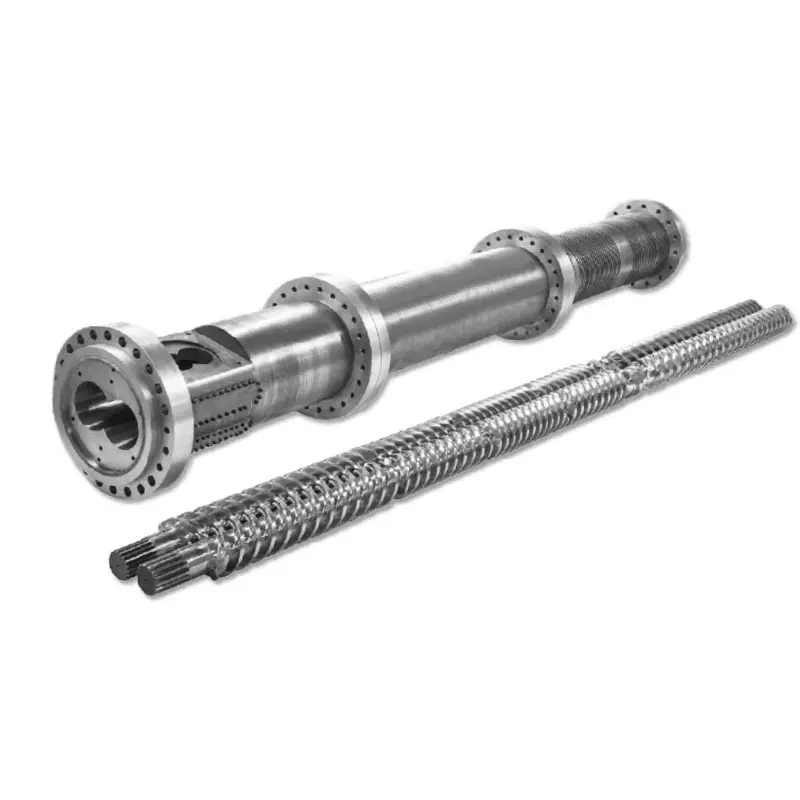
Our PVC board screw barrel is the relevant product starting point. If you are still choosing the machine architecture, use our broader conical twin screw extruder guide first. This article assumes a conical twin screw board line and focuses on specifying its replacement components.
Our purchasing view: we would keep a proven geometry unless the wear evidence or a changed production duty gives us a reason to alter it. Changing geometry, formulation and operating settings together makes the next trial harder to interpret.
The recipe belongs in the screw specification
“PVC foam board” does not tell a manufacturer enough about the material entering the hopper. The brief should identify the resin grade, filler grade and loading, regrind content, stabilizer and lubricant system, processing aid and blowing system. Where the recipe is confidential, agree on a controlled technical summary and how the full formulation will be handled during a trial.
Foam quality cannot be assigned to screw geometry alone. Arkema describes its acrylic processing aid Plastistrength® CF 1158 for thick cellular PVC sheet in terms of melt strength, foam density, cell homogeneity and surface finish. That is a useful reminder when specifying equipment: a formulation change can alter the result even when the metal components stay the same.
| Information to provide | What it helps the factory assess | Useful detail |
|---|---|---|
| PVC resin and dry blend | The material the geometry must process | Grade, preparation method and consistency between batches |
| Filler | Dispersion needs and the wear-protection discussion | Type, grade, loading and whether these will change |
| Regrind | Variation in the actual feed | Source, proportion, particle condition and contamination controls |
| Processing aid and blowing system | The formulation basis for the foam-quality target | Exact grades and dosages for the agreed trial recipe |
| Finished board | The result that counts as acceptable production | Thickness, width, density, surface requirement and end use |
We would also ask whether the order covers one stable product or regular changes between board grades. A design selected around one recipe should not quietly become a promise for every recipe the plant may run later.
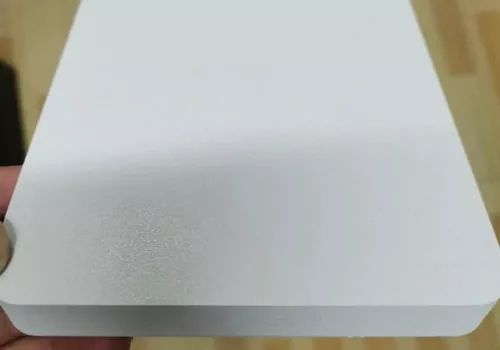
A diameter pair is a reference, not a replacement drawing
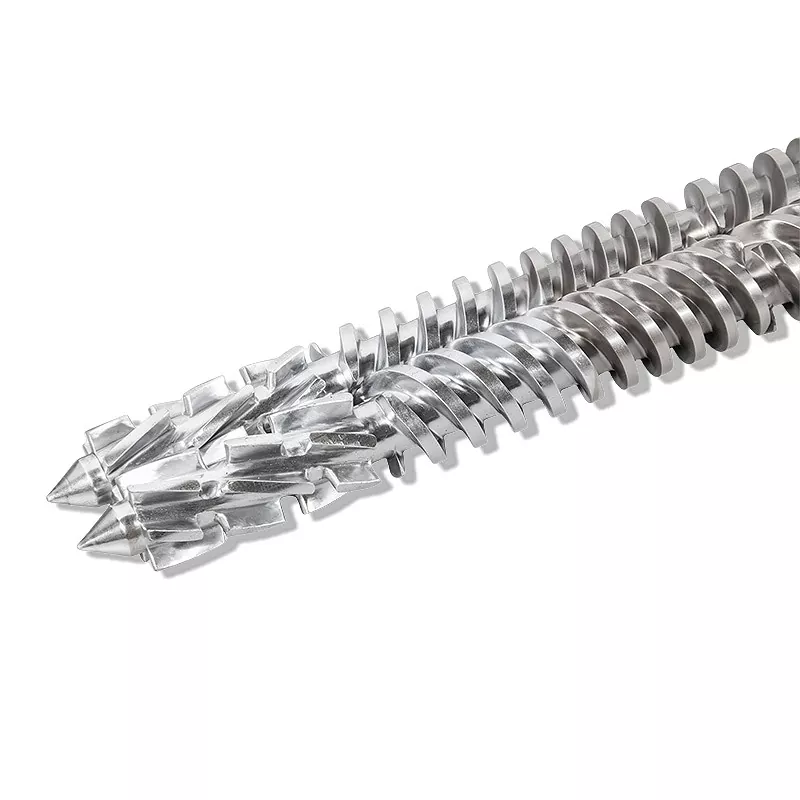
Our PVC board range includes these screw diameter pairs in millimeters:
| Available diameter pairs (mm) | |||
|---|---|---|---|
| 45/90 | 45/100 | 51/105 | 55/110 |
| 58/124 | 60/125 | 65/120 | 65/132 |
| 68/143 | 75/150 | 80/143 | 80/156 |
| 80/172 | 92/188 | 105/216 | 110/220 |
A request for “65/132” still leaves the working length, taper, shaft connection and barrel interfaces undefined. Confirm the machine maker and model, then compare the complete assembly drawing. Include rotation and screw phasing, feed opening, vent position, flange details, and the heating and cooling arrangement.
For a replacement, ask the supplier to identify which dimensions come from the original drawing and which were measured from the used assembly. That distinction matters around worn surfaces. We would not release a new matched set from a nameplate and an outside photograph alone.
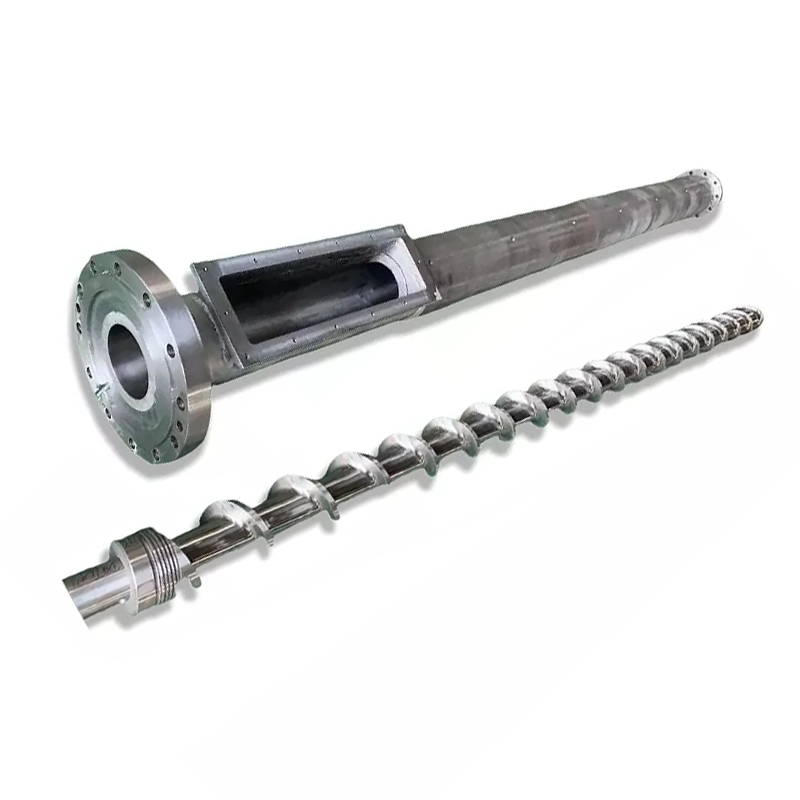
Related applications also need their own brief. Our PVC sheet conical twin screw barrel is a separate product route; the shared PVC label does not establish that it is interchangeable with a foam board assembly. Use the conical twin screw barrel category to identify the application, then confirm the specific drawing.
Specify where the wear protection goes
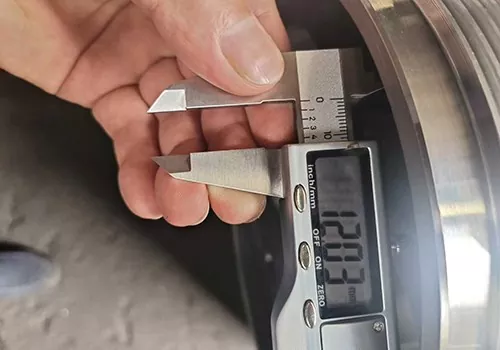
For our PVC board screw barrels, the base material specification includes 38CrMoAlA. The available treatment data gives buyers a concrete starting point for comparing constructions:
| Property | Nanhaiya PVC board specification | What to settle in the order |
|---|---|---|
| Base material | 38CrMoAlA | Material identification and traceability documents |
| Tempering hardness | HB260-290 | Inspection scope and report |
| Nitriding hardness | HV900-1100 | Test method and measurement location |
| Nitriding depth | 0.5-0.8 mm | Treated surfaces and depth verification |
| Nitriding brittleness | ≤ grade 1 | Evaluation method and acceptance documentation |
| Straightness | 0.015 mm/m | Drawing datum and inspection method |
| Bimetal hardness | HRC56-65 | Selected alloy and protected locations |
| Bimetal depth | 2.0-3.0 mm | Layer extent and finished condition |
These values belong to different properties and constructions. HV nitriding hardness and HRC bimetal hardness are not numbers to rank directly against one another. A deeper alloy layer also does not, by itself, establish a service-life multiplier.
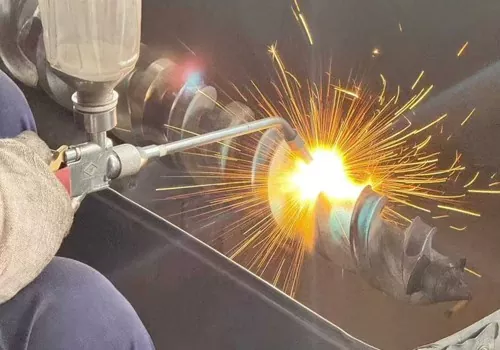
Our bimetal construction uses nickel-based alloy plus tungsten alloy, with alloy coverage over 400 mm in length and a depth of 2-3 mm. For a purchase order, ask which part of the screw or barrel receives that protection. The word “bimetallic” alone leaves too much room for two quotations to describe different scopes.
When we would keep nitriding in the comparison
If the existing nitrided assembly has delivered acceptable wear life under the intended recipe, it remains a sensible candidate. Compare its replacement cost and shutdown implications with the proposed alternative. There is little value in paying for a surface upgrade without knowing which failure it is meant to address.
When we would evaluate a bimetal construction
A documented wear pattern, a changed filler duty or repeated replacement of the same working area gives the discussion a firmer basis. Put the wear locations beside the proposed alloy coverage and ask the manufacturer to explain the match. Keep alignment and mating-component condition in the review; changing the surface treatment does not establish that the assembly fits correctly.
Before blaming the screws, build a comparable operating record
A rough surface, uneven cells or falling output is a reason to investigate. It does not identify the failed component. Begin by comparing the current run with an acceptable earlier run: recipe, feed condition, screw speed, temperatures, load, pressure where measured, and finished-board results.
We would use the following checks to decide whether a replacement inquiry is supported by enough information. They are investigation prompts, not a diagnosis from symptoms alone.
| Observation | First comparison | Useful evidence for the supplier |
|---|---|---|
| Board density or cells change after a recipe revision | Compare resin, additives, regrind and operating settings | Old and new recipes, board samples and production records |
| Output deteriorates under a previously stable duty | Check whether feed and operating conditions are still comparable | Trend records plus a screw and barrel wear map |
| Surface quality changes without an obvious recipe change | Check recorded conditions and the rest of the line, including the die | Defect photographs, timing and maintenance history |
| Visible scoring or a suspected fit problem | Have qualified personnel inspect the matched assembly under the machine's maintenance procedure | Location photographs, interface measurements and assembly history |
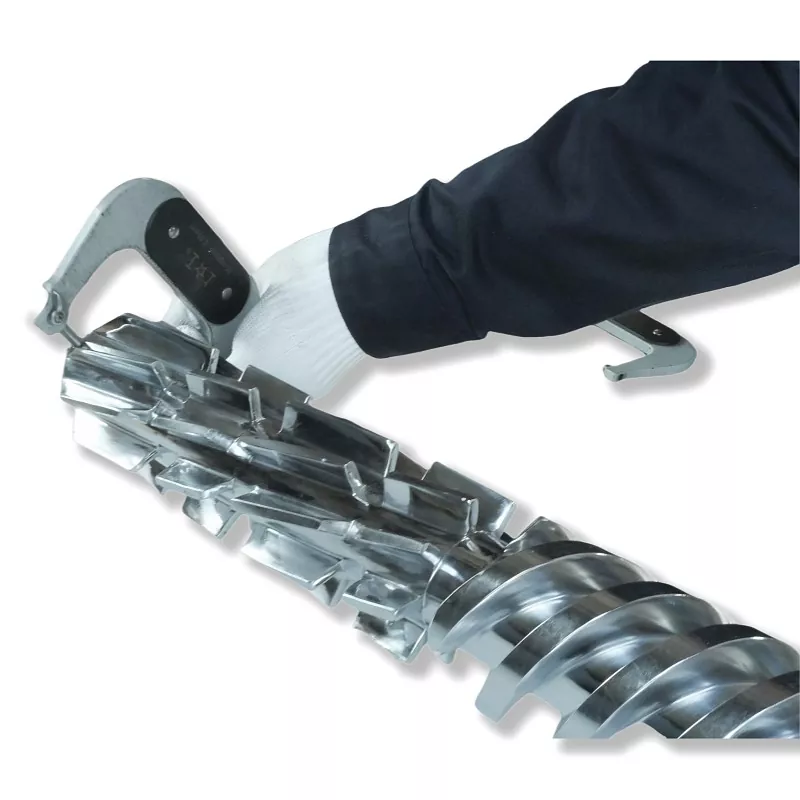
If you intend to keep the old barrel and replace only the screws, require an assessment of the barrel's internal condition. Measure both mating components at defined locations against the drawing. Otherwise the new screws may enter an assembly whose clearance problem remains unresolved.
Agree on acceptable board production before the order
Separate component acceptance from production acceptance. The first checks whether the supplier made the specified assembly. The second checks performance on the agreed line with the agreed material. A dimensional inspection cannot prove finished-board density, and a short run with an easier recipe cannot demonstrate your intended duty.
- Approve the drawing revision, material, treatment, protected surfaces and inspection documents before manufacture.
- Define the trial recipe and record the actual feed batch. State who supplies the material and whether the trial is at the supplier's facility or your plant.
- Agree on board thickness and width, the density measurement method, sampling locations and the permitted variation.
- Define surface and cell-quality acceptance using agreed reference samples or written criteria. Include the downstream requirements relevant to the board's end use.
- Record saleable output alongside operating conditions and rejected material. Agree on the stable test duration rather than judging a momentary peak.
We would be careful about accepting a higher output figure if it comes with a board that misses the buyer's finish or density requirement. The order should make that trade-off explicit. It should also state which items the screw barrel supplier controls and which depend on the existing extruder, die and downstream equipment.
Send a brief the factory can quote against
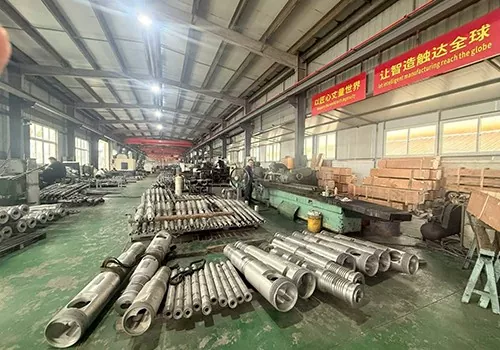
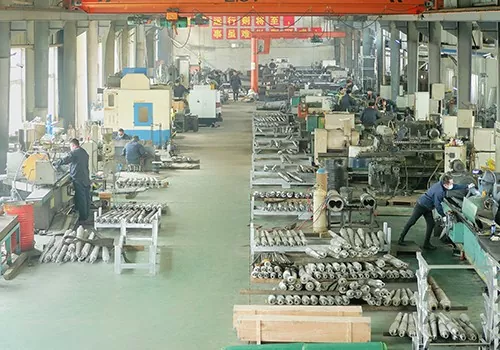
Nanhaiya supports OEM and ODM work for PVC board screw barrels. Our production equipment includes CNC lathes capable of machining workpieces up to 6 meters long and five-axis machining centers for complex flight and flange structures. Those capabilities help explain our manufacturing scope; the agreed drawing remains the basis for your particular order.
Attach the following to your inquiry:
- Machine maker, model, nameplate photographs and the current assembly drawing.
- Whether this is a like-for-like replacement, a wear upgrade or a change of board formulation.
- Recipe details or an agreed technical summary, including filler and regrind.
- Current and target board dimensions, density and saleable output.
- Wear measurements, defect photographs and relevant operating records.
- Required inspection documents, trial criteria and the intended replacement schedule.
If a drawing is missing, identify that in the first message and send the available measurements. We can then discuss what information is still needed for a quotation. Our PVC board product support includes installation guidance, troubleshooting and maintenance recommendations; define the support needed for your shutdown in the order.
Discuss your PVC foam board replacement with Nanhaiya
Send your screw barrel drawing, formulation summary and the problem you want to solve. Tell us whether the priority is restoring an existing duty or adapting the assembly for a different board.
Send drawings for a quotationView PVC board screw barrelsDiscuss on WhatsApp
Zhoushan Nanhaiya Plastic Machinery Co., Ltd.
Email: info@nhyscrew.com
Phone: +86-13505809643 | Mobile: +86-13587082002
Block C, No. 2 West Section, Xingzhou Avenue, Dinghai District, Zhoushan City, Zhejiang Province, China.
Company contact details
Frequently asked questions
Is the same screw diameter pair enough to order a replacement?
No. Confirm the screw and barrel drawing, working length, taper, shaft connection, rotation and phasing, flange, feed opening, vent and heating layout. A matching diameter pair is a starting reference, not proof of interchangeability.
Should every PVC foam board line use a bimetallic screw barrel?
No. Compare the formulation, actual wear pattern, expected production duty and replacement cost. A nitrided construction remains a candidate when the existing wear life is acceptable. Evaluate bimetal protection when documented wear justifies its cost, and specify the protected areas and depth.
Can a new screw barrel guarantee a lower foam board density?
No. Foam density also depends on formulation, processing aid, blowing system and operating conditions. Agree on the recipe, board dimensions, density test method and acceptable output before making a performance commitment.
What material and treatment data does Nanhaiya offer for PVC board screw barrels?
Our PVC board range includes 38CrMoAlA, tempering hardness HB260-290, nitriding hardness HV900-1100 and nitriding depth 0.5-0.8 mm. The bimetal specification includes HRC56-65 hardness and 2.0-3.0 mm depth. The order should identify the selected construction and the surfaces covered.
Can I replace the screws and keep the old barrel?
Only after inspection confirms that the barrel and its interfaces remain suitable for the replacement screws. Request a dimensional wear map and an assessment of the matched assembly. An outside photograph cannot establish internal clearance.
What should I send Nanhaiya for a quotation?
Send the machine nameplate, screw and barrel drawings, formulation or an agreed formulation summary, board dimensions and density target, current operating records, wear measurements and the intended acceptance criteria. State whether you want a like-for-like replacement or a change in production duty.